#04 Weekly Thesis process, Updates & exploration
Saturday, September 12 - Friday, September 18 -
This week consists of more progress — but at the end of it, on Friday, Sep 18th, I had my first committee meeting. A very informative meeting; getting everyone together was a great way to have a good base of where I am and who knows what, get advice from everyone as a whole, but also simply listening to all four of my committee members discuss and agree/disagree was very eye-opening.
This week's post discusses and highlights the work I have done throughout the week, process and progress, and a lot of testing. But from this point [beginning of next week], the primary focus will be honing in on the why — focusing on the written portion of the thesis for a while. Getting thoughts into words and re-discovering the goal, the idea, the purpose, the what and the why of the thesis. Since the consensus and main takeaway from the committee meeting was that now I need to slow down on the production, gain perspective, and re-start the production once I have a solid framework to bounce off of.
So next week's goal & my high-priority to-do list have changed drastically from what I thought they looked like to what they will be since the meeting. I will be keeping the to-do list on the bottom of this page the way I had planned it at the beginning of this week, but I will be working on the discovery and writing portion as of right now until I can come back to that to-do list, more informed with the correct idea and frame of reference.
So now let's rewind all the way back to last Friday! Exactly one week ago today -
*Photo of the weekInspiration column
Glitchy Bilboards
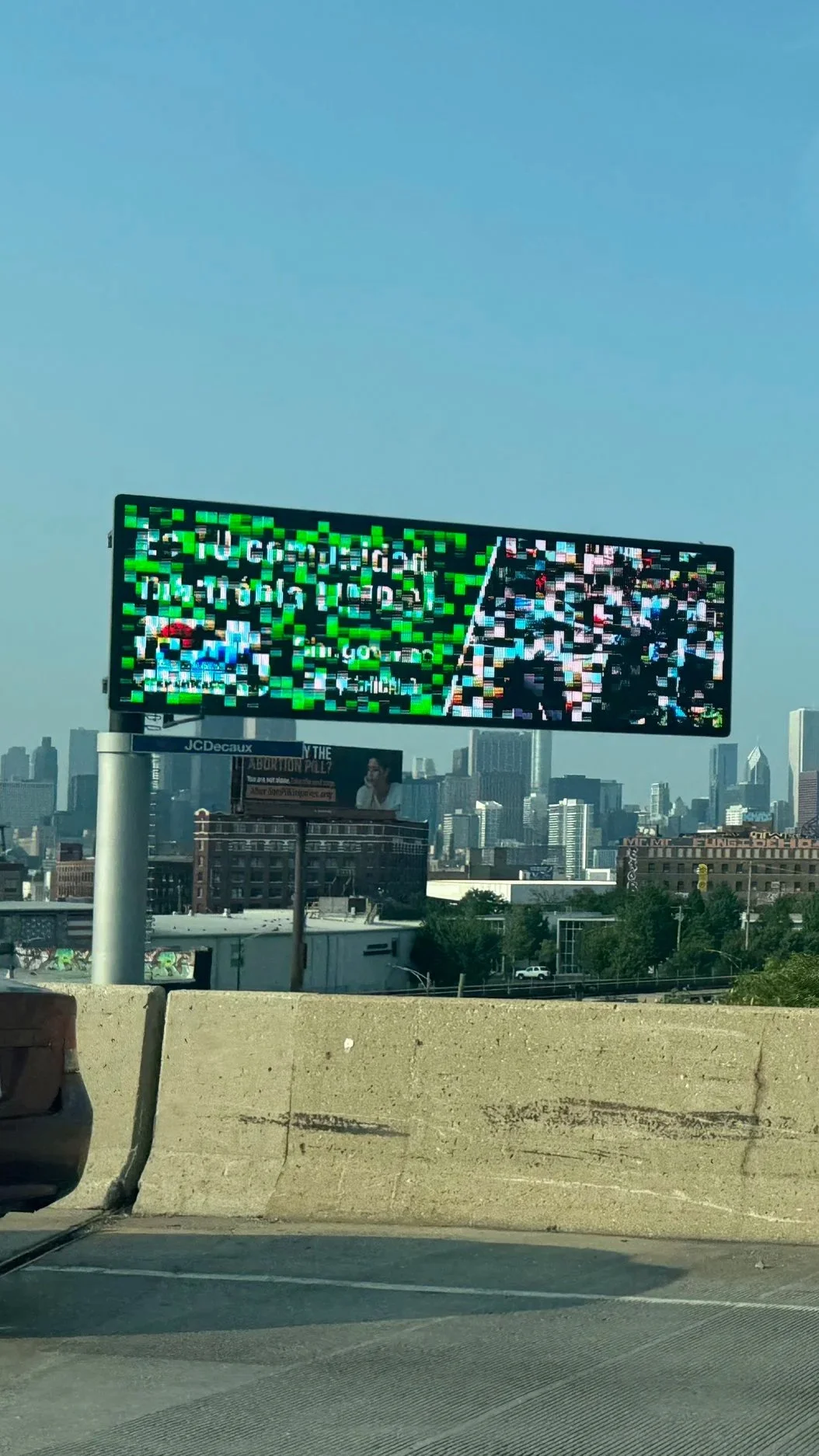
Chicago, IL
The glitch effect is a product of perfect timing, the moment the display changed.
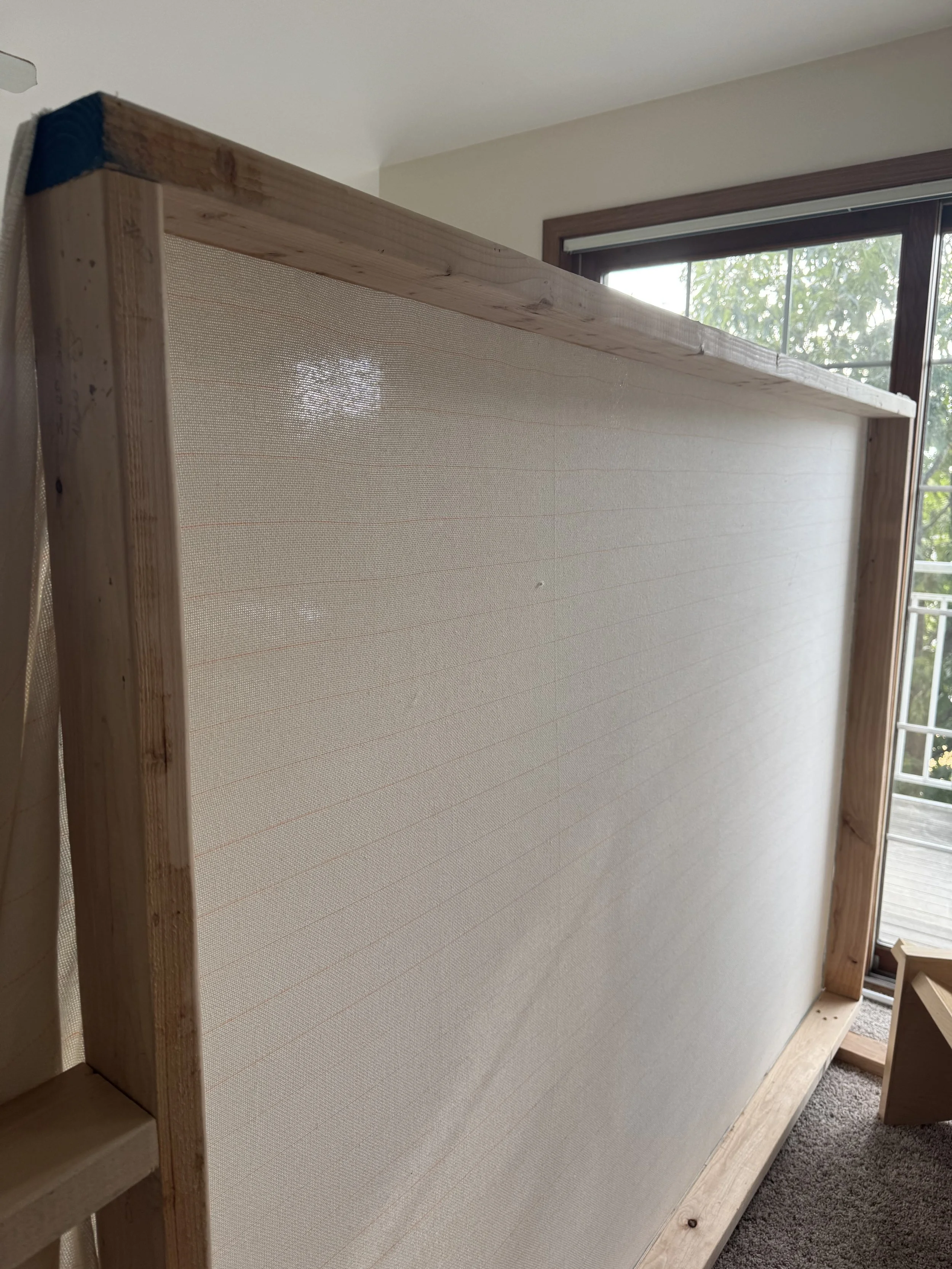
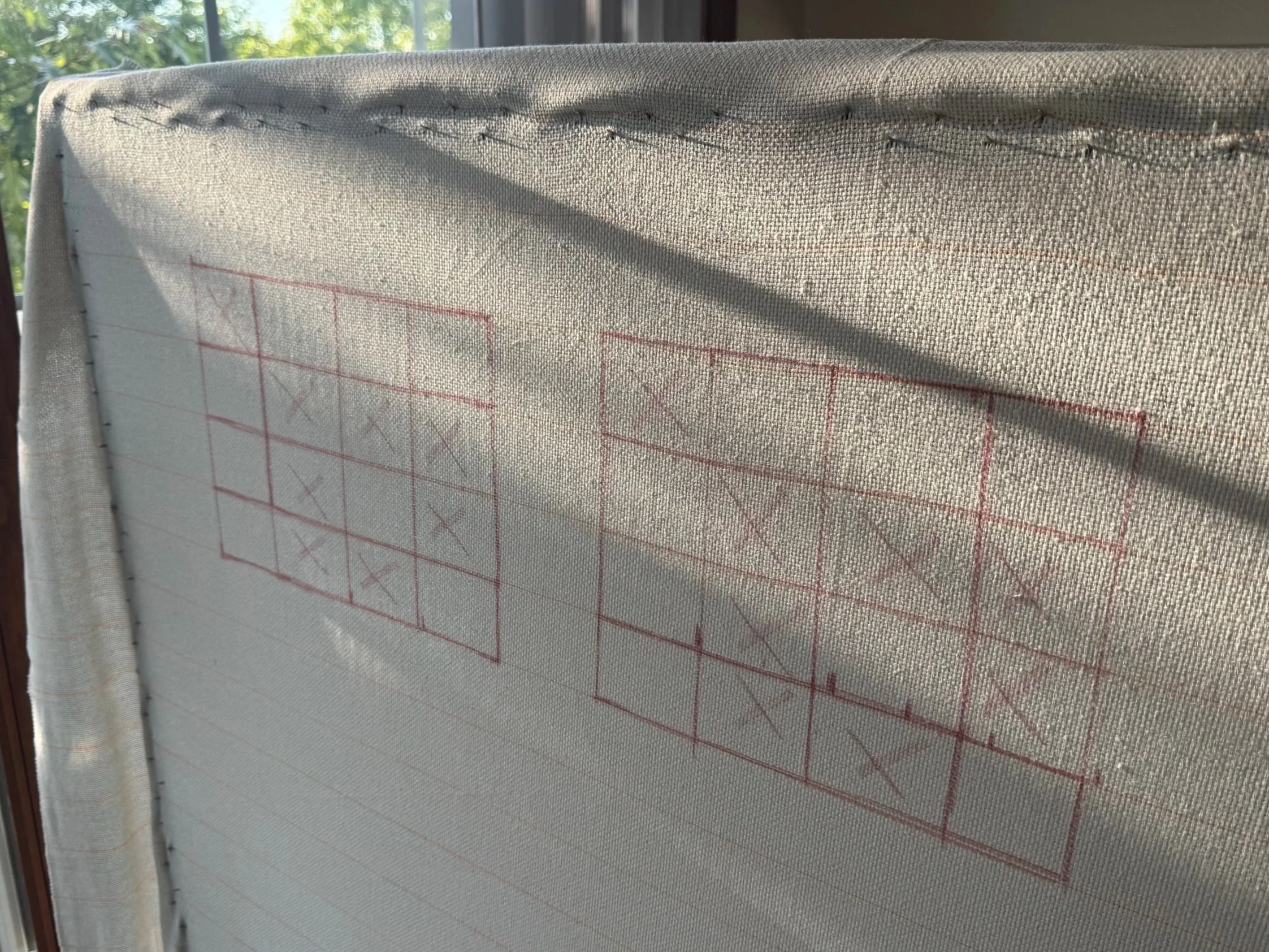
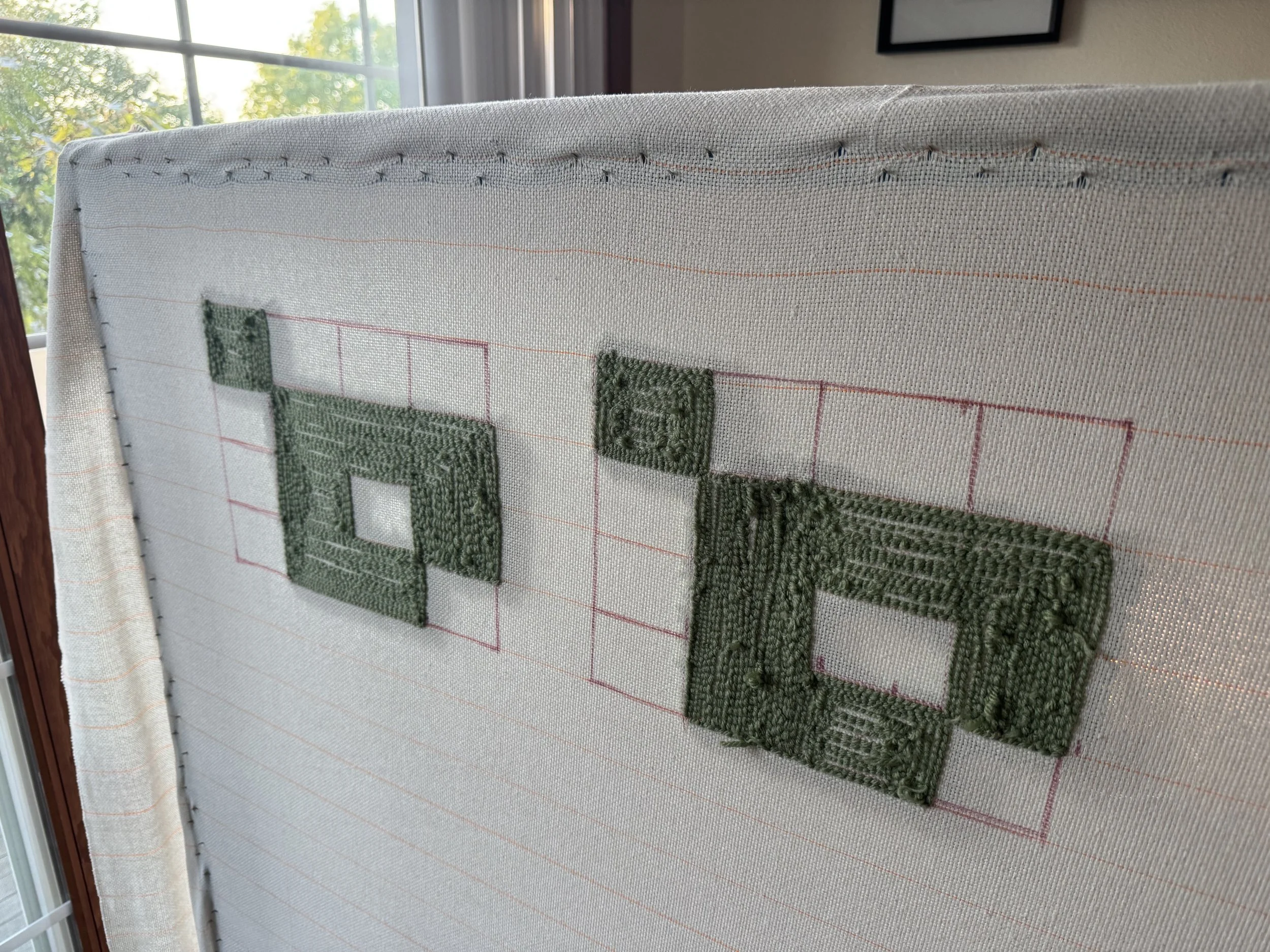
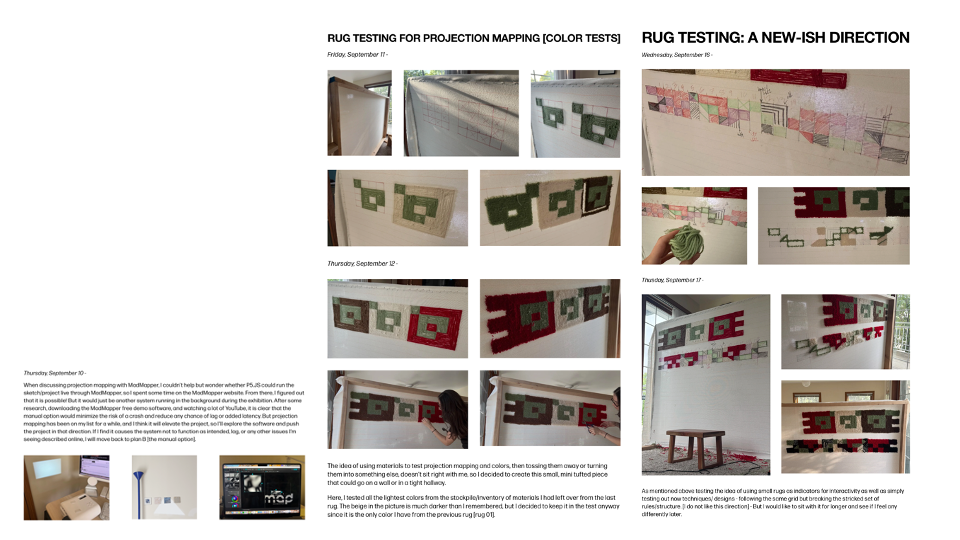
Rug Testing for Projection Mapping [Color Tests]
Friday, September 11 -
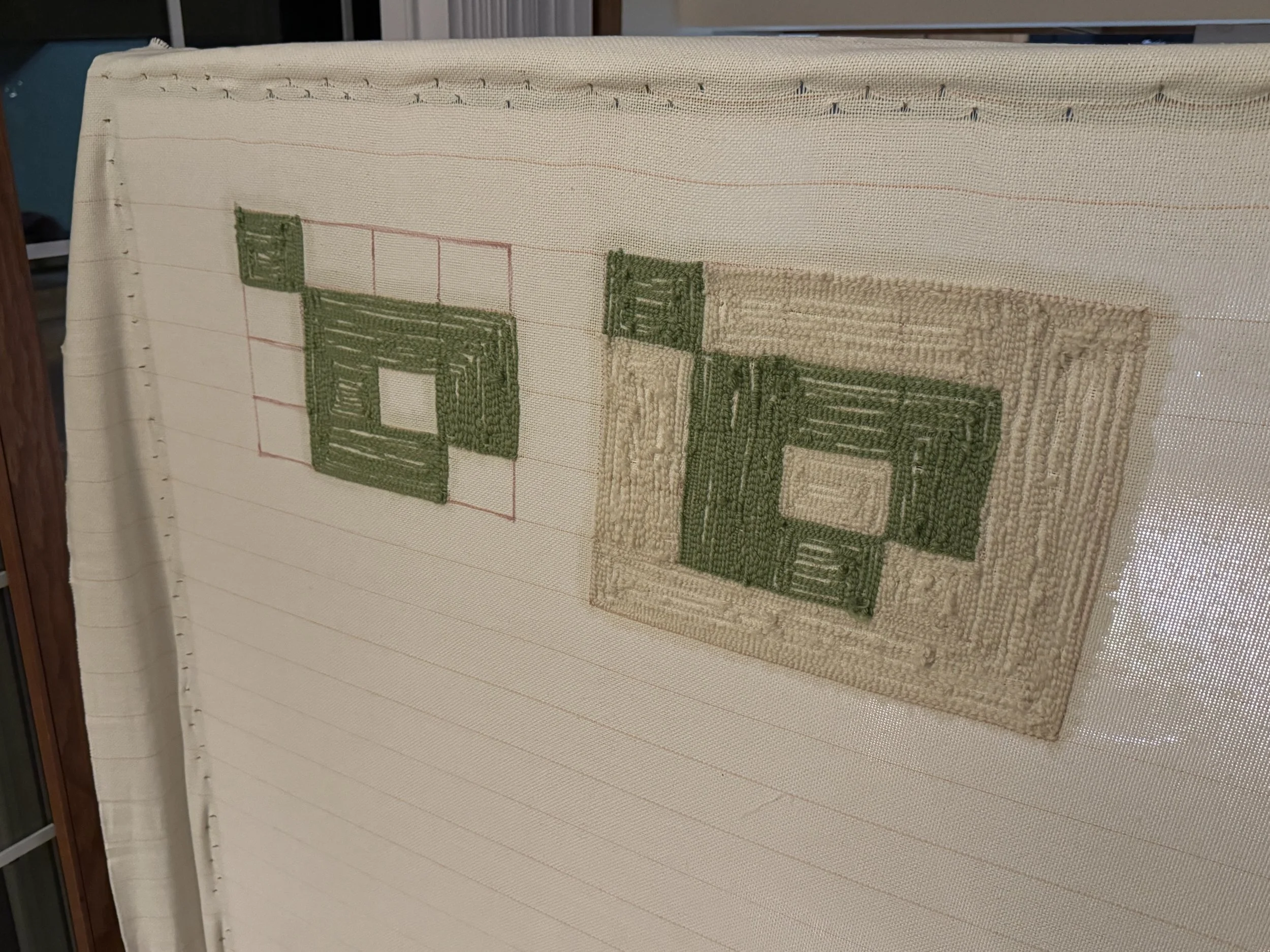
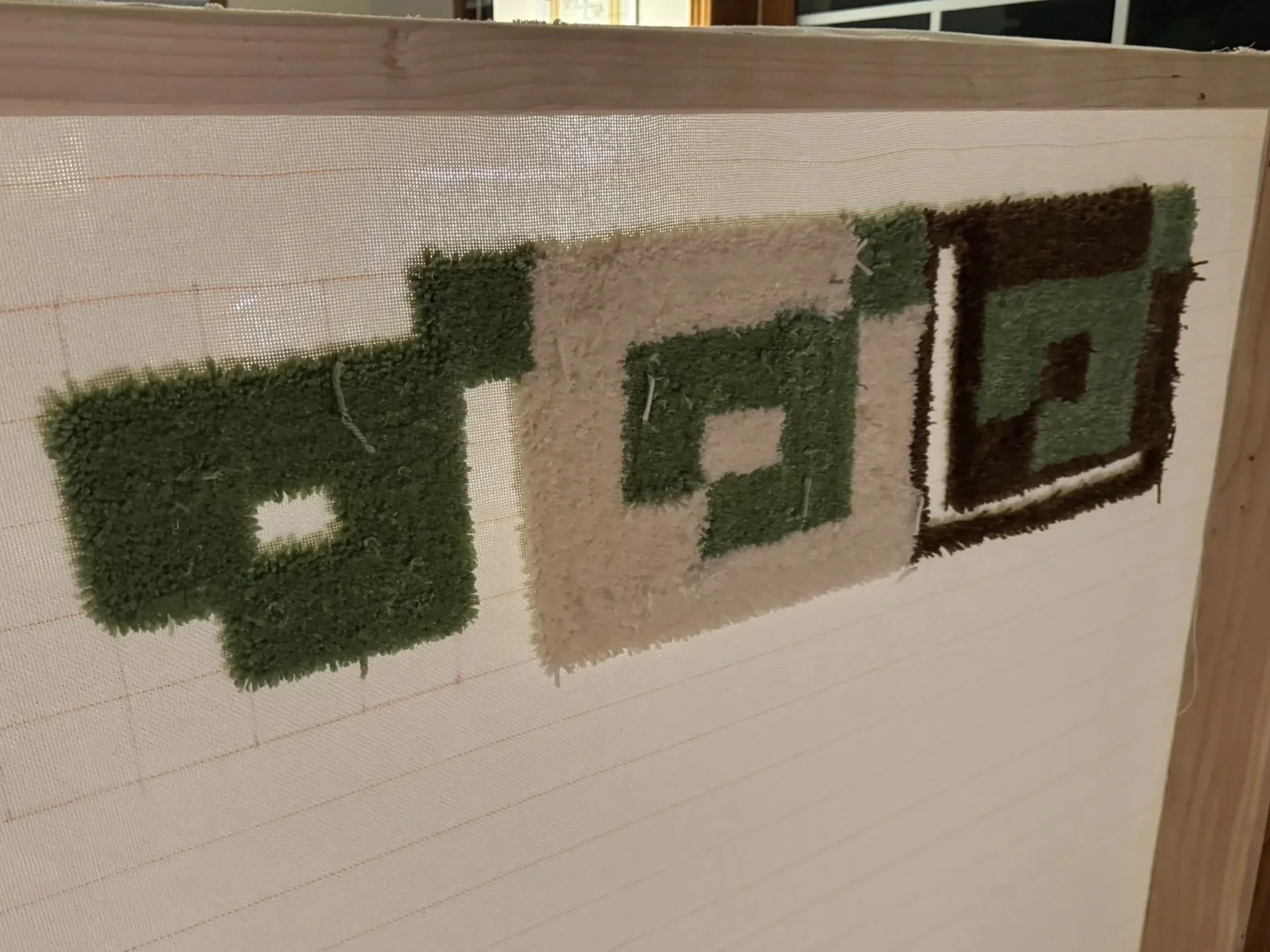
Thursday, September 12 -
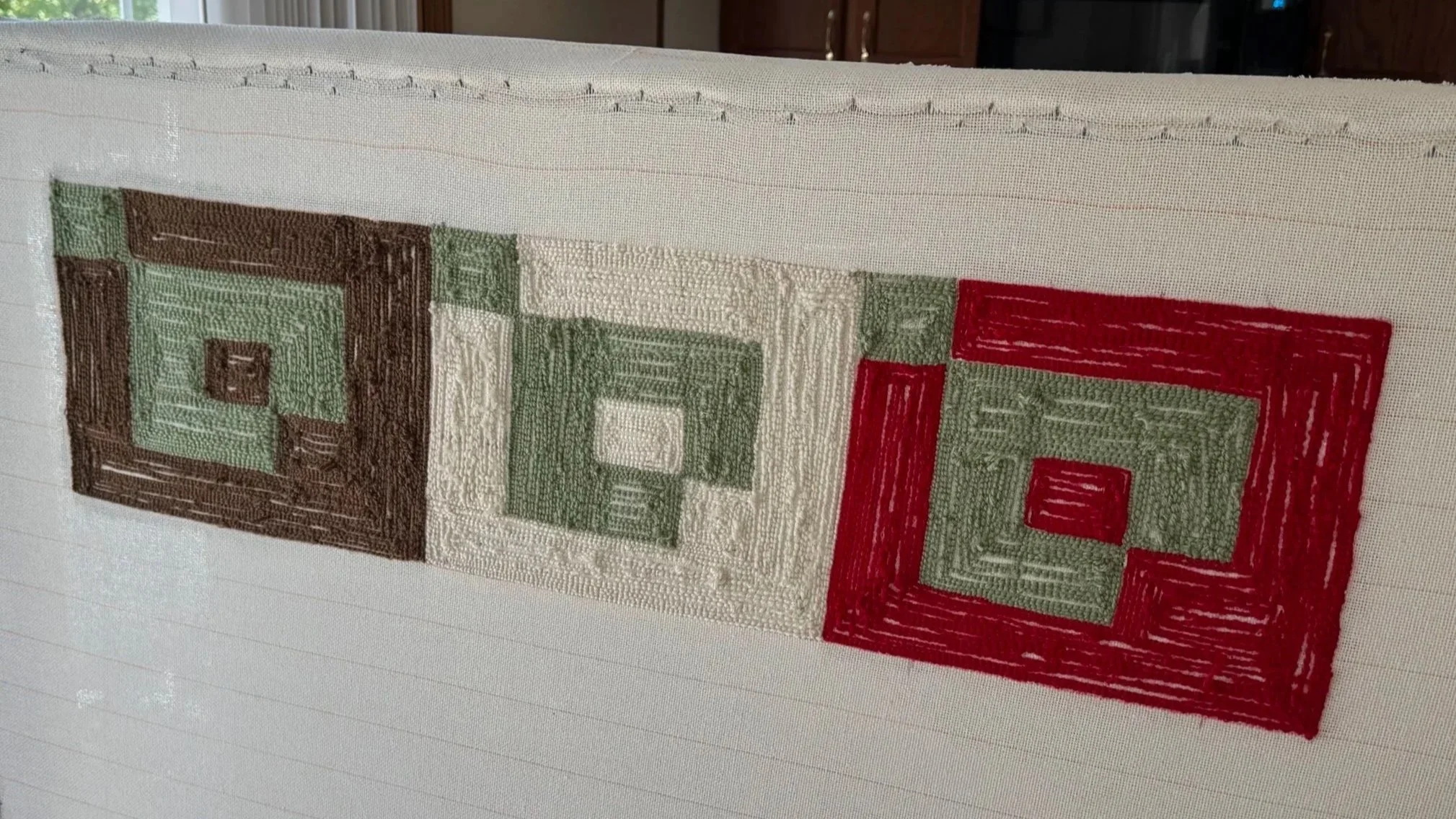
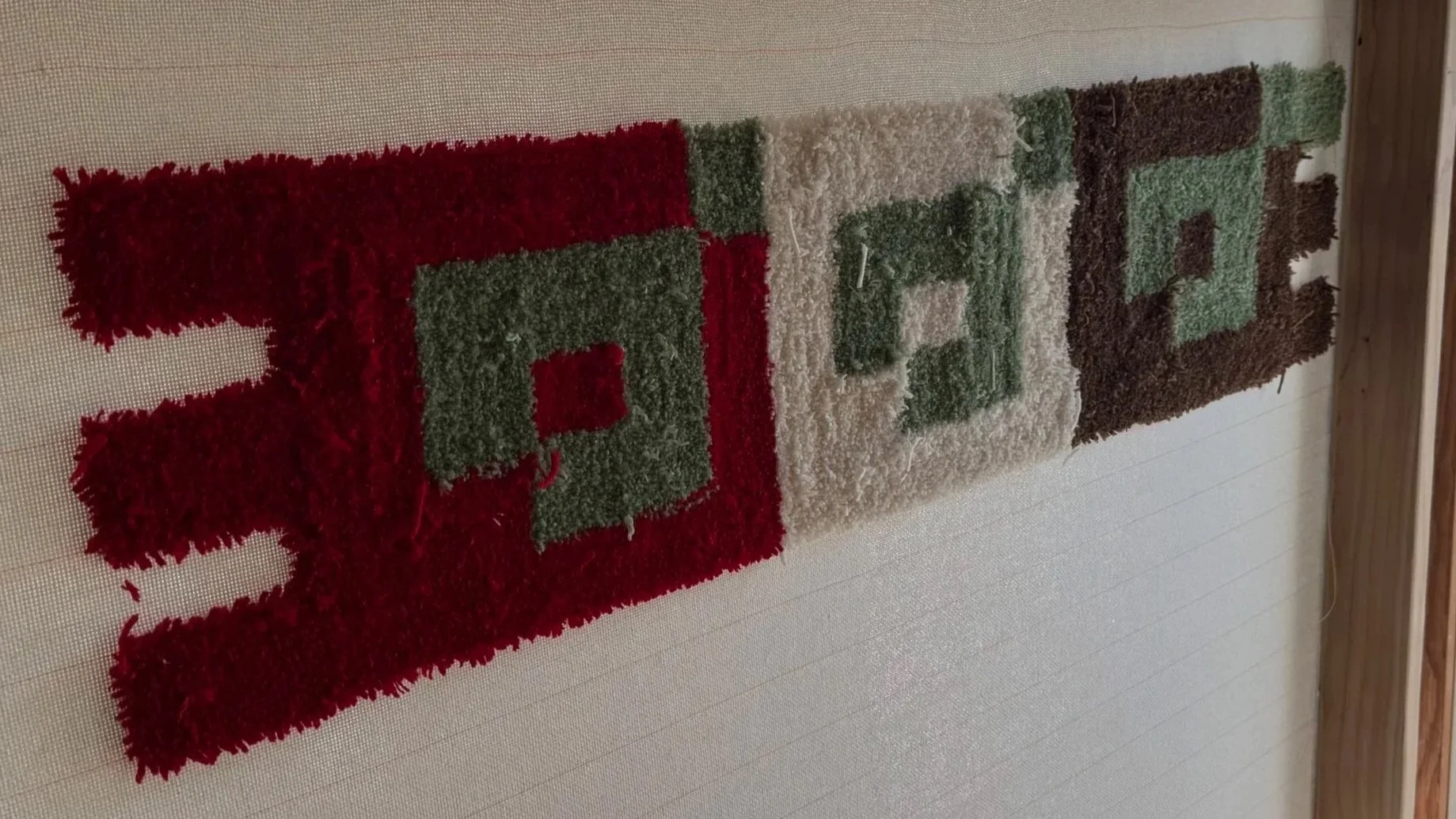
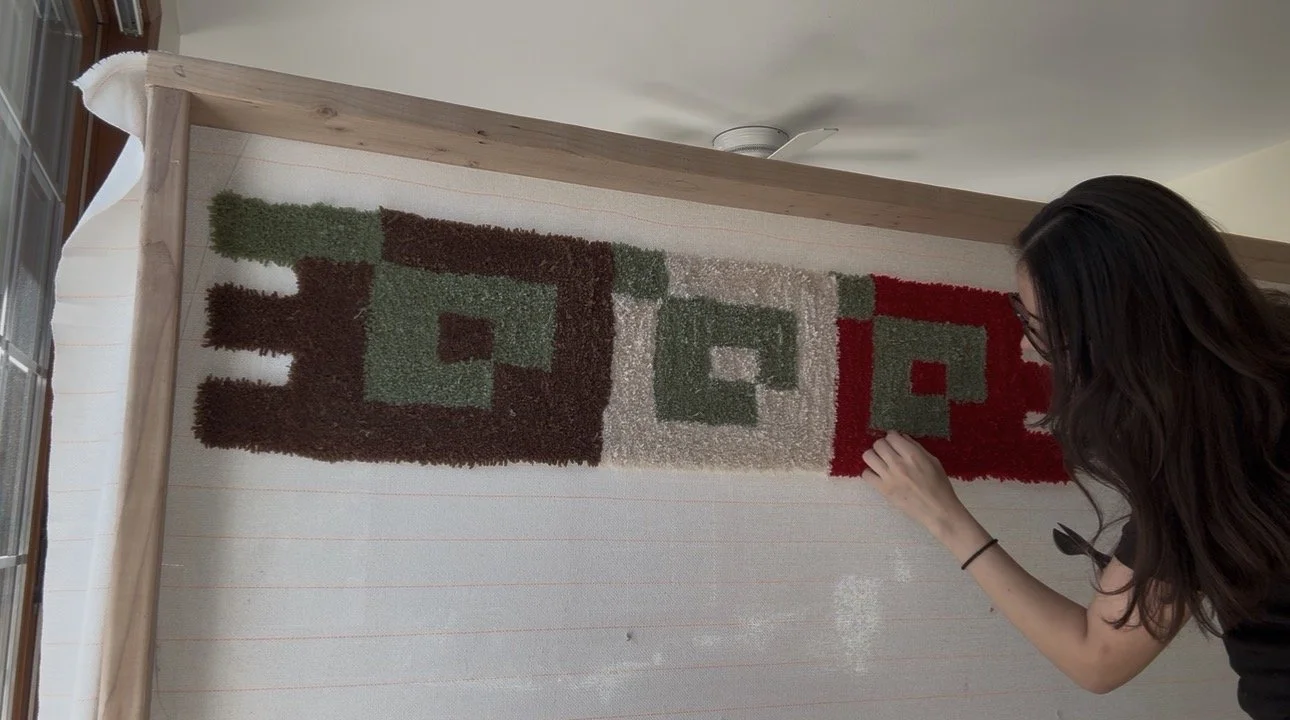
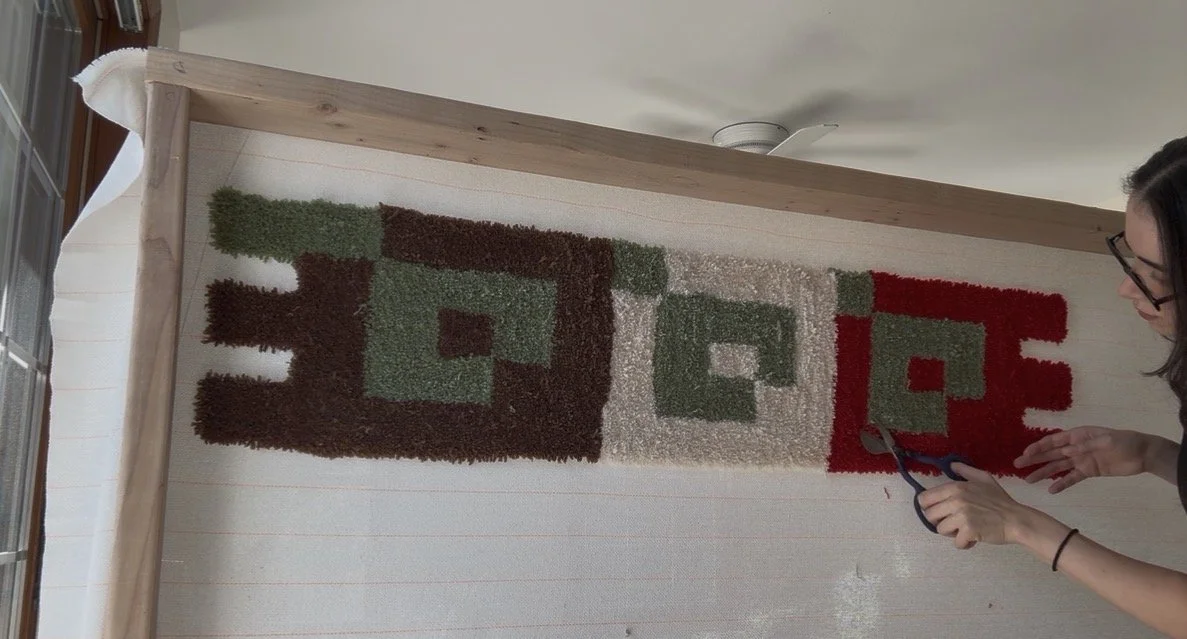
The idea of using materials to test projection mapping and colors, then tossing them away or turning them into something else, doesn't sit right with me, so I decided to create this small, mini tufted piece that could go on a wall or in a tight hallway.
Here, I tested all of the lightest colors from the stockpile/inventory of materials I had left over from the last rug. The beige in the picture is much darker than I remembered, but I decided to keep it in the test anyway, since it is the only color I have from the previous rug [Rug 01].
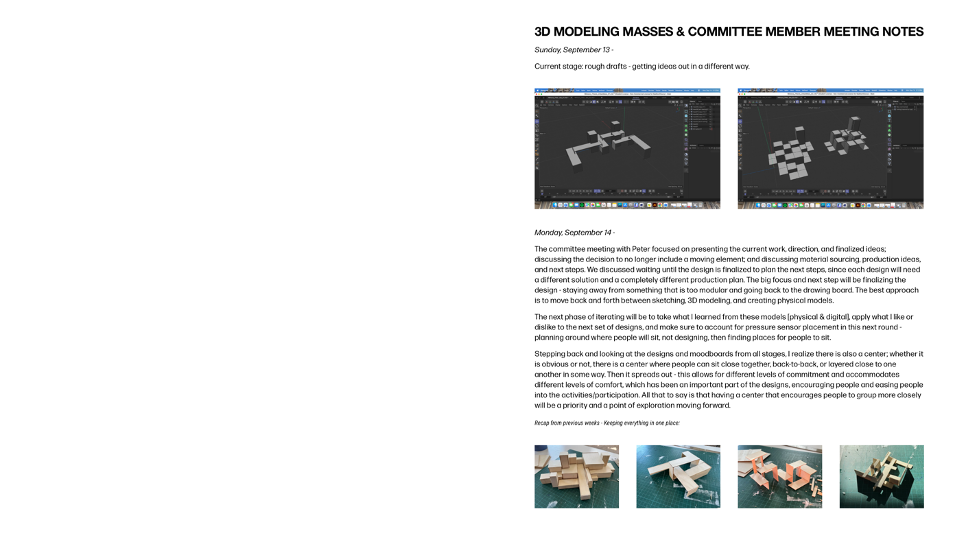
3D Modeling Masses & Committee MEMBER Meeting Notes
Sunday, September 13 -
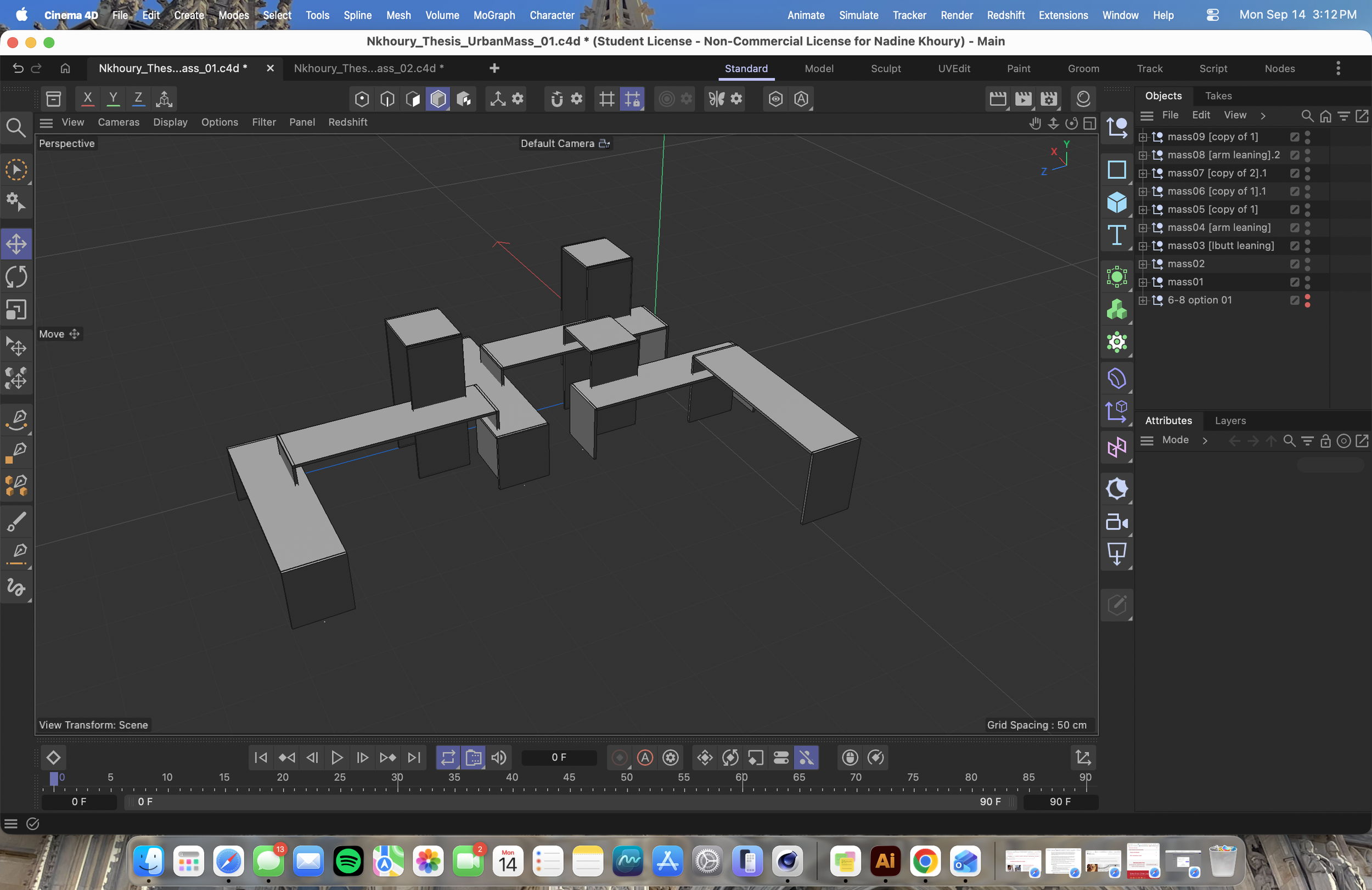
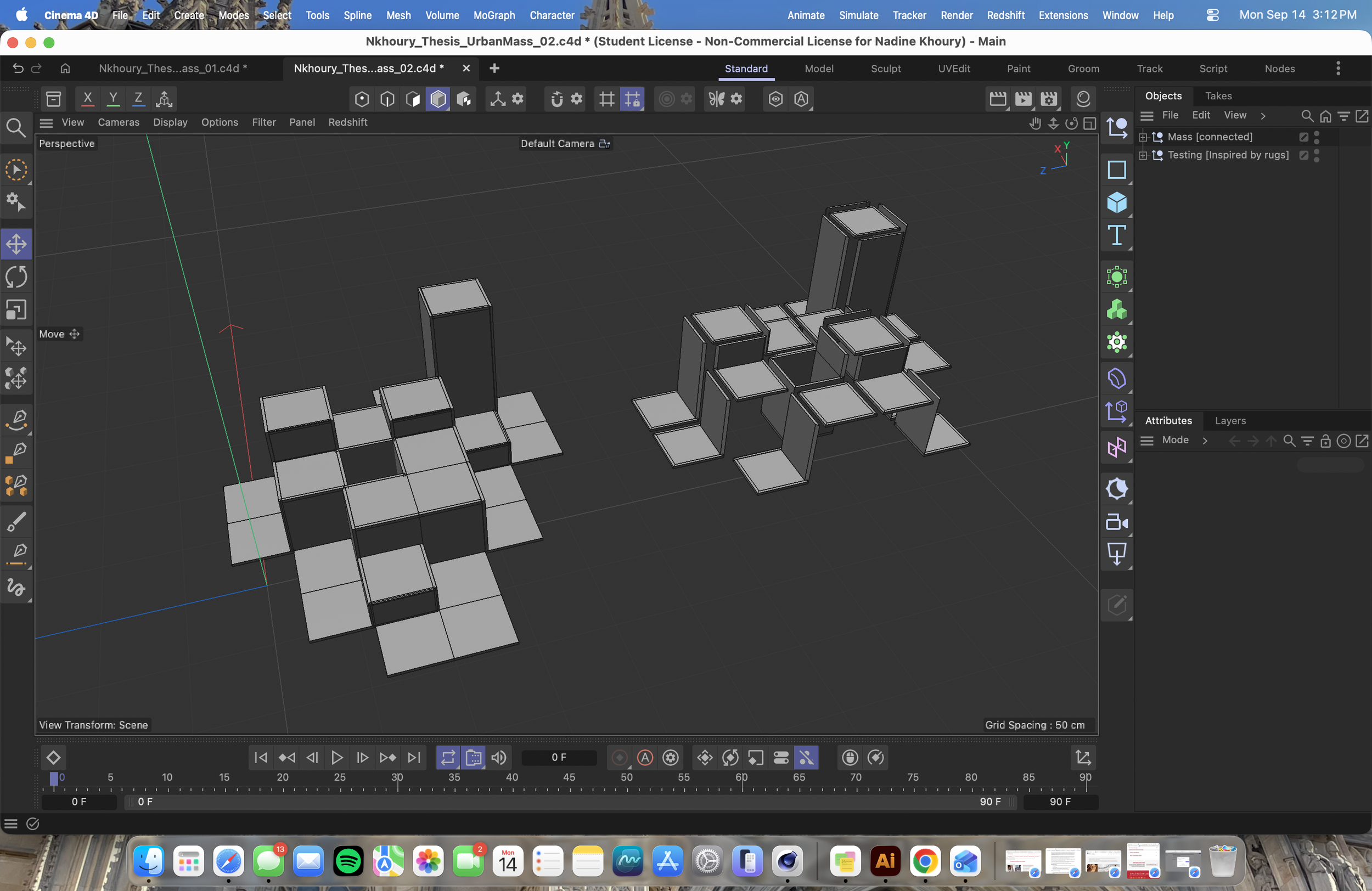
Current stage: rough drafts - getting ideas out in a different way.
Monday, September 14 -
The committee meeting with Peter focused on presenting the current work, direction, and finalized ideas; discussing the decision to no longer include a moving element; and discussing material sourcing, production ideas, and next steps. We discussed waiting until the design is finalized to plan the next steps, since each design will need a different solution and a completely different production plan. The big focus and next step will be finalizing the design — staying away from something that is too modular and going back to the drawing board. The best approach is to move back and forth between sketching, 3D modeling, and creating physical models.
The next phase of iterating will be to take what I learned from these models [physical & digital], apply what I like or dislike to the next set of designs, and make sure to account for pressure sensor placement in this next round - planning around where people will sit, not designing and then finding places for people to sit.
Stepping back and looking at the designs and moodboards from all stages, I realize there is also a center; whether it is obvious or not, there is a center where people can sit close together, back-to-back, or layered close to one another in some way. Then it spreads out — this allows for different levels of commitment and accommodates different levels of comfort, which has been an important part of the designs, encouraging people and easing people into the activities/participation. All that to say: having a center that encourages people to group more closely will be a priority and a point of exploration moving forward.
Recap from previous weeks - Keeping everything in one place: 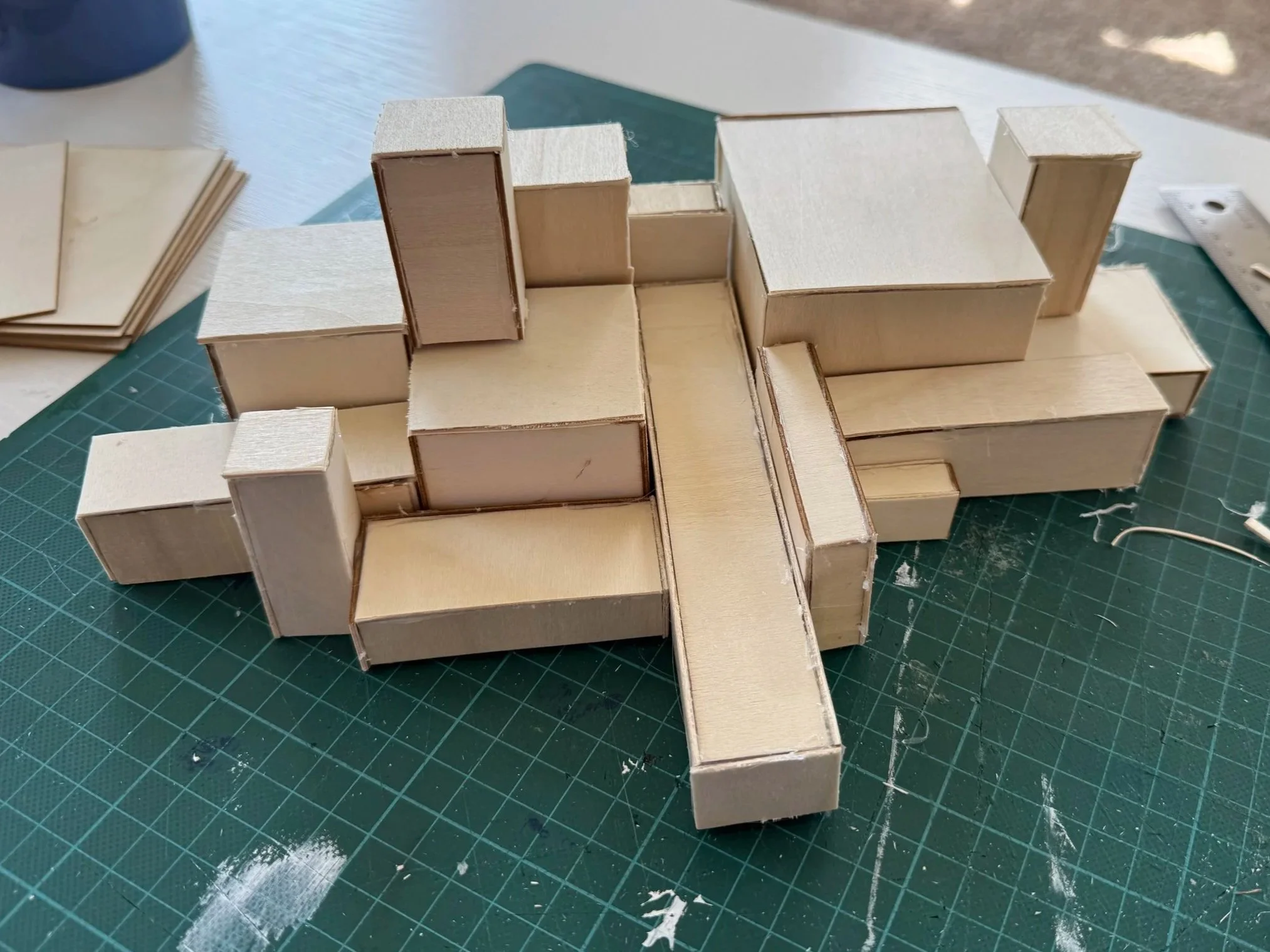
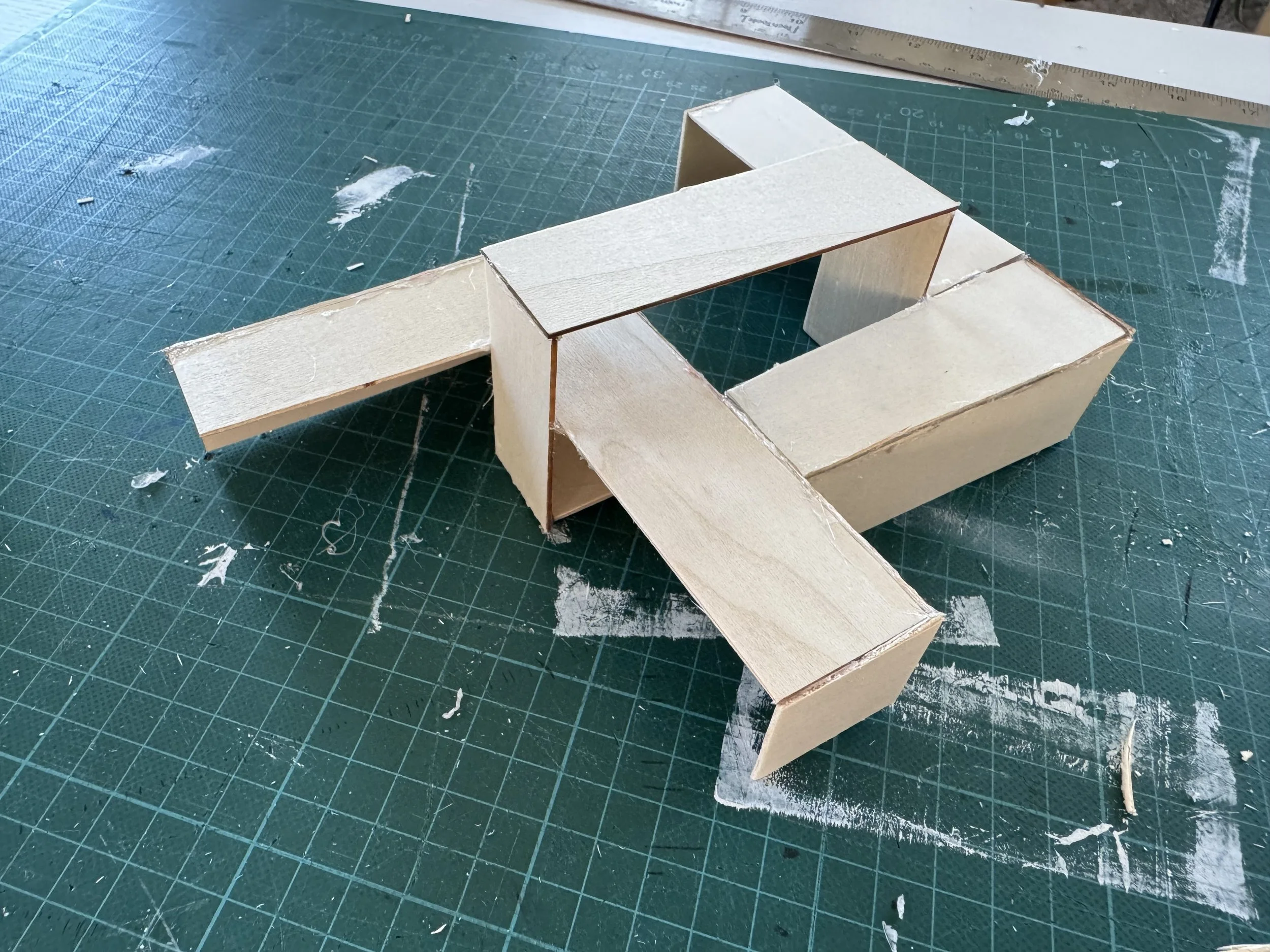
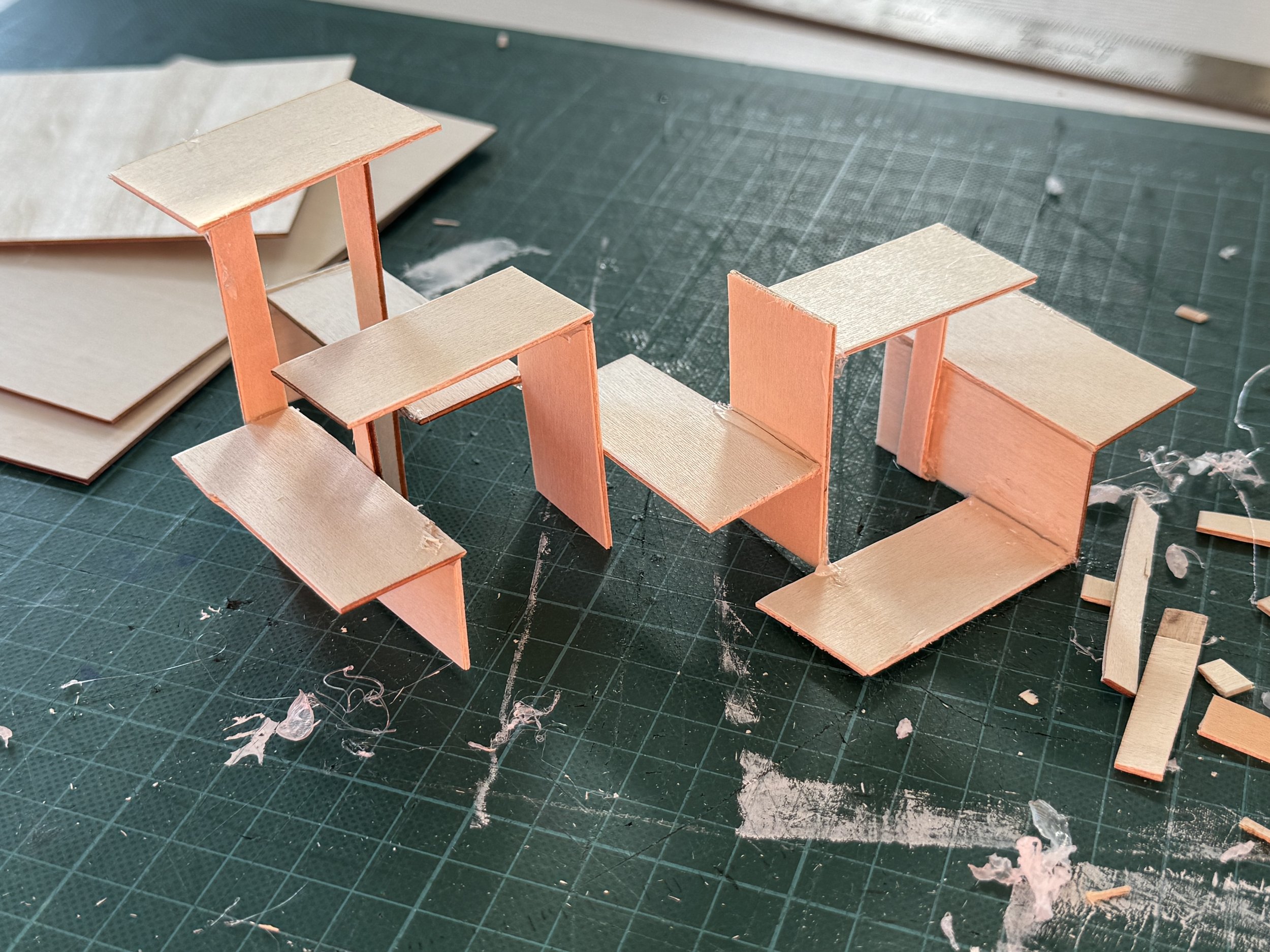
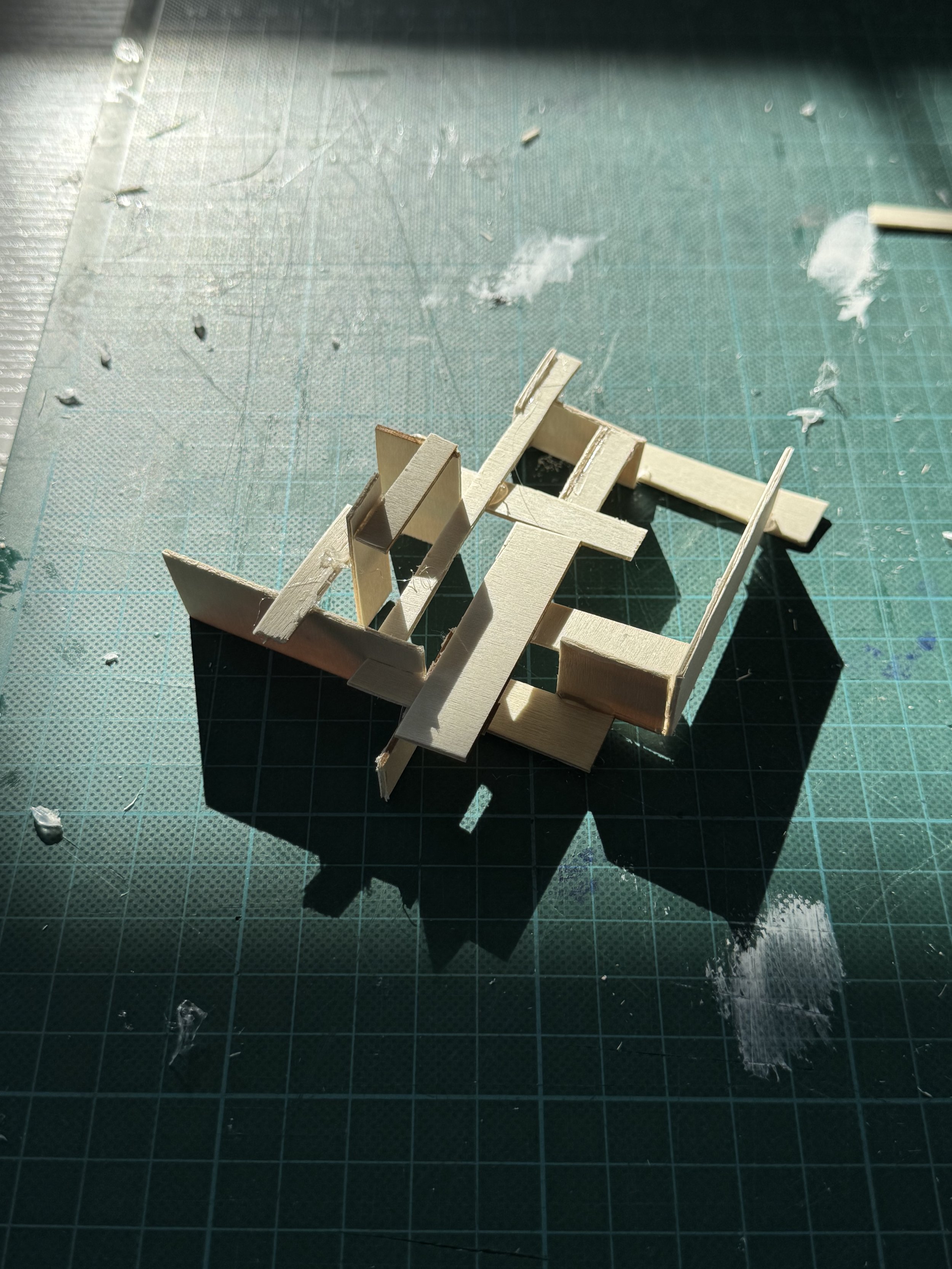
During the meeting, the discussion about a classmate assuming the seats on this furniture piece would be tufted led to the conclusion that the rugs have, in a way, become a guide for people within the exhibition — an indicator of where the interactive elements are within the space.
This got me thinking that tufting smaller, seat-sized pieces that could be placed over the sensors is a viable solution, and I no longer believe it would be "too many tufted items." I realize that would leave out the three other projects, but then I went back to the idea that the miniature test rug could be used as an indicator on the ground to guide people on where to stand. The bottom will be lined with non-slip material, as it is built into the backing fabric I have purchased for the project!
This would also mean that I could use the test piece I made for the exhibition, & I would be able to fill the rest of the fabric currently stretched around my frame — since, as soon as I cut out the small test rug, I will not be able to properly re-stretch the tufting fabric onto the frame unless I build a smaller frame, which I was trying to avoid! [I also really hate wasting fabric.]
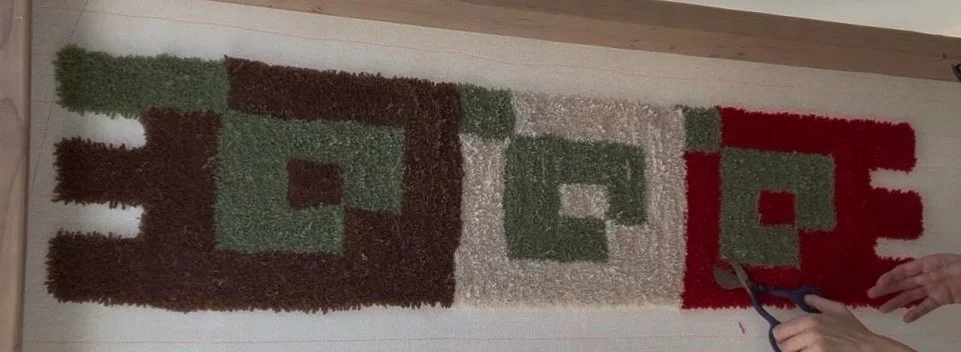
The mini/test rug in question
PROJECTS SHARED BY PROFESSORS, FRIENDS, OR PEERS
Monday, September 14 -
Thank you, Dan!
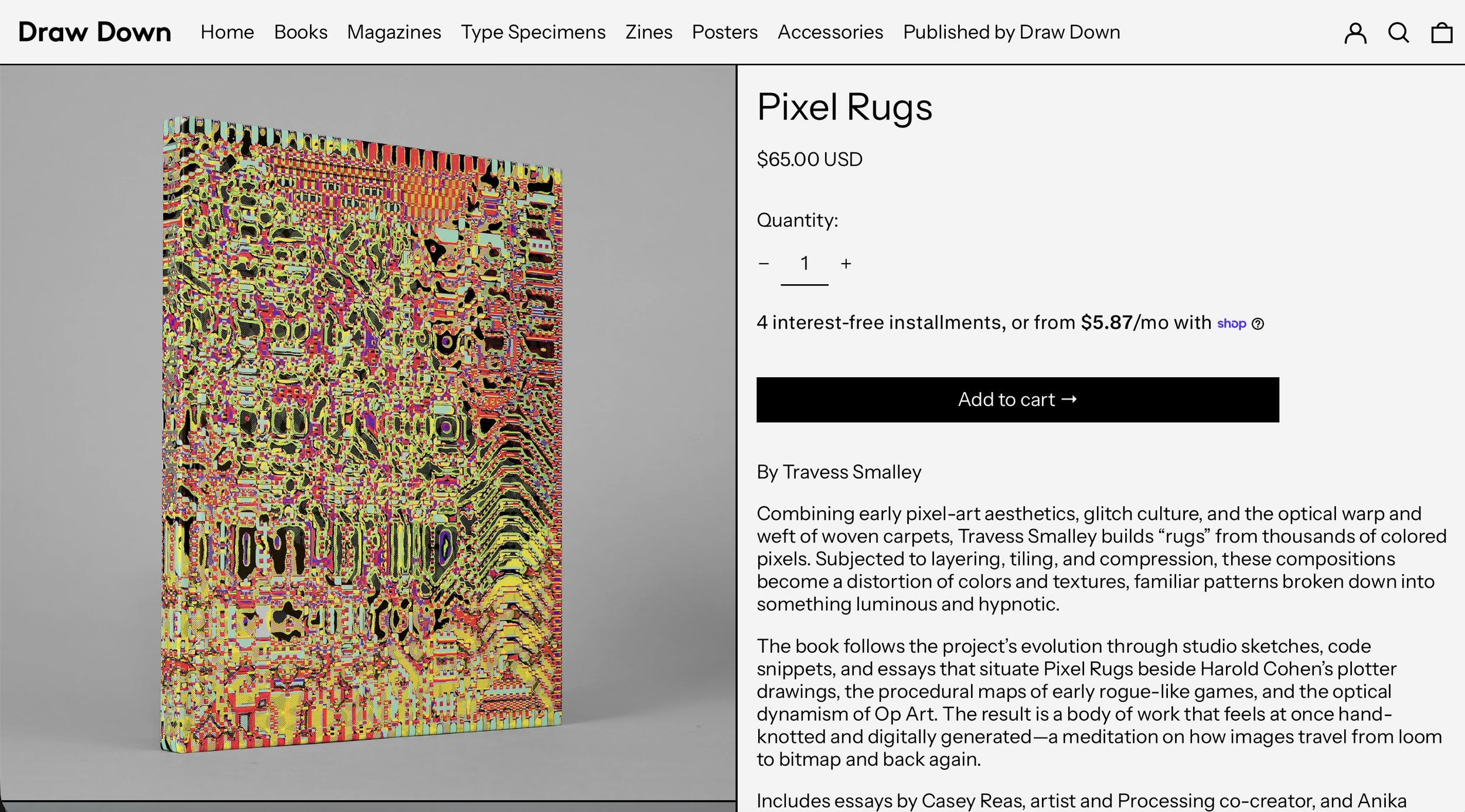
Pixel Rugs - Draw Down
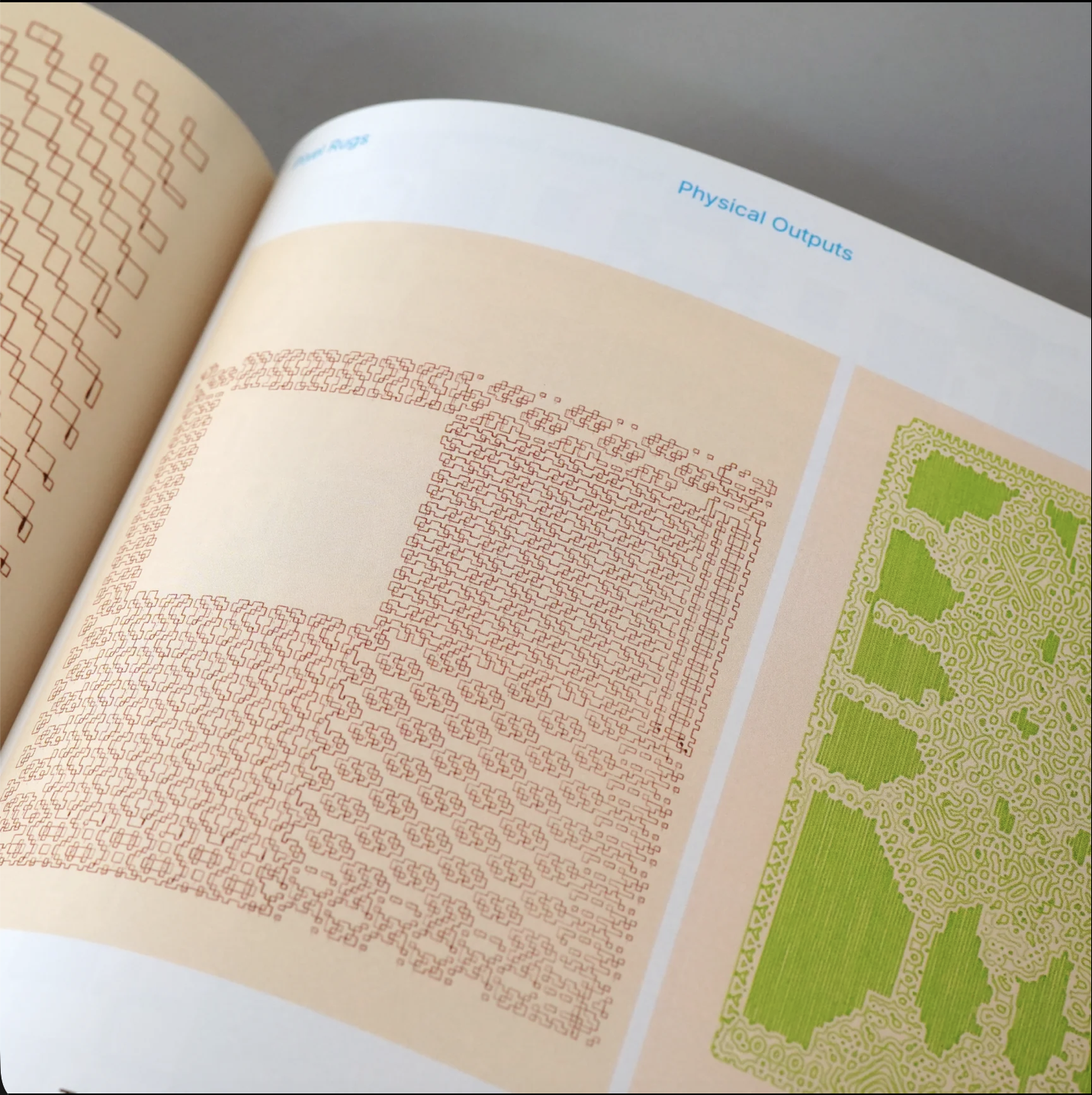
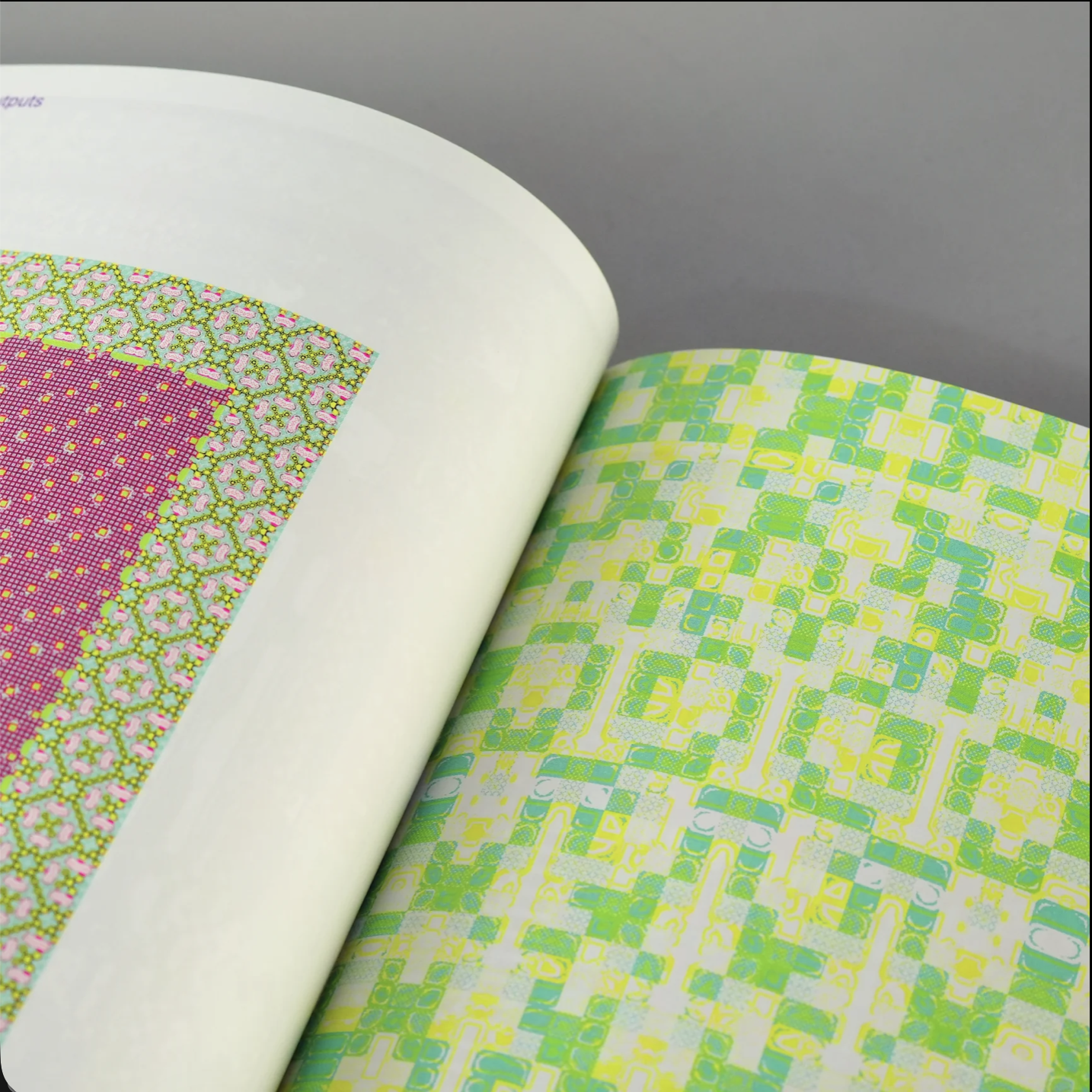
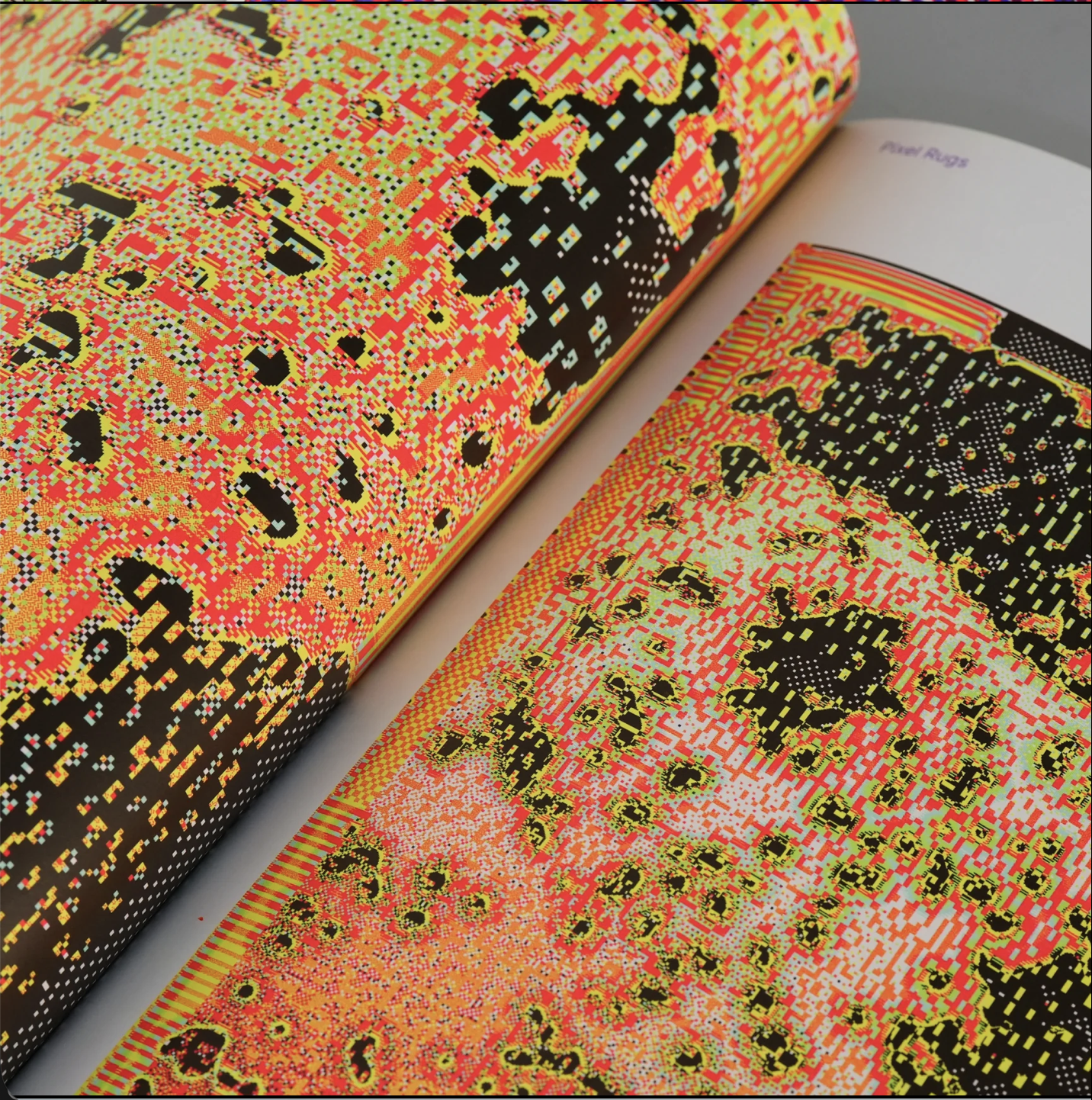
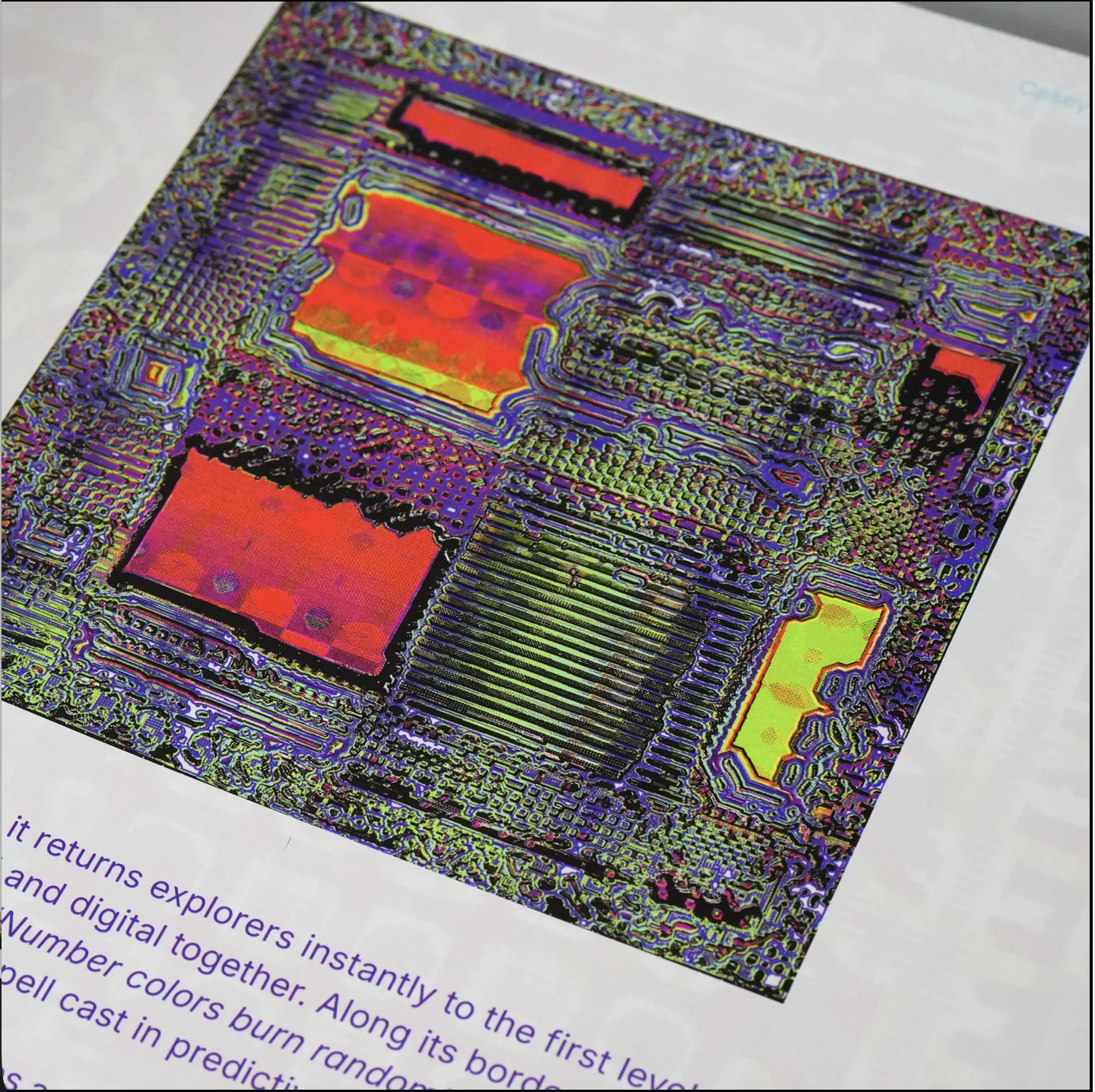
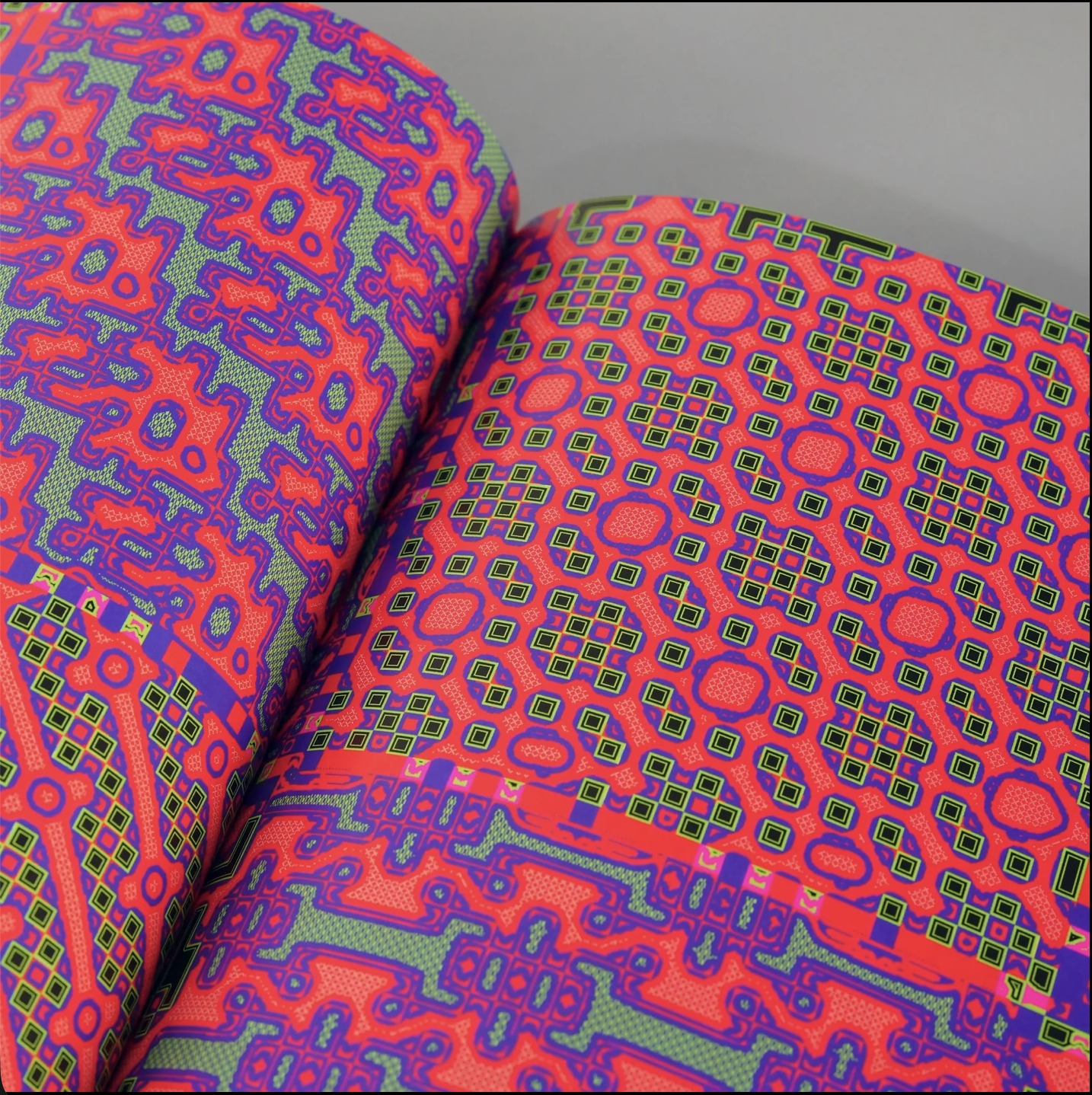
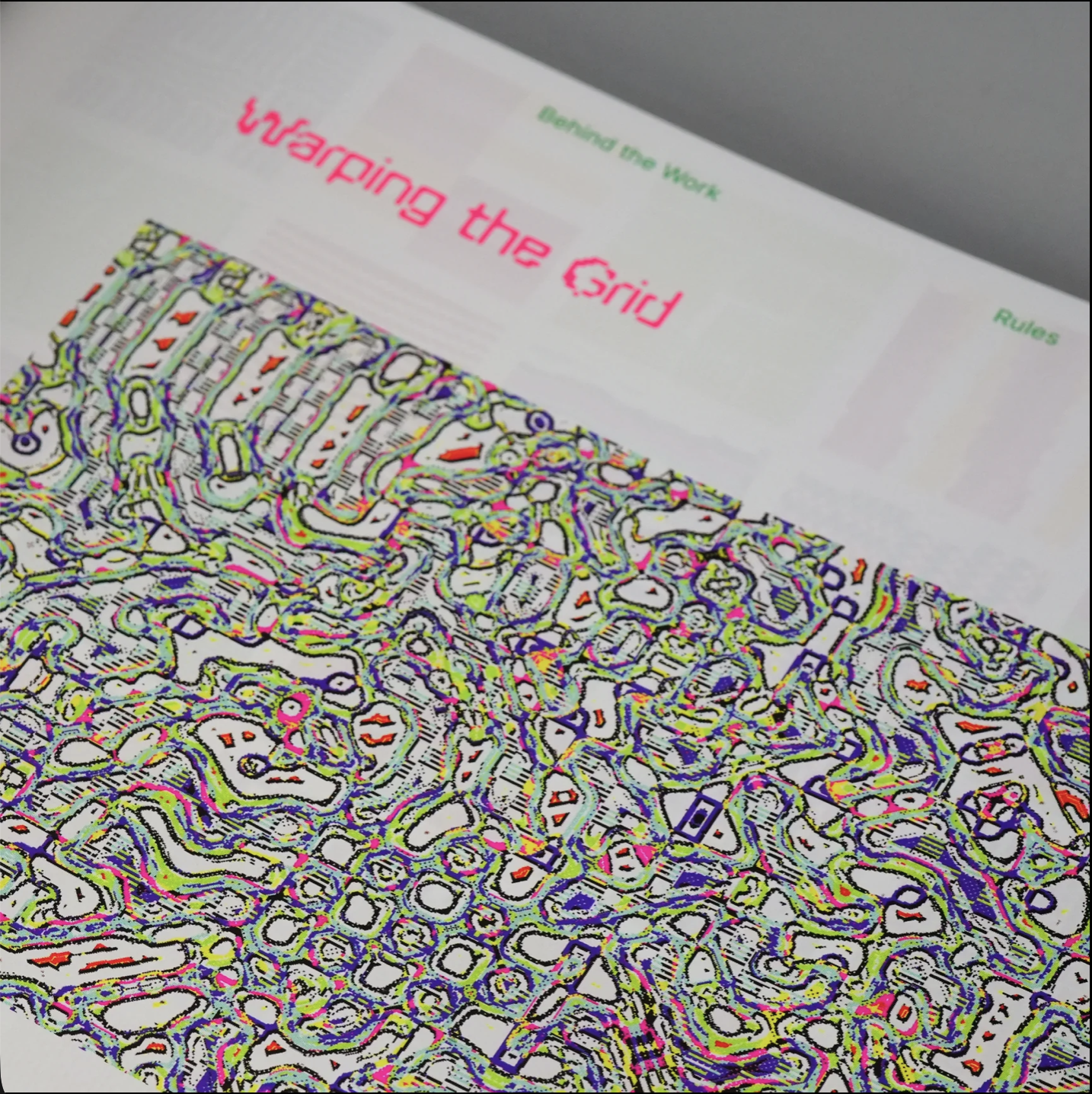
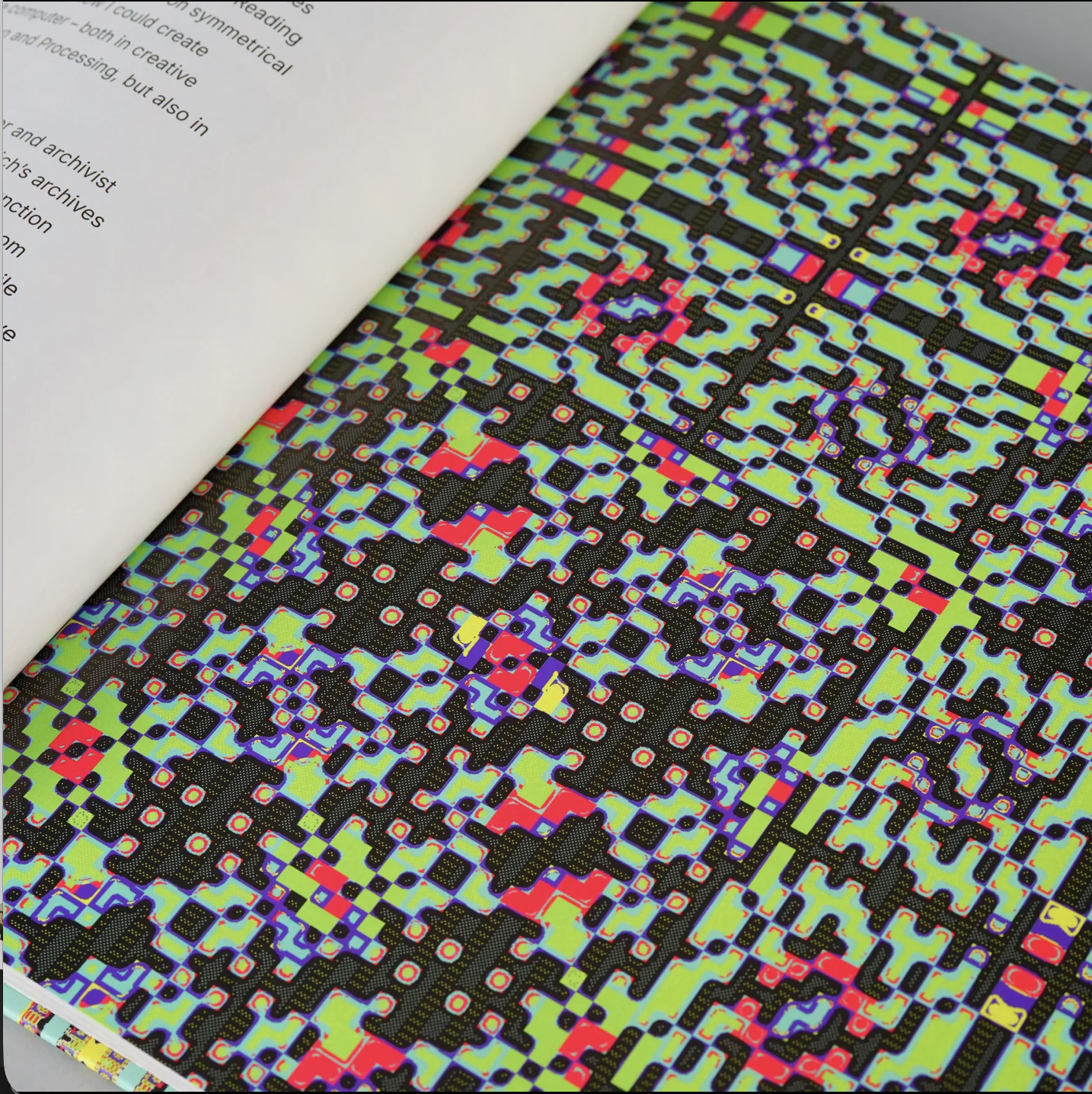
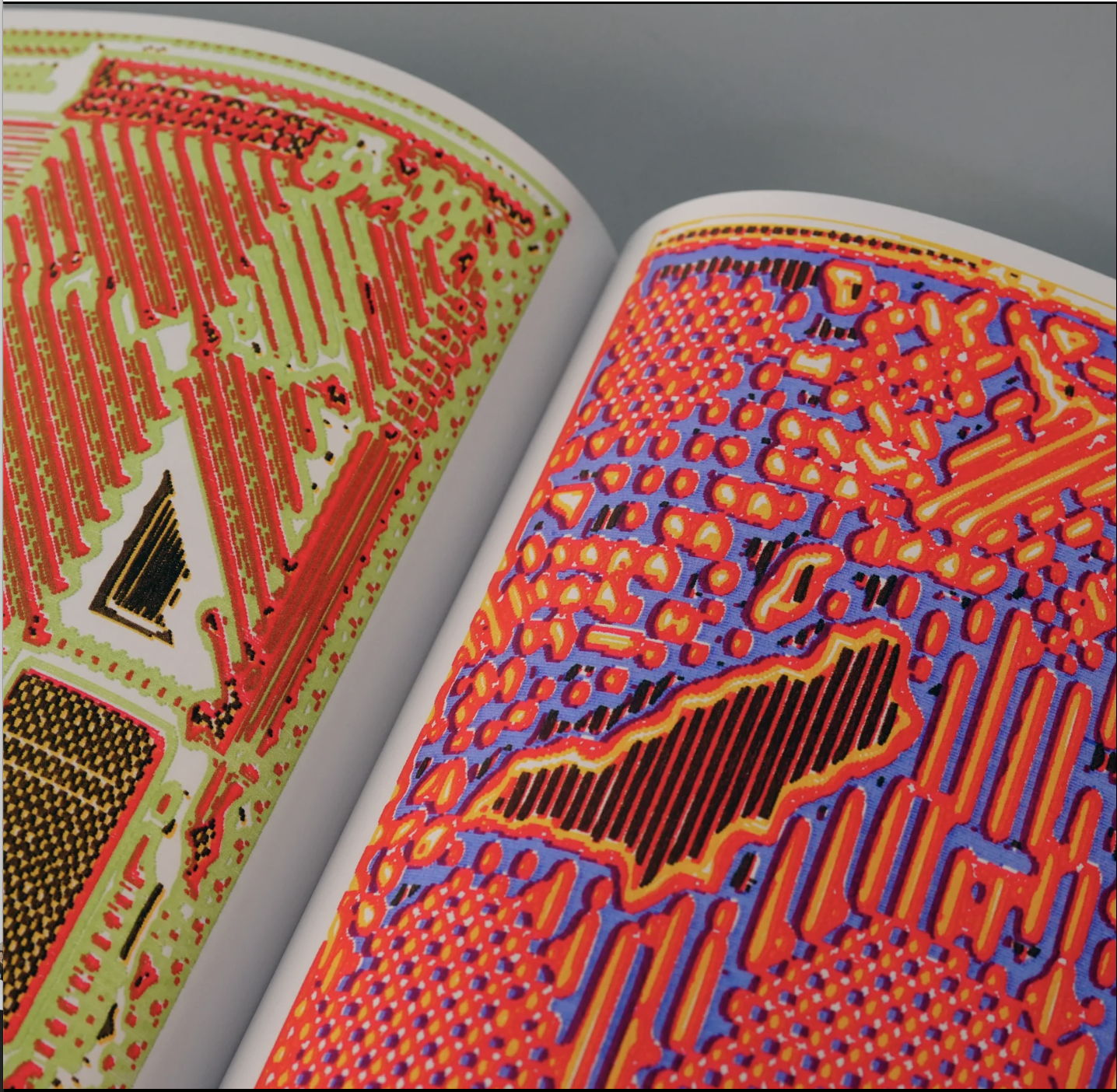
This just got me thinking about the possibilities. Sticking to the 2 ½ inch by 2 ½ inch square grid for the rugs does put more restraints on the design — moving past that could help create more texture and visual interest, breaking the uniformity of the rest of the rugs in different applications — maybe the seats follow a different set of rules but still match the geometric nature of the designs while indicating the different functionality. Interactive rugs vs. seats; indicators and guides vs. tools that facilitate interactions and reactions. There is more to explore in this space, and even though the inspiration above isn't physical rugs, it got me thinking.
MORE updates & Information!
The full Committee Member meeting has been scheduled for Friday, September 18th!
Moodboard, inspiration, a new collection of visuals
Wednesday, September 16 -
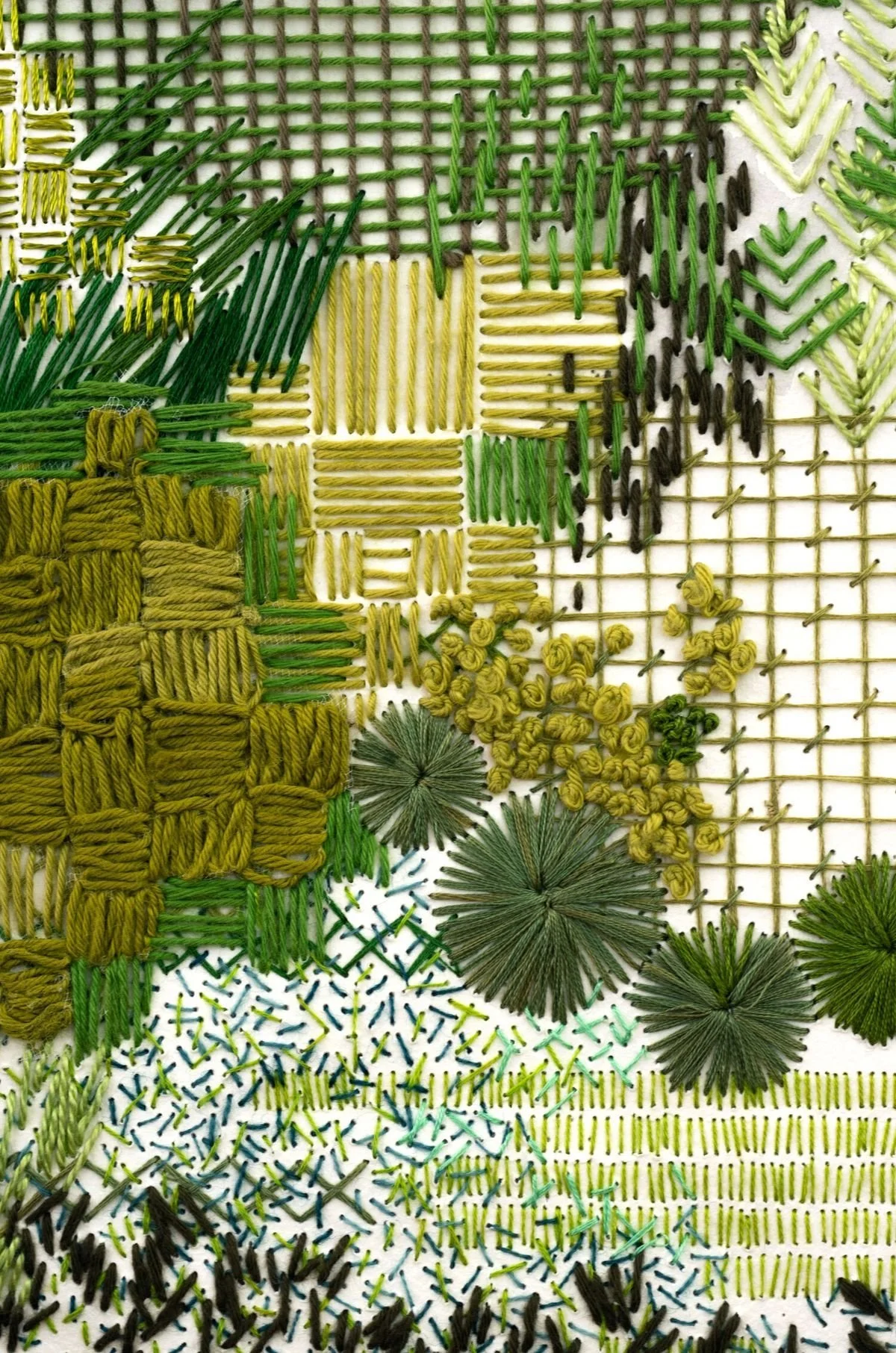
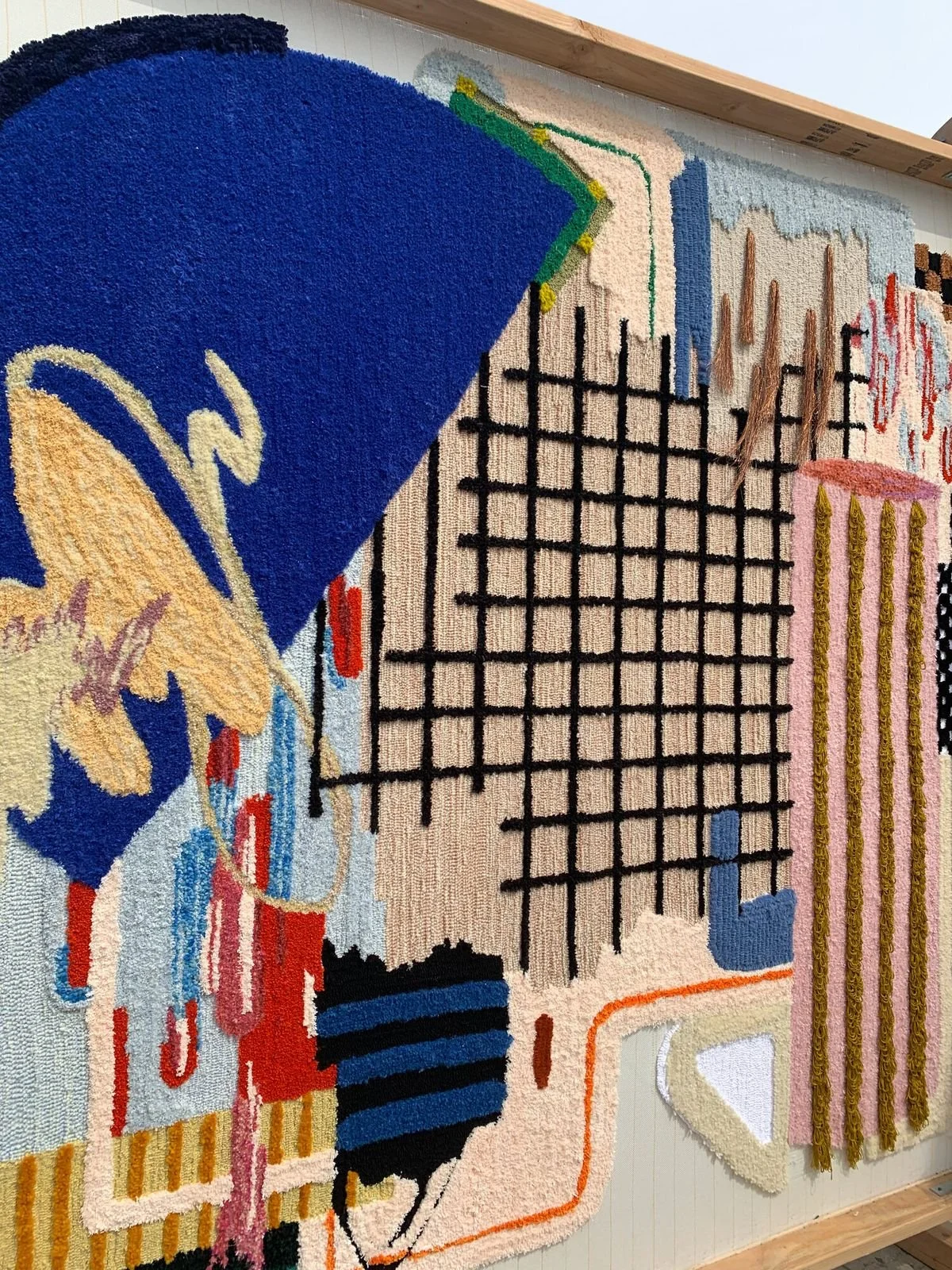
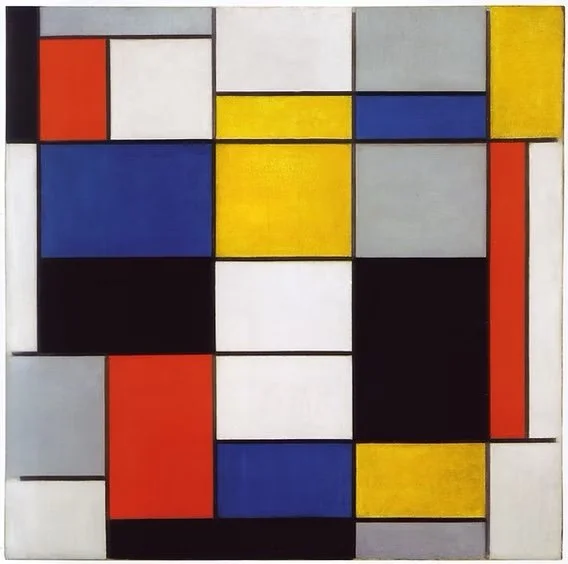
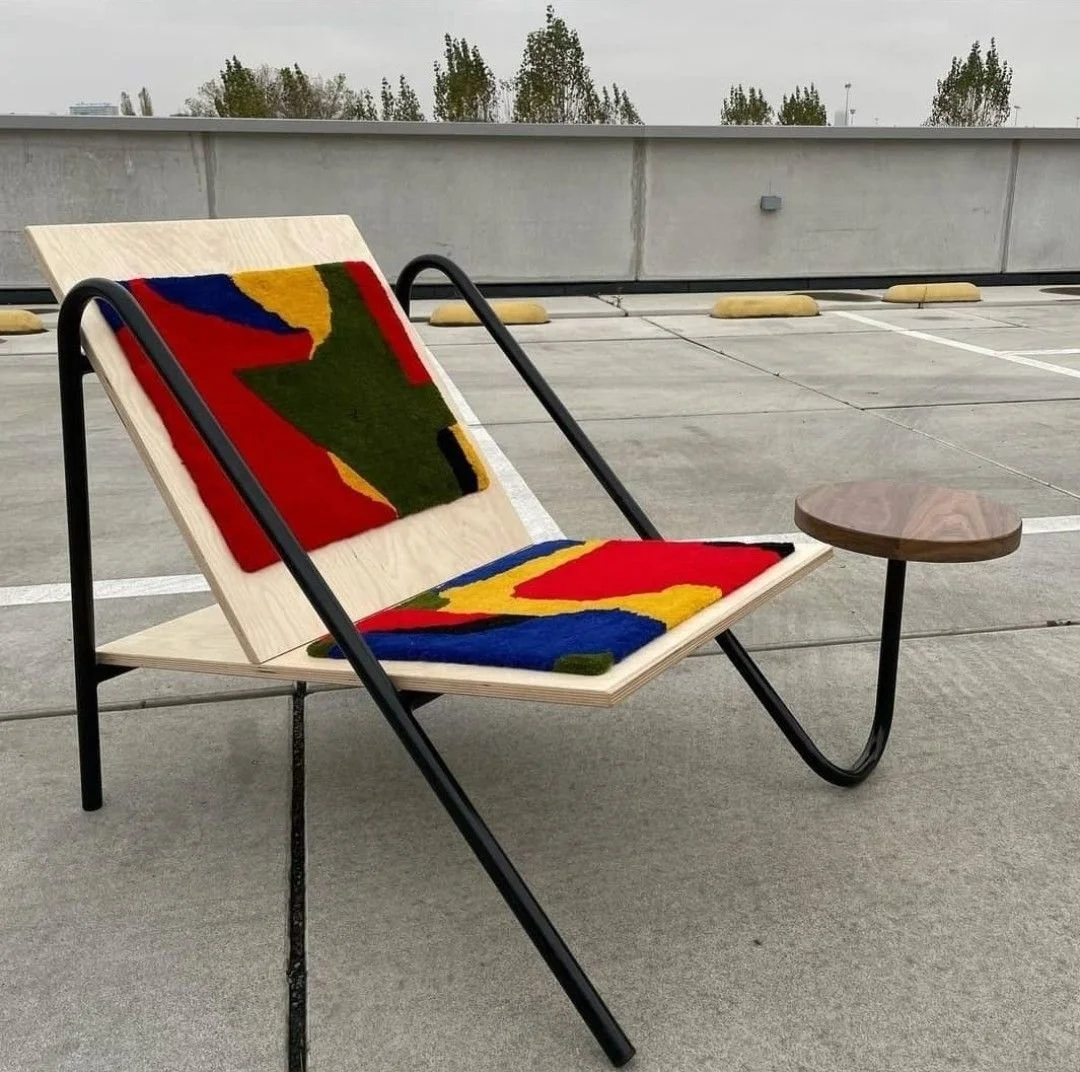
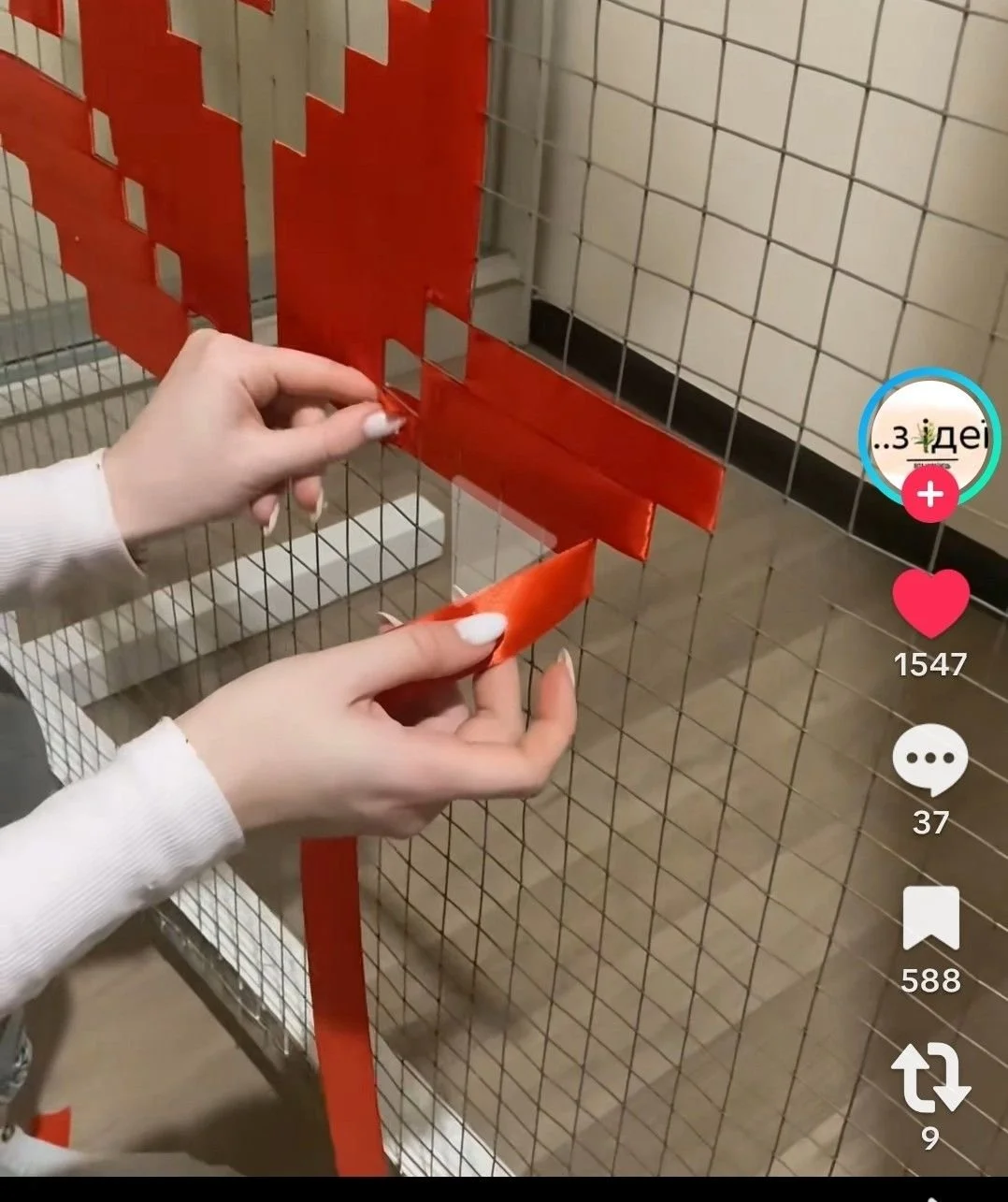
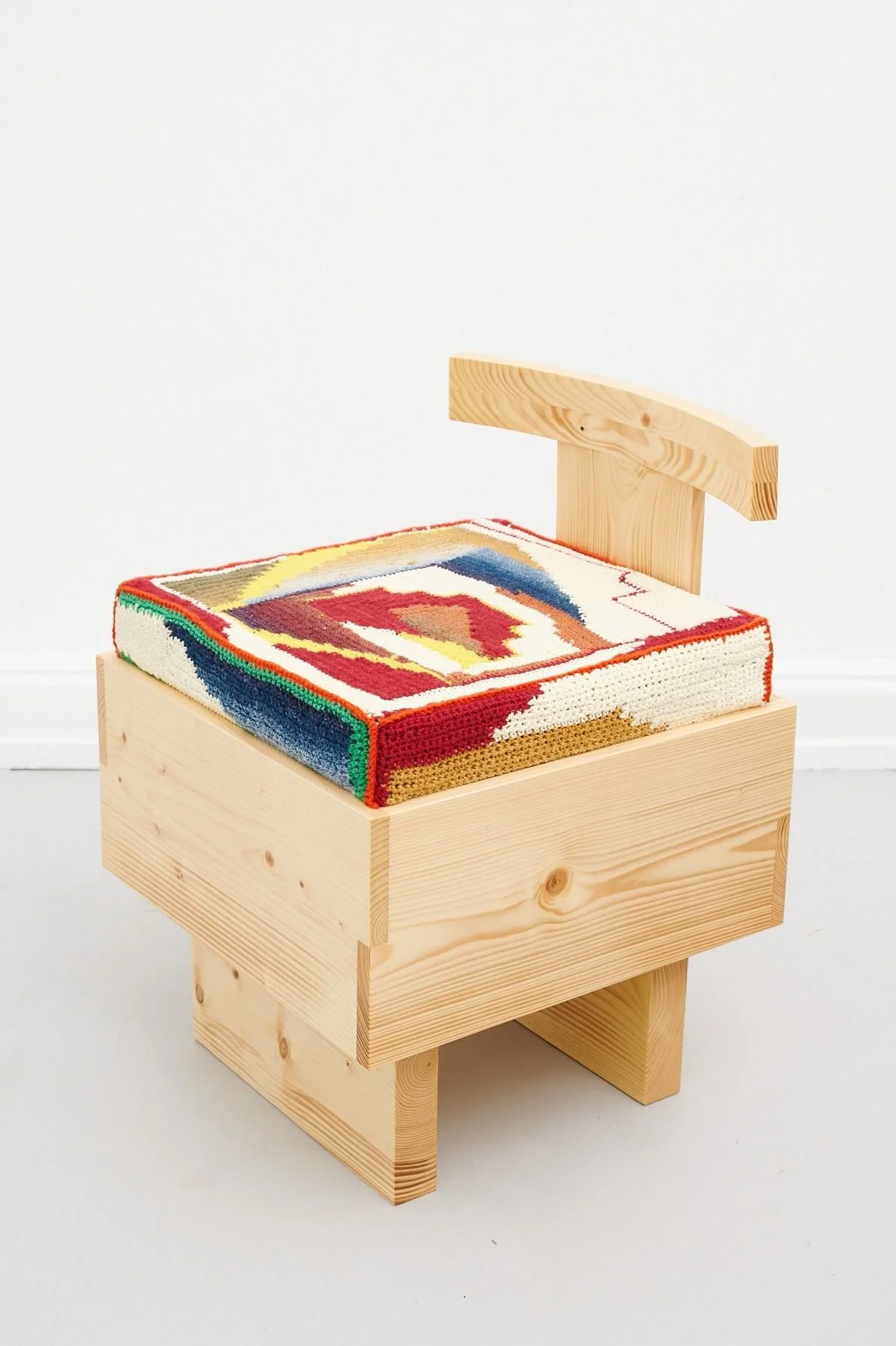
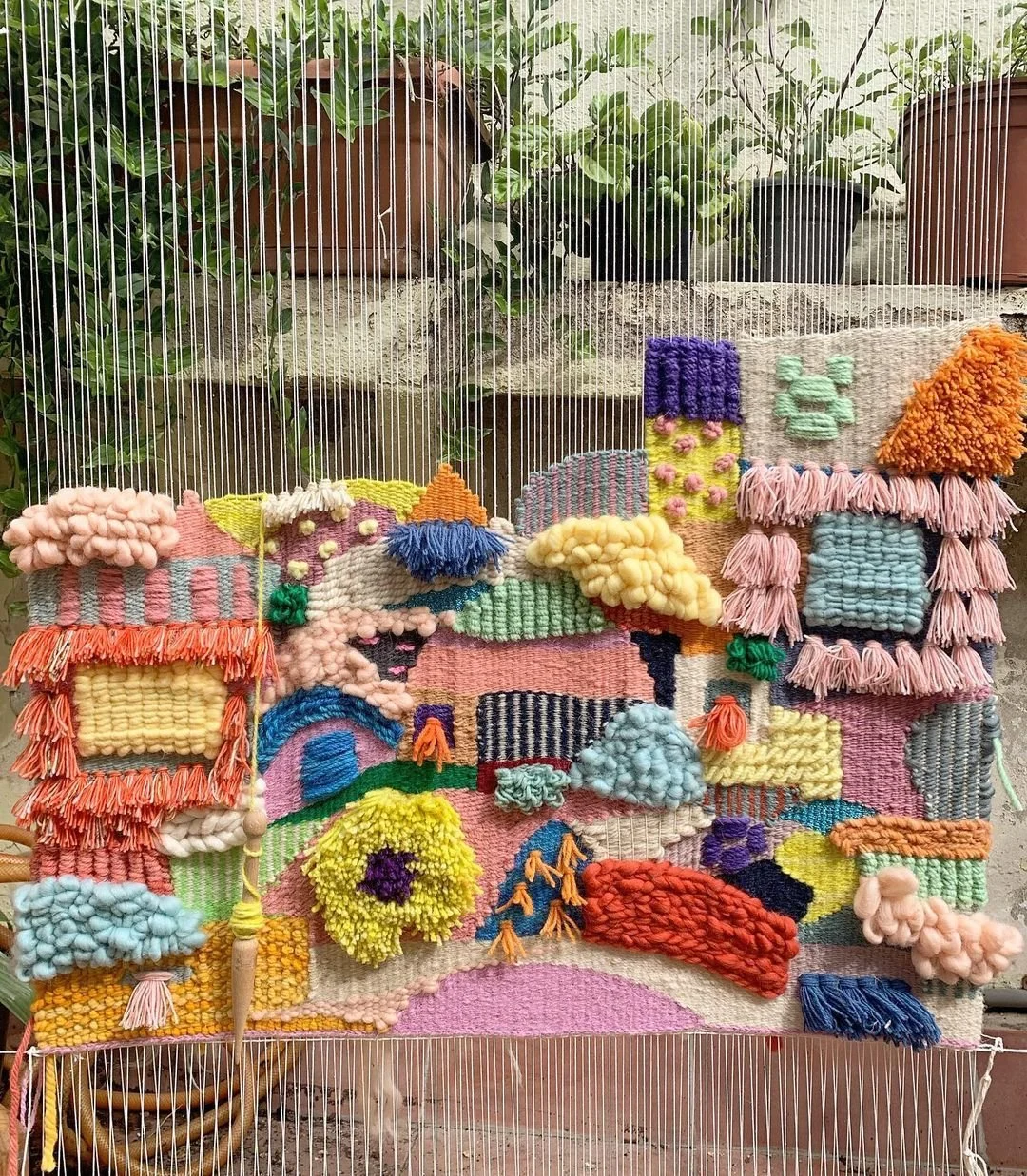
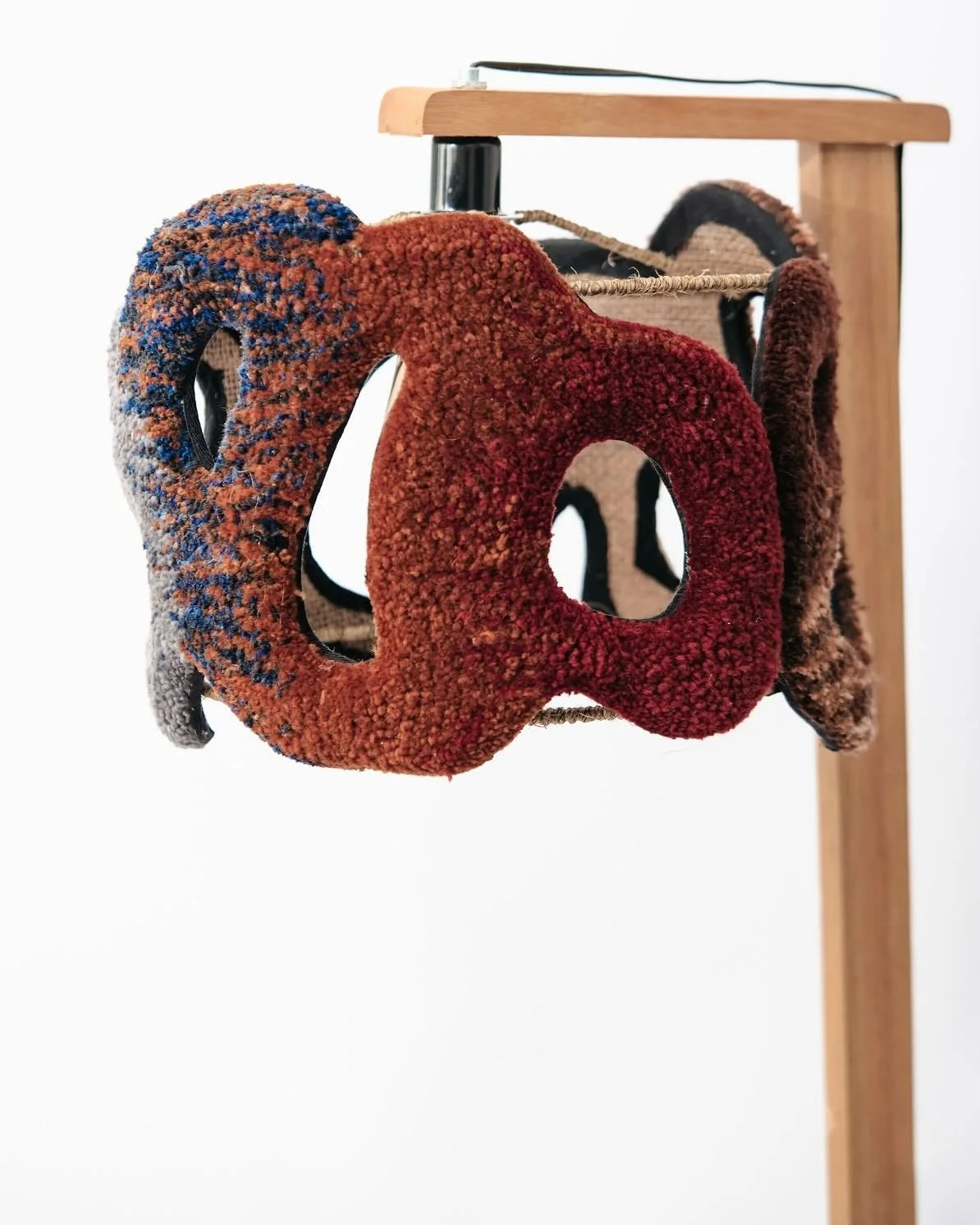
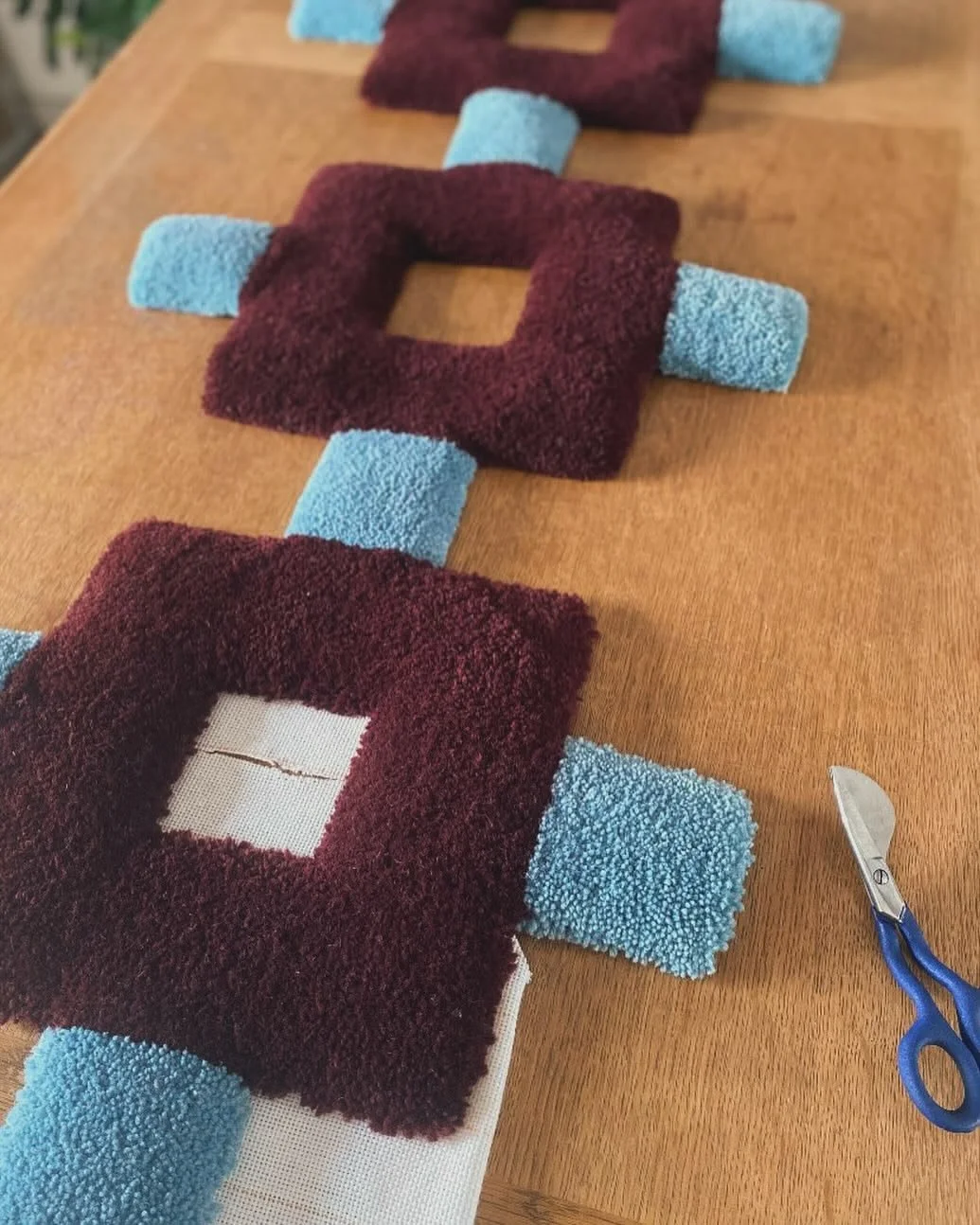
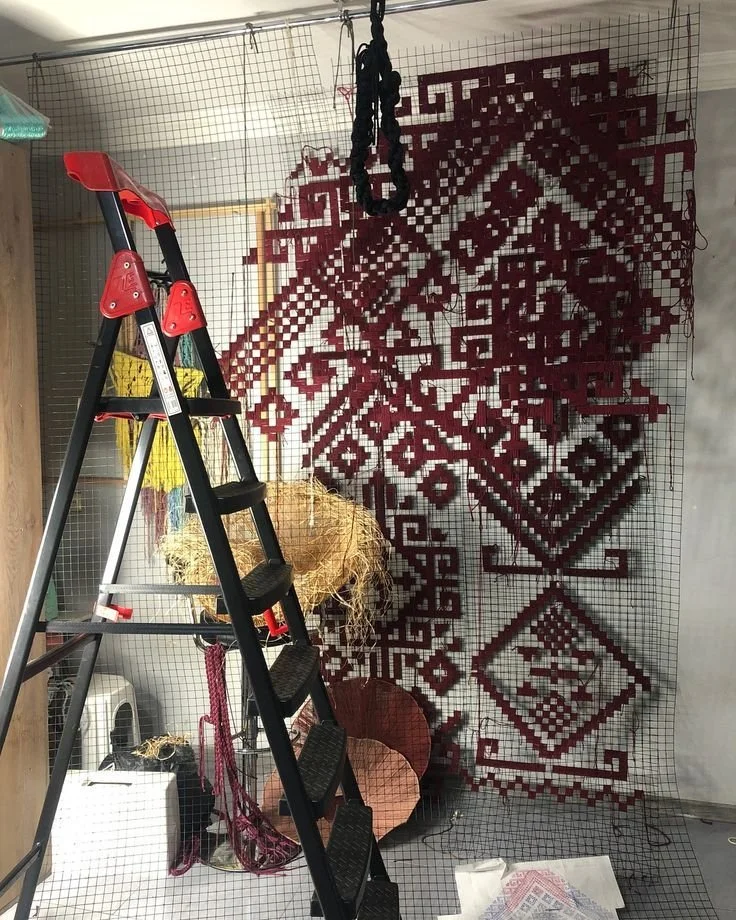
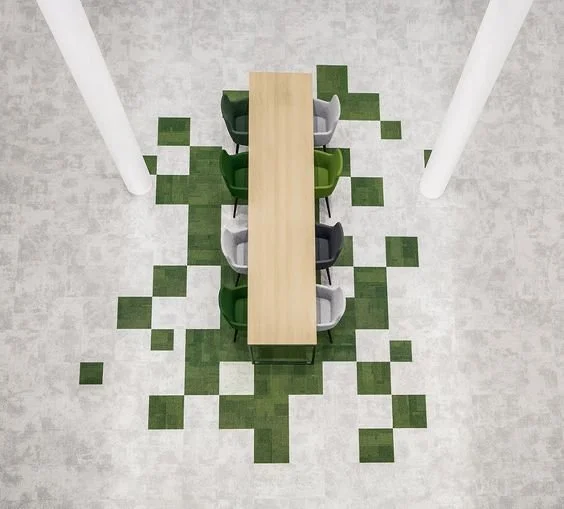
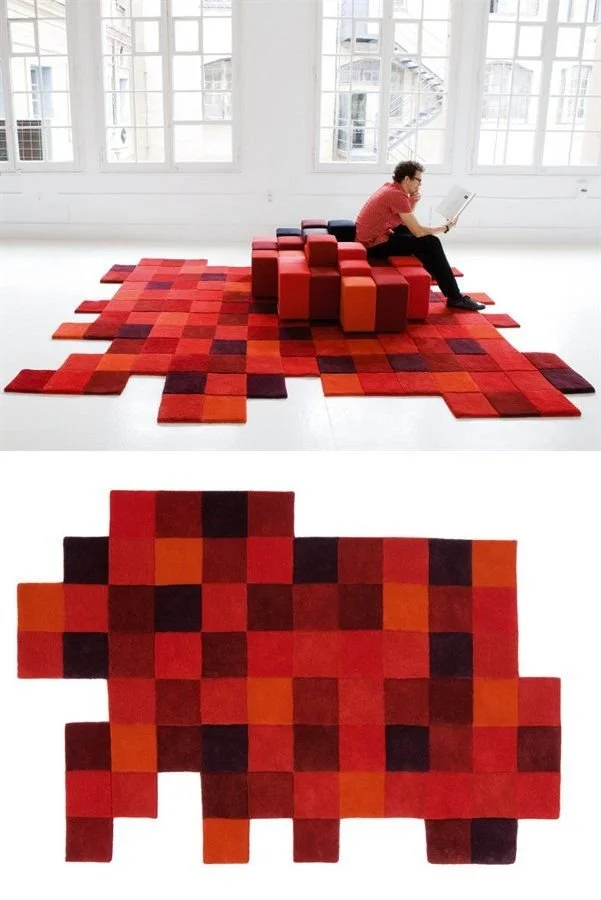
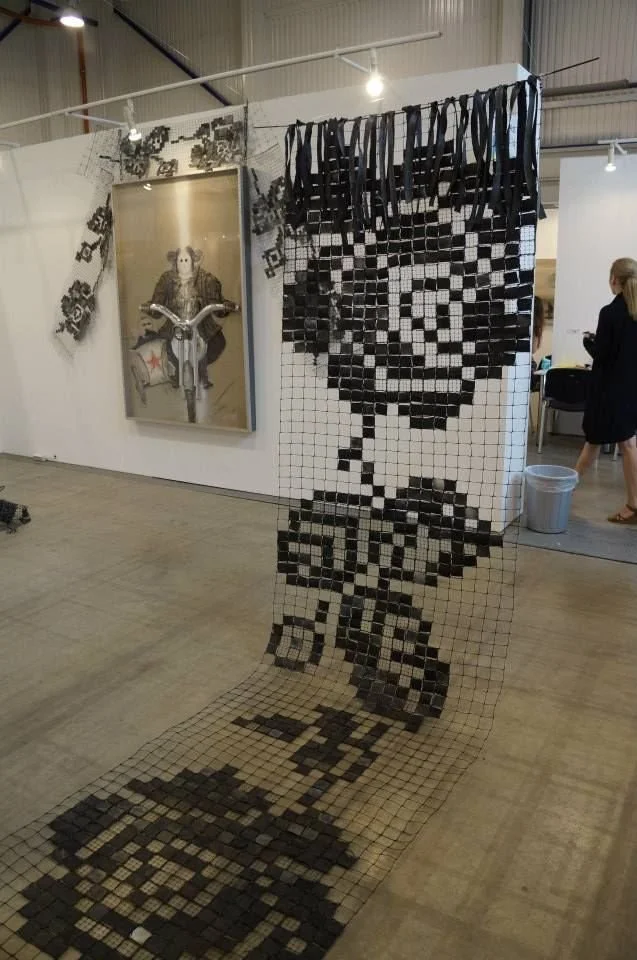
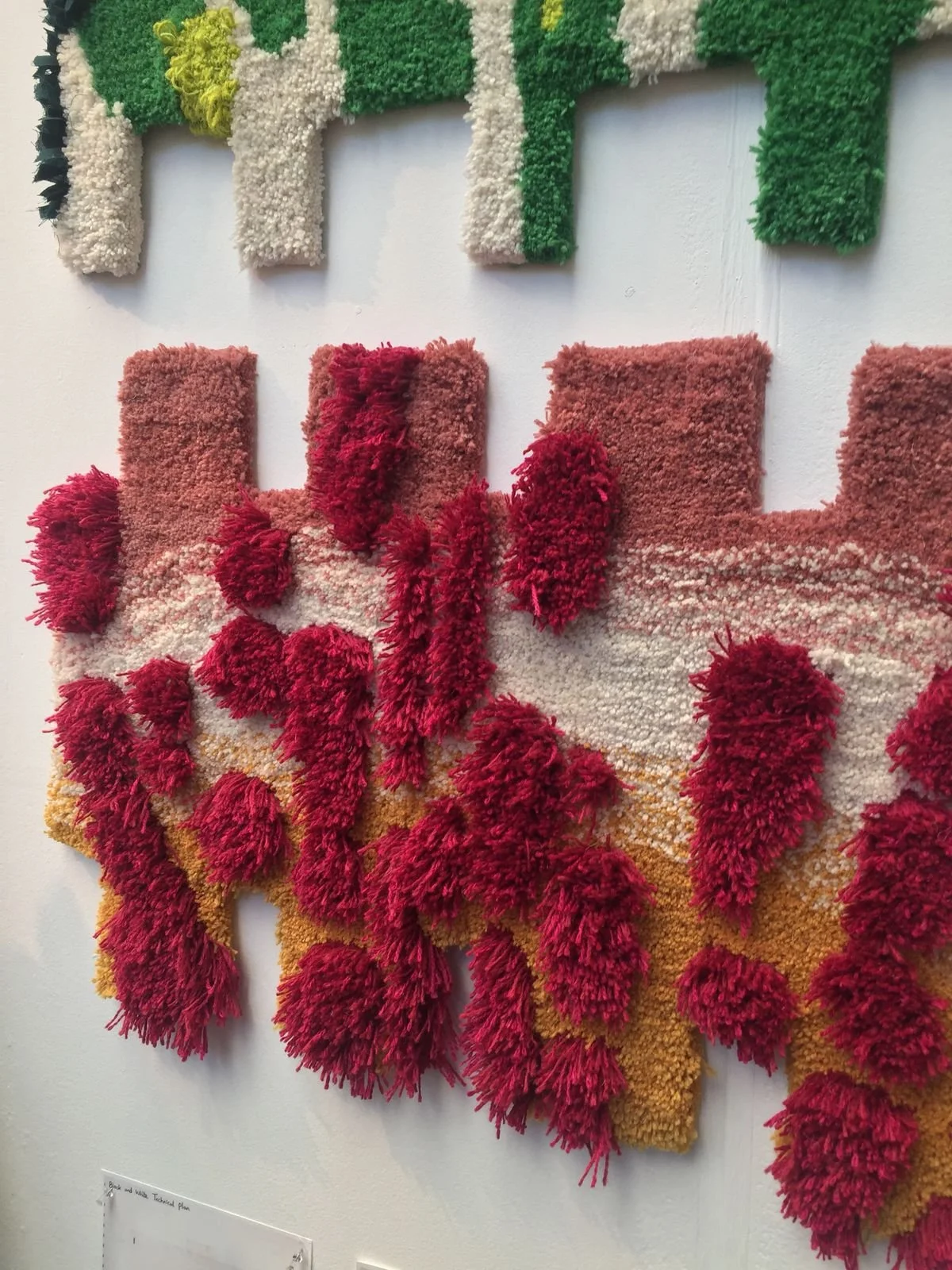
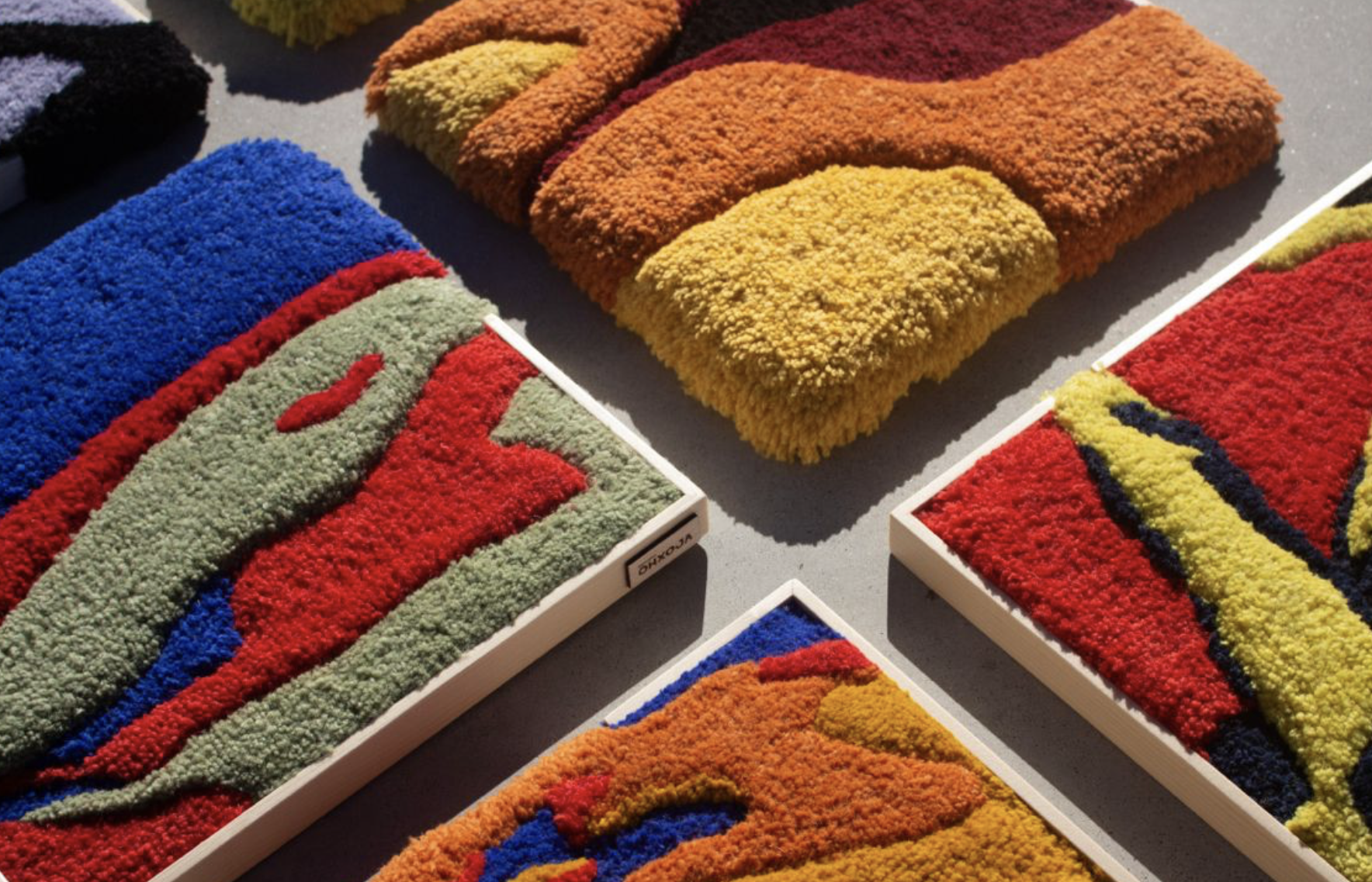
The meeting with Peter [committee member] from this week really stuck with me — especially the conversation about the tufted fabric becoming the indicator for interactivity. This moodboard was created and collected with that in mind!
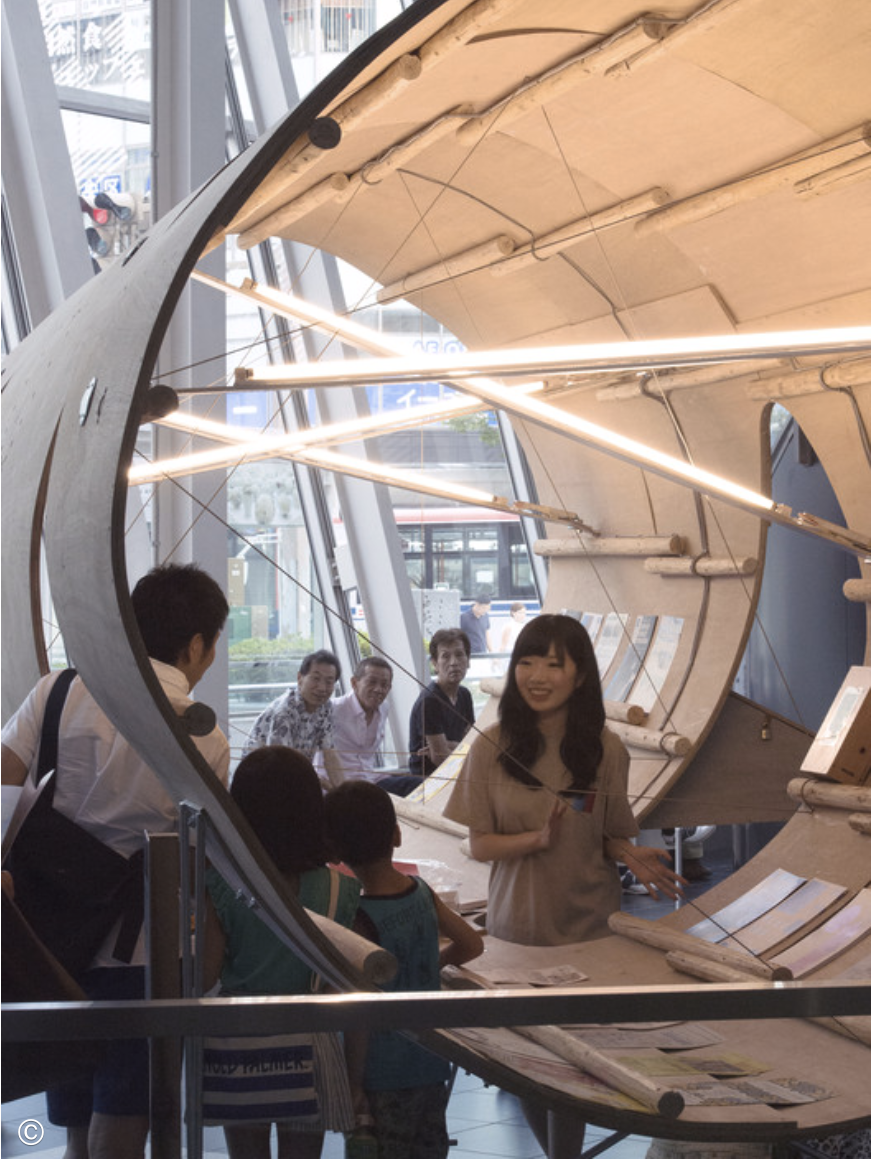
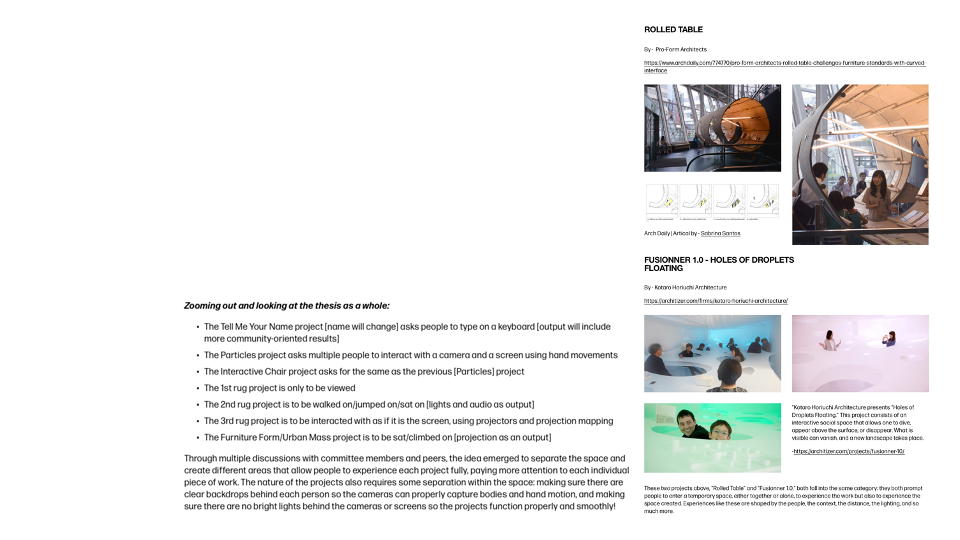
Rolled Table
By - Pro-Form Architects
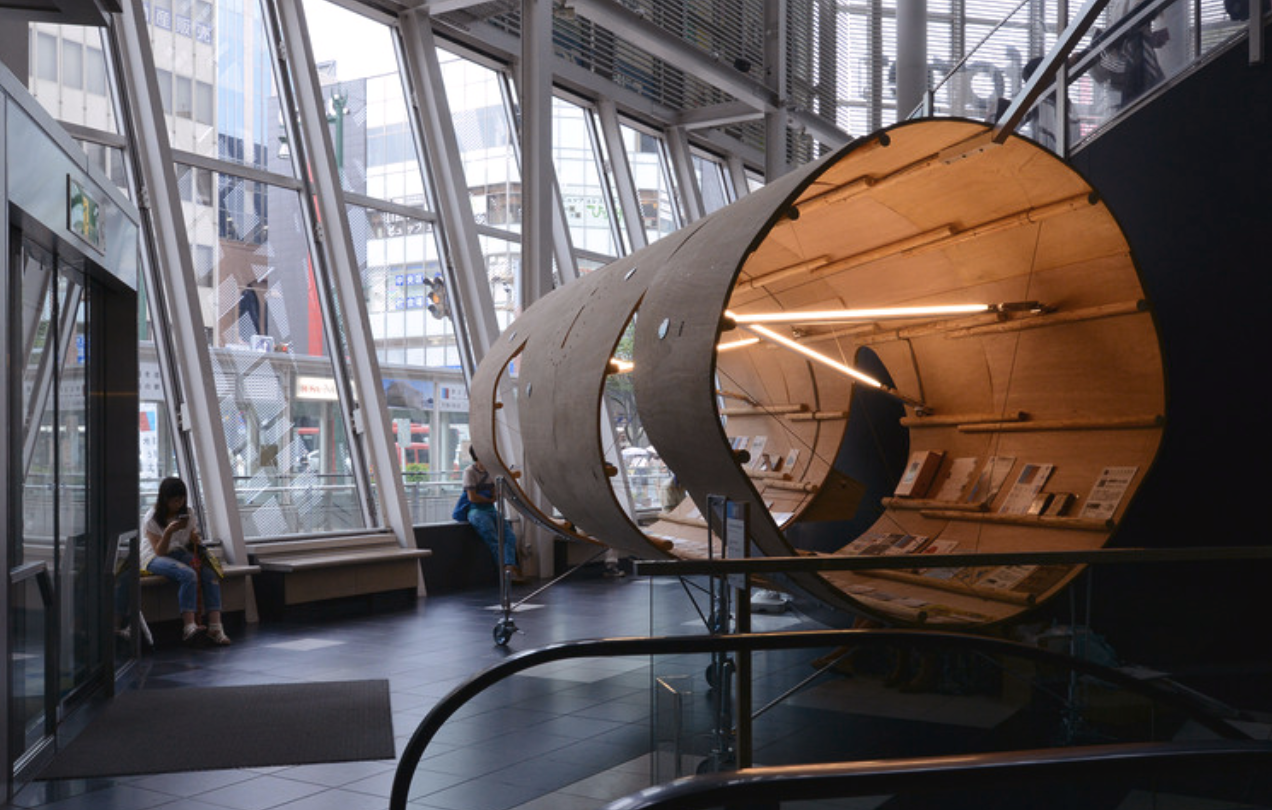
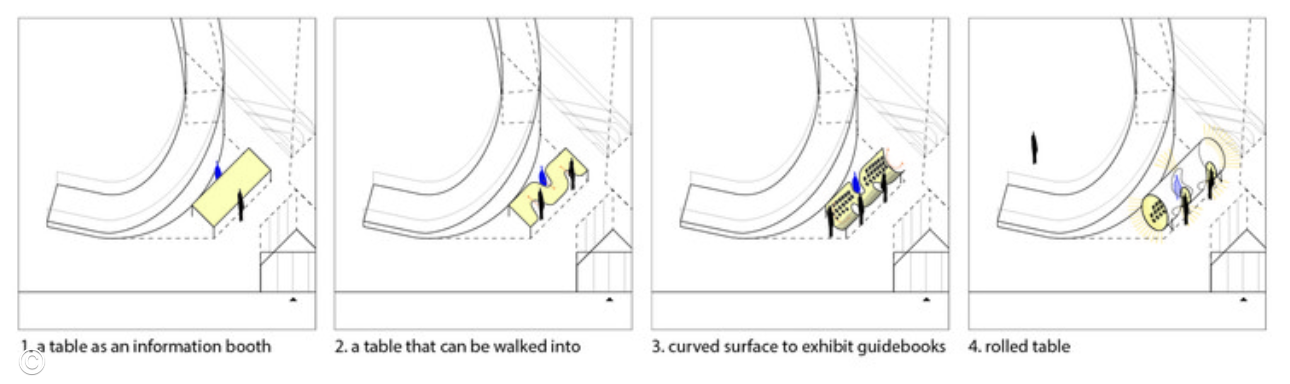
Arch Daily | Artical by - Sabrina Santos
Fusionner 1.0 - Holes of droplets floating
By - Kotaro Horiuchi Architecture
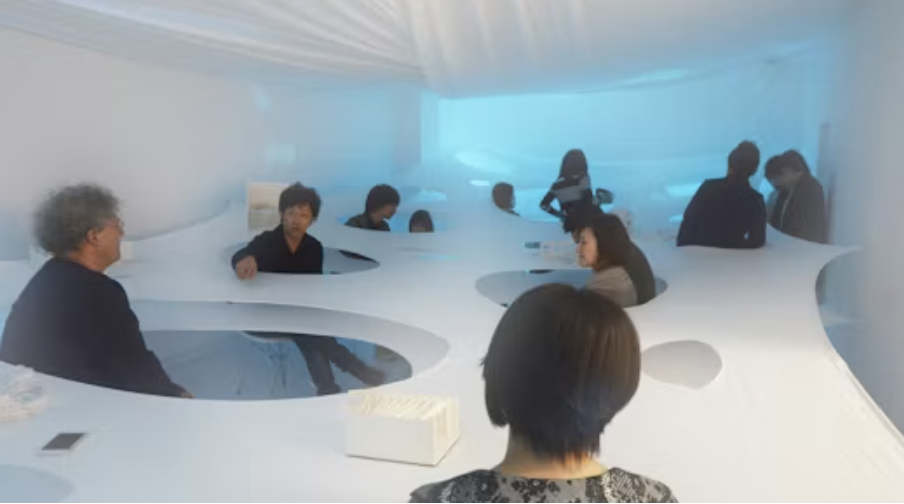
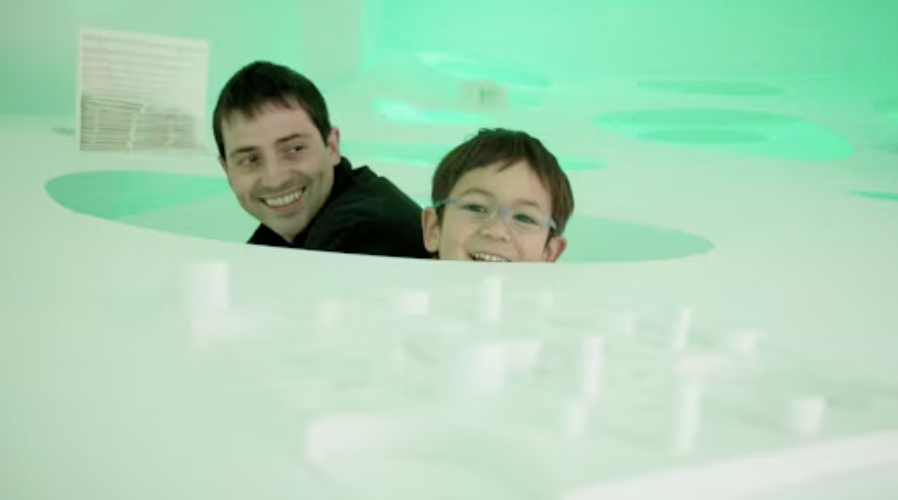
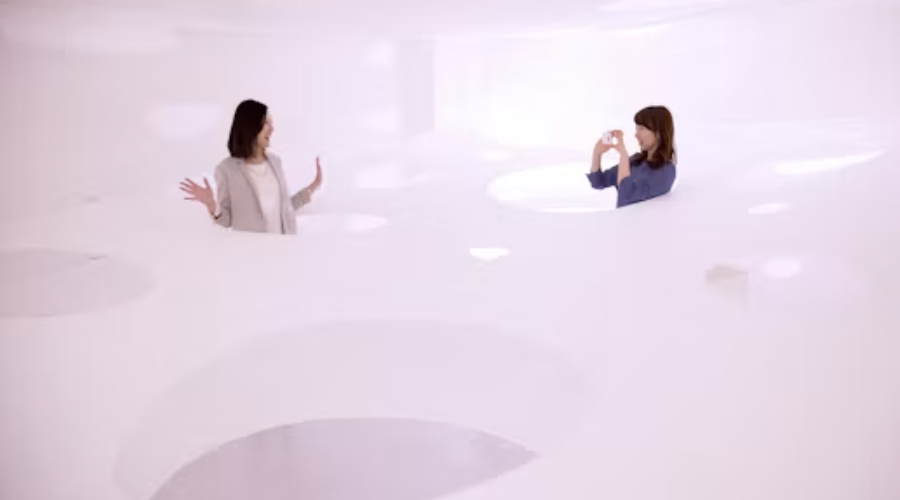
“Kotaro Horiuchi Architecture presents "Holes of Droplets Floating." This project consists of an interactive social space that allows one to dive, appear above the surface, or disappear. What is visible can vanish, and a new landscape takes place.
These two projects above, "Rolled Table" and "Fusionner 1.0," both fall into the same category: they both prompt people to enter a temporary space, either together or alone, to experience the work but also to experience the space created. Experiences like these are shaped by the people, the context, the distance, the lighting, and so much more.
Zooming out and looking at the thesis as a whole:
The Tell Me Your Name project [name will change] asks people to type on a keyboard [output will include more community-oriented results]
The Particles project asks multiple people to interact with a camera and a screen using hand movements
The Interactive Chair project asks for the same as the previous [Particles] project
The 1st rug project is only to be viewed
The 2nd rug project is to be walked on/jumped on/sat on [lights and audio as output]
The 3rd rug project is to be interacted with as if it is the screen, using projectors and projection mapping
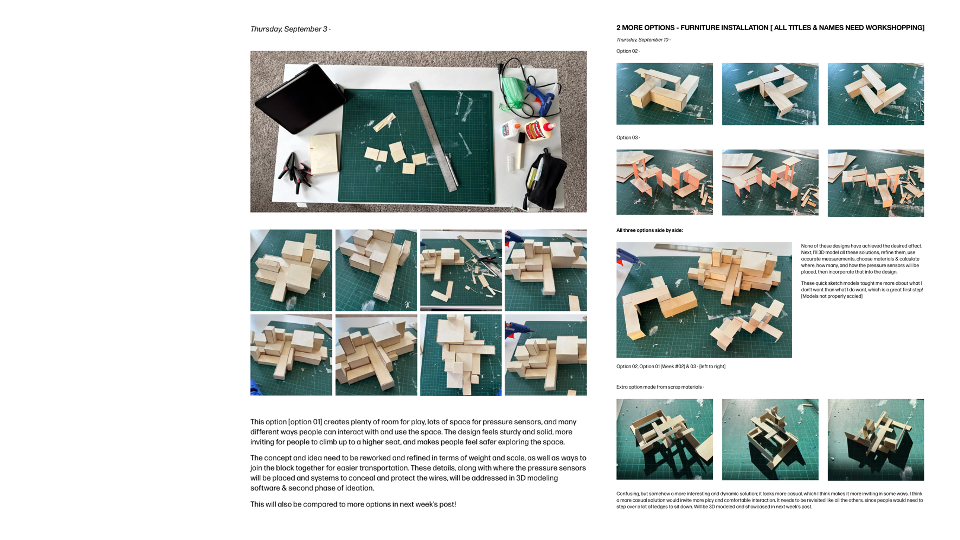
The Furniture Form/Urban Mass project is to be sat/climbed on [projection as an output]
Through multiple discussions with committee members and peers, the idea emerged to separate the space and create different areas that allow people to experience each project fully, paying more attention to each individual piece of work. The nature of the projects also requires some separation within the space: making sure there are clear backdrops behind each person so the cameras can properly capture bodies and hand motion, and making sure there are no bright lights behind the cameras or screens so the projects function properly and smoothly!
RE-WORKING PAST PROJECTS - TELL ME YOUR NAME
Wednesday September 16 -
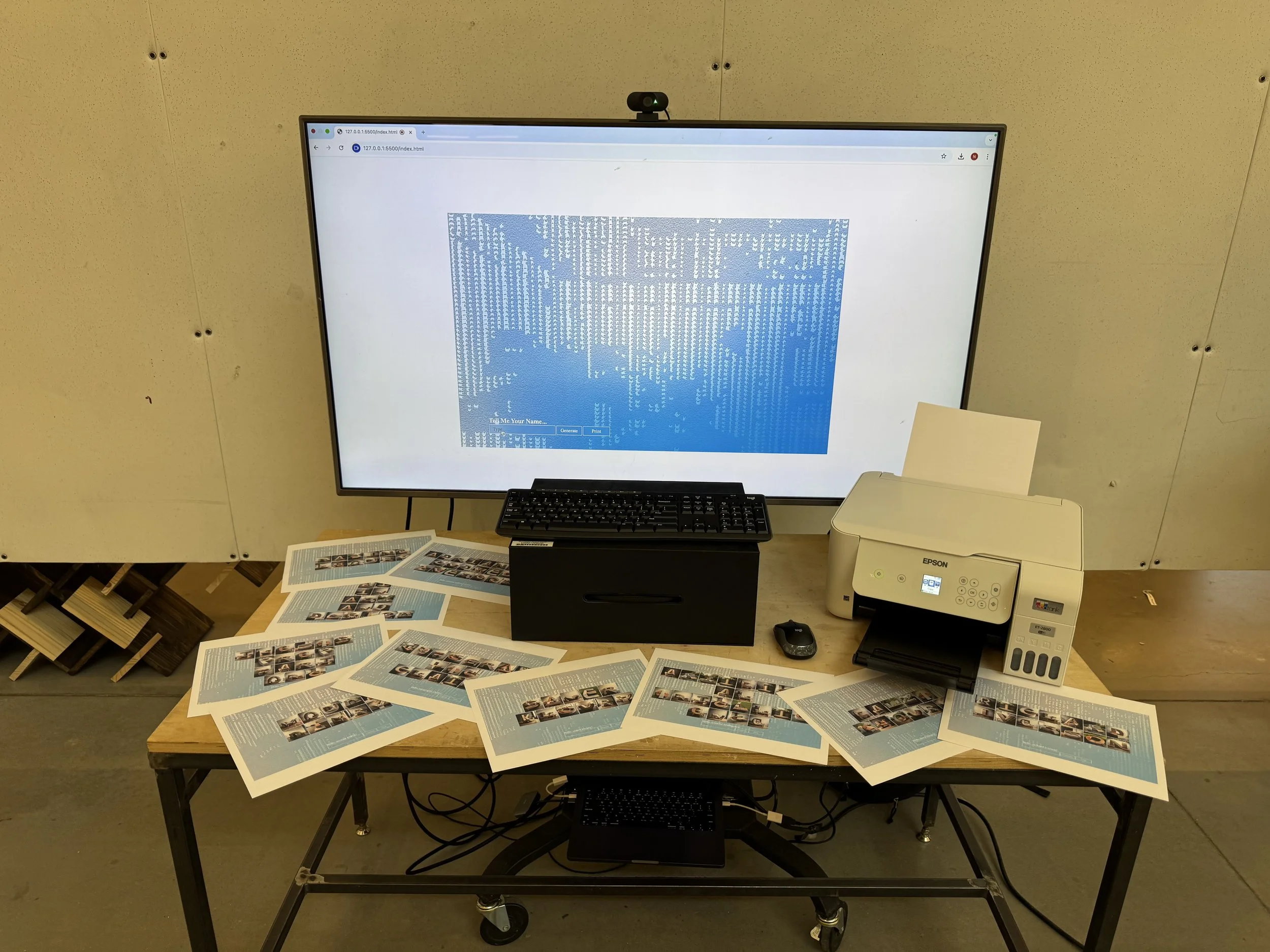
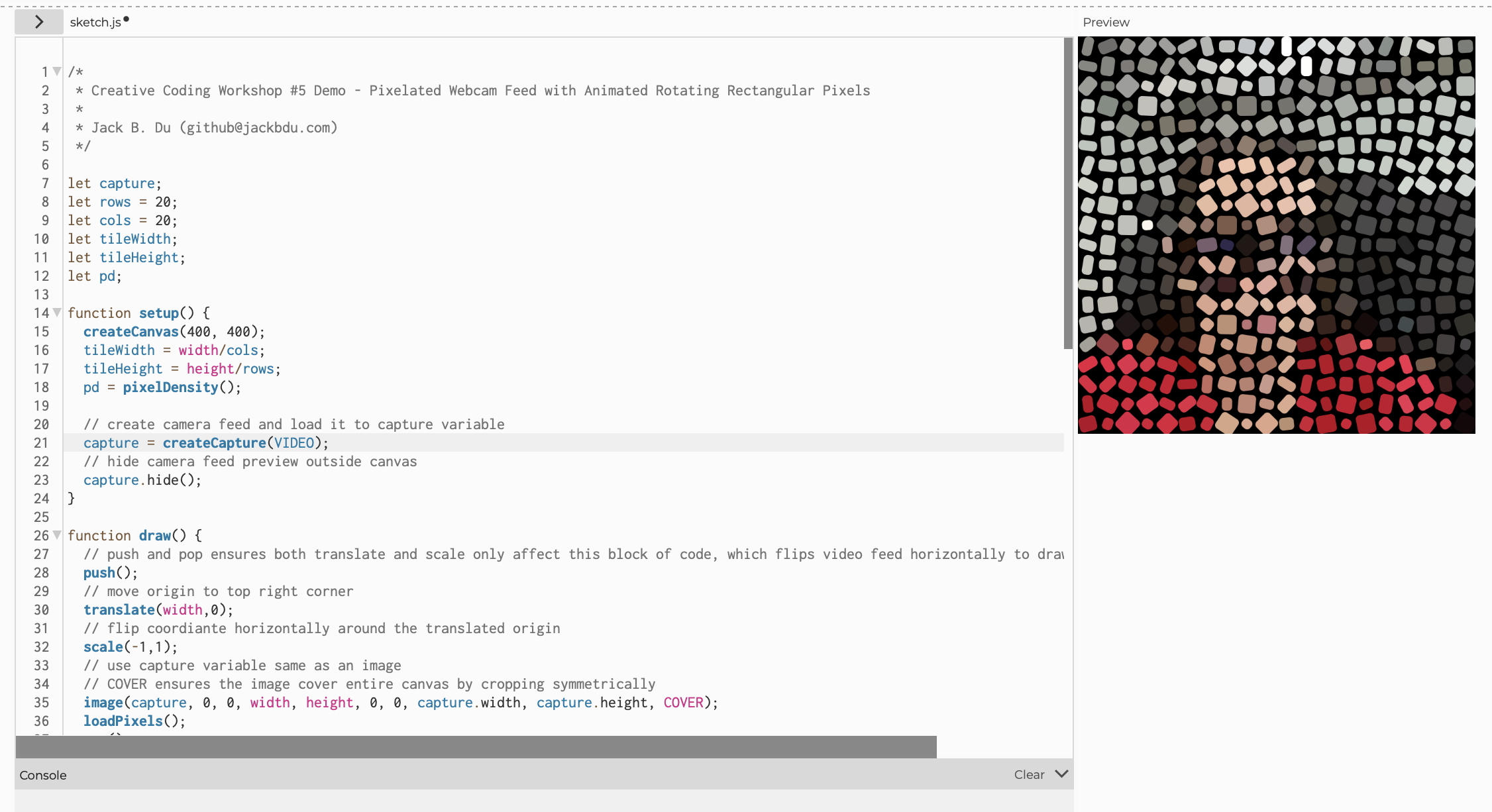
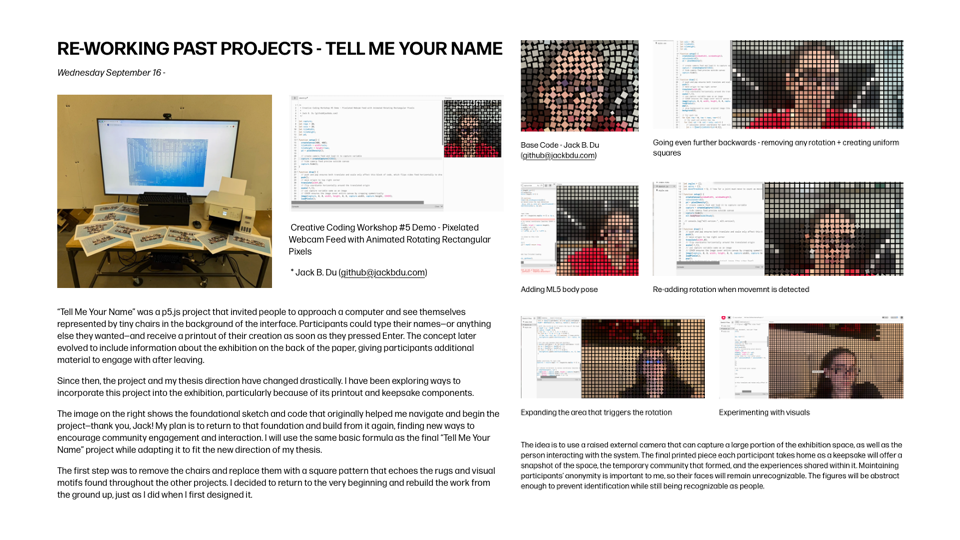
Creative Coding Workshop #5 Demo - Pixelated Webcam Feed with Animated Rotating Rectangular Pixels
* Jack B. Du (github@jackbdu.com)
“Tell Me Your Name” was a p5.js project that invited people to approach a computer and see themselves represented by tiny chairs in the background of the interface. Participants could type their names—or anything else they wanted—and receive a printout of their creation as soon as they pressed Enter. The concept later evolved to include information about the exhibition on the back of the paper, giving participants additional material to engage with after leaving.
Since then, the project and my thesis direction have changed drastically. I have been exploring ways to incorporate this project into the exhibition, particularly because of its printout and keepsake components.
The image on the right shows the foundational sketch and code that originally helped me navigate and begin the project—thank you, Jack! My plan is to return to that foundation and build from it again, finding new ways to encourage community engagement and interaction. I will use the same basic formula as the final “Tell Me Your Name” project while adapting it to fit the new direction of my thesis.
The first step was to remove the chairs and replace them with a square pattern that echoes the rugs and visual motifs found throughout the other projects. I decided to return to the very beginning and rebuild the work from the ground up, just as I did when I first designed it.
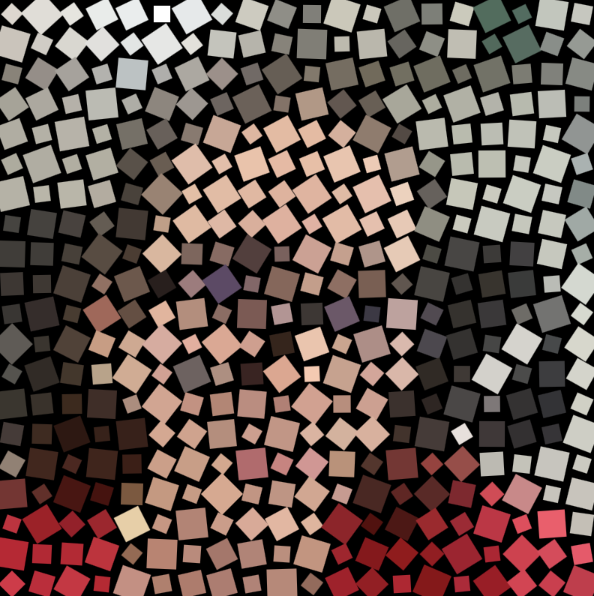
Base Code - Jack B. Du (github@jackbdu.com)
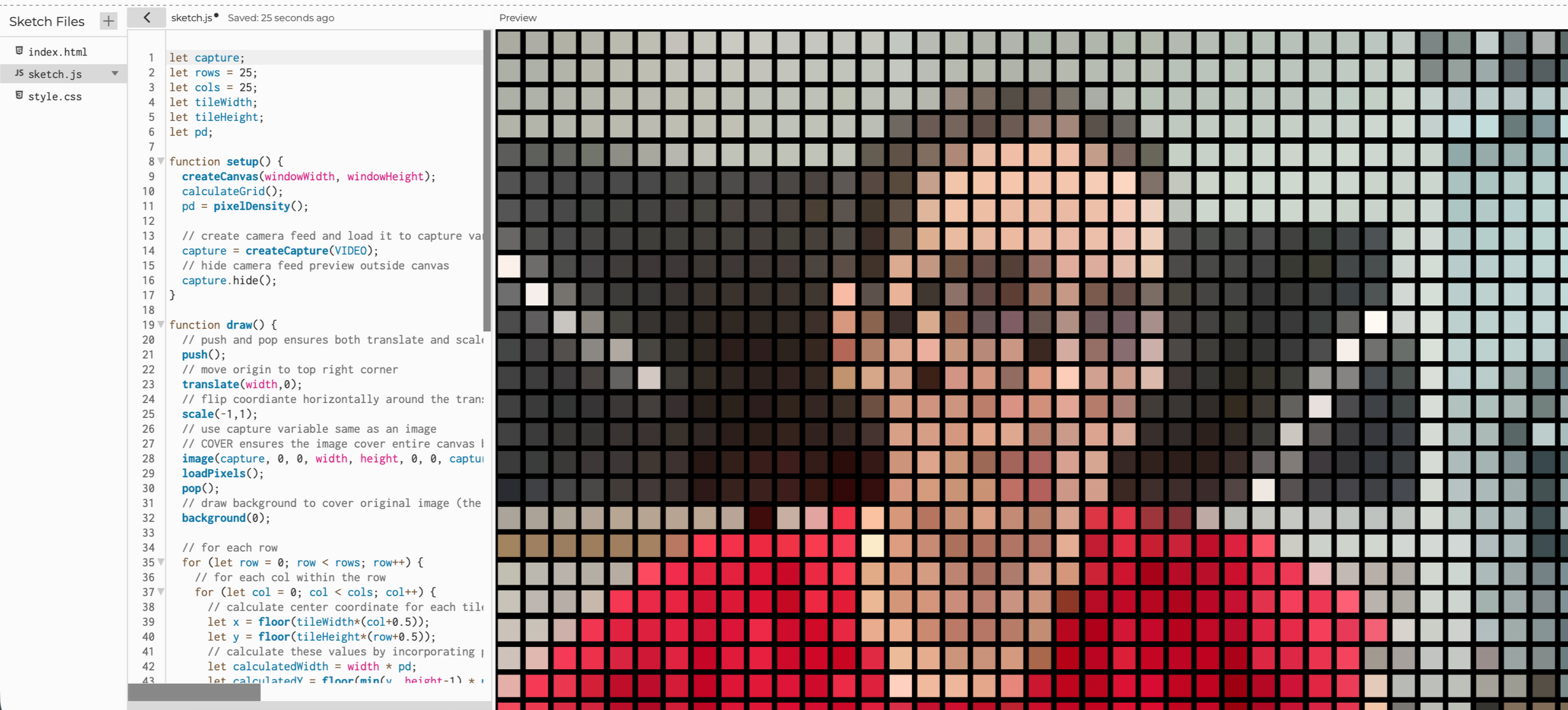
Going even further backwards - removing any rotation + creating uniform squares
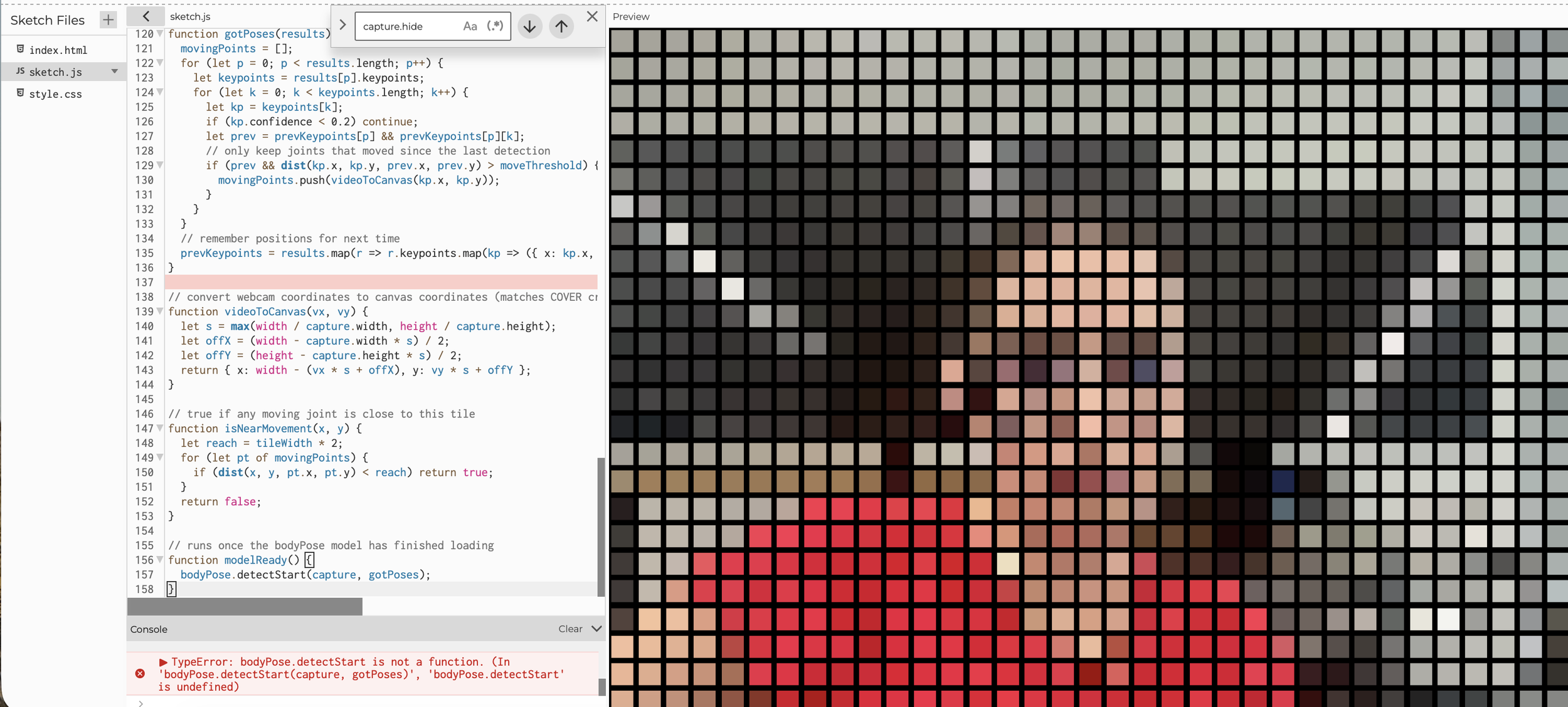
Adding ML5 body pose
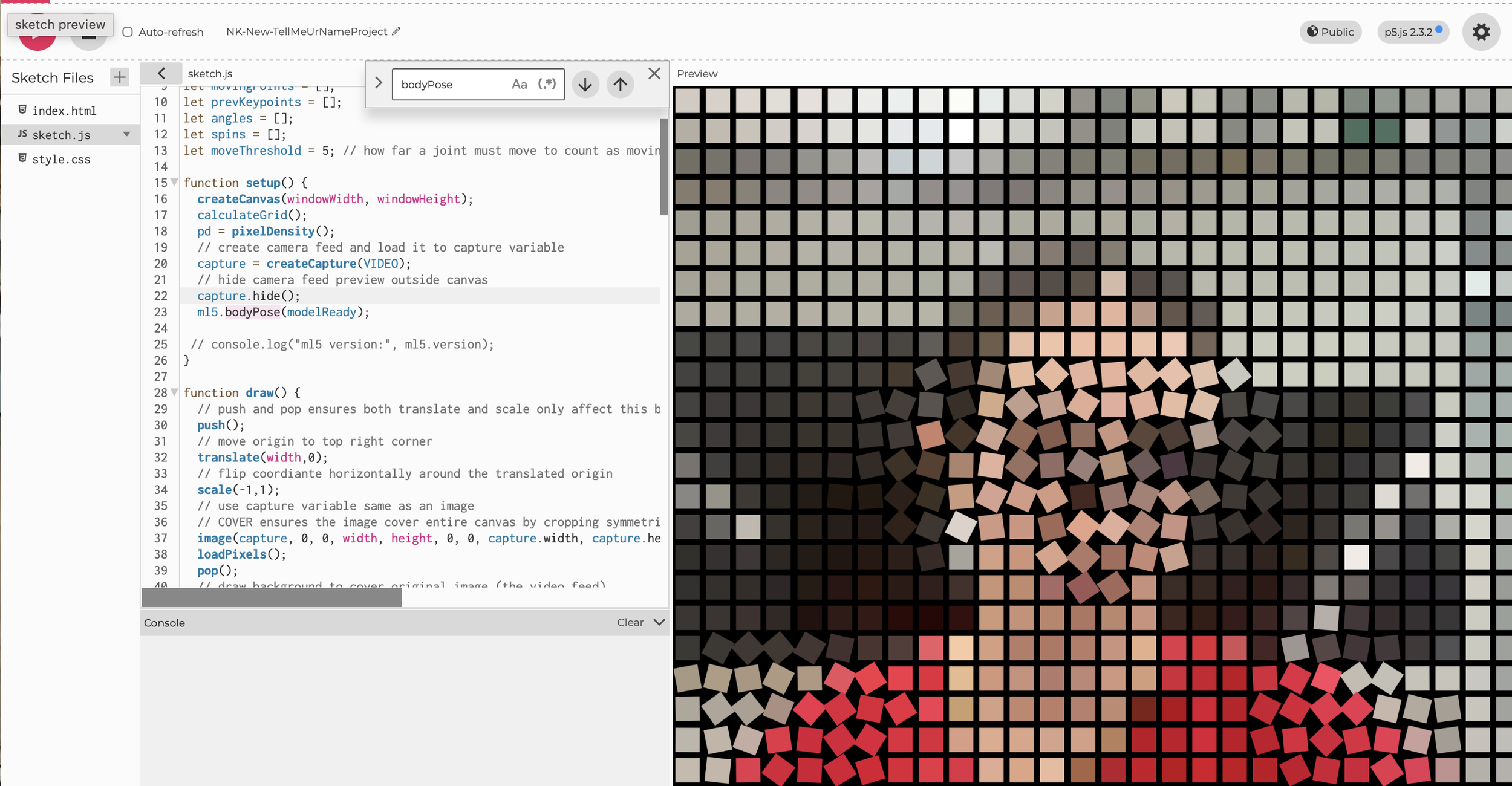
Re-adding rotation when movemnt is detected
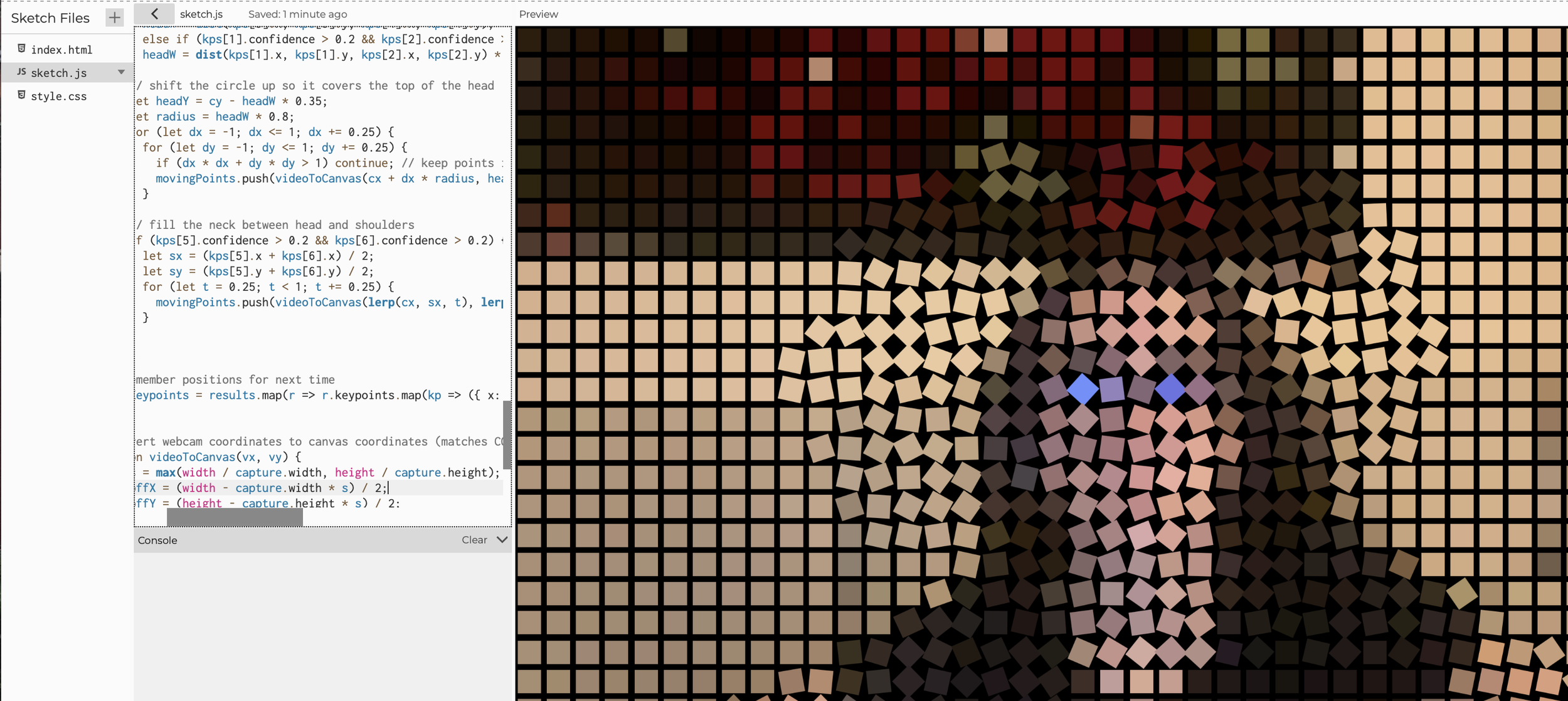
Expanding the area that triggers the rotation
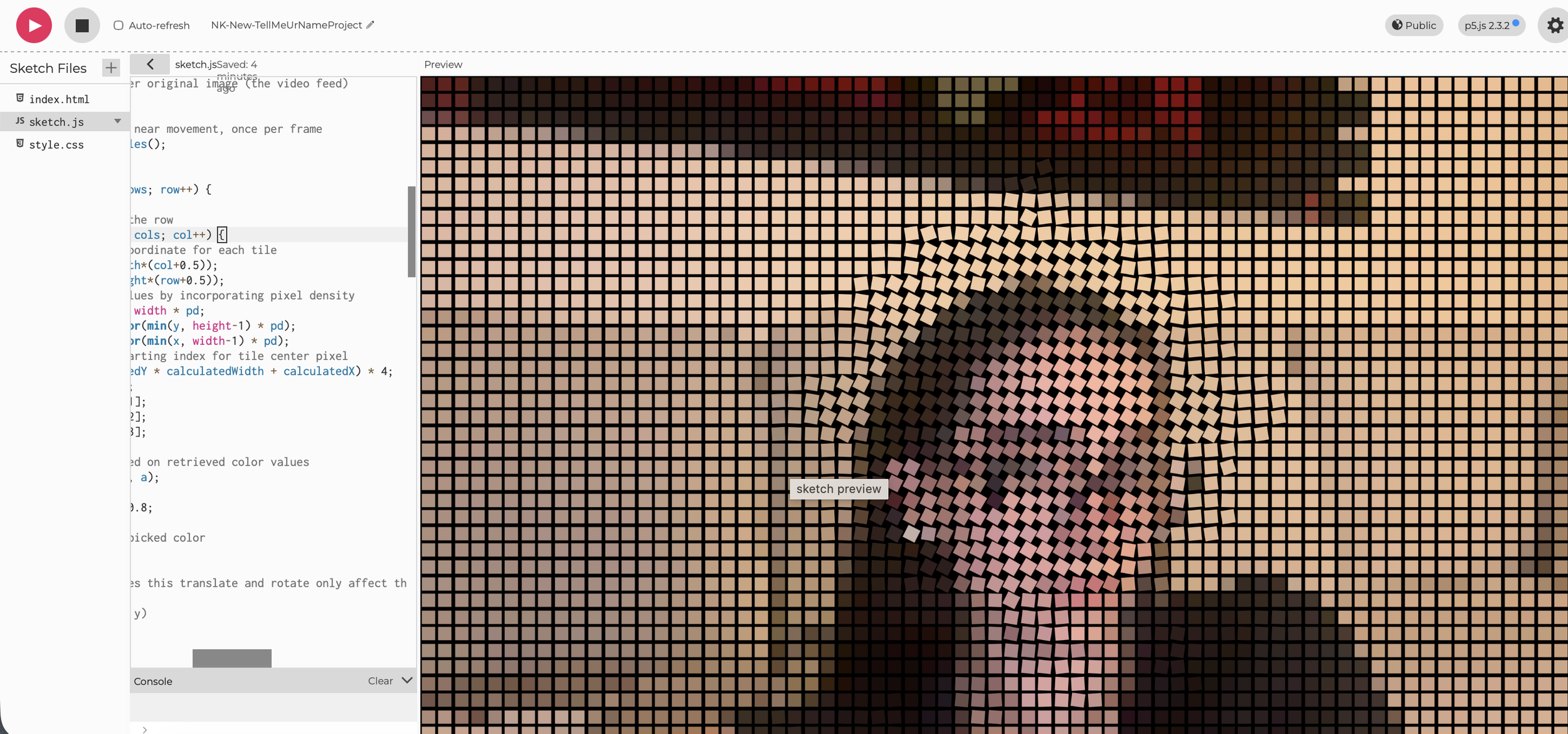
Experimenting with visuals
The idea is to use a raised external camera that can capture a large portion of the exhibition space, as well as the person interacting with the system. The final printed piece each participant takes home as a keepsake will offer a snapshot of the space, the temporary community that formed, and the experiences shared within it. Maintaining participants’ anonymity is important to me, so their faces will remain unrecognizable. The figures will be abstract enough to prevent identification while still being recognizable as people.
Rug Testing: A new-ish Direction
Wednesday, September 16 -
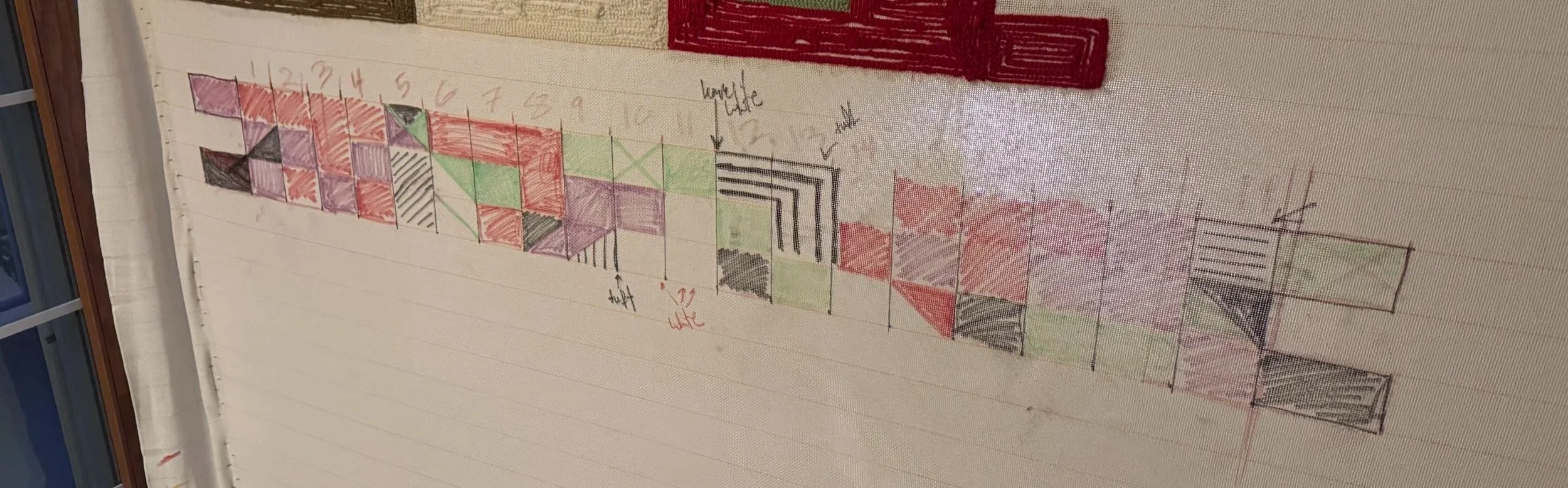
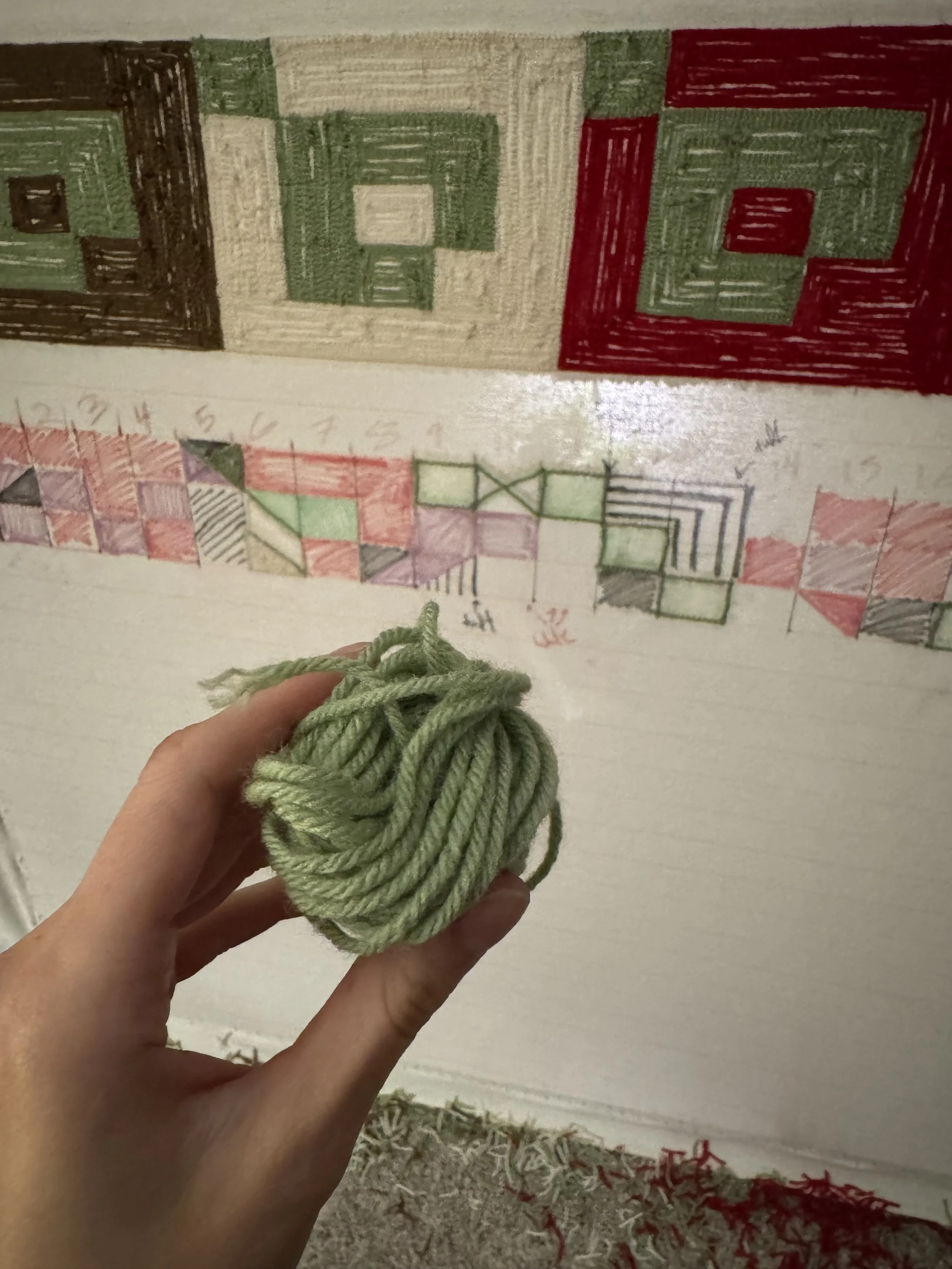
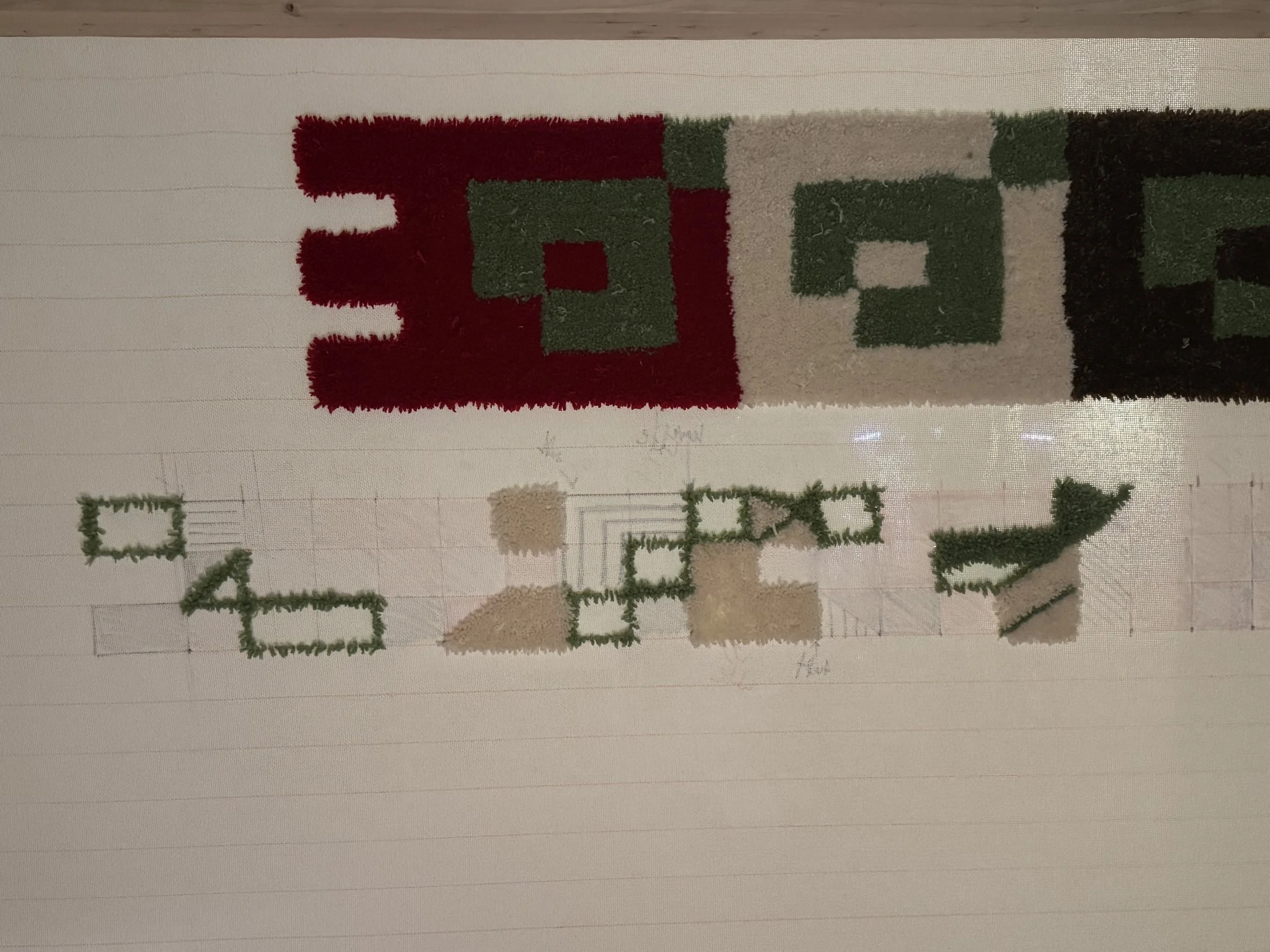
Thusday, September 17 -
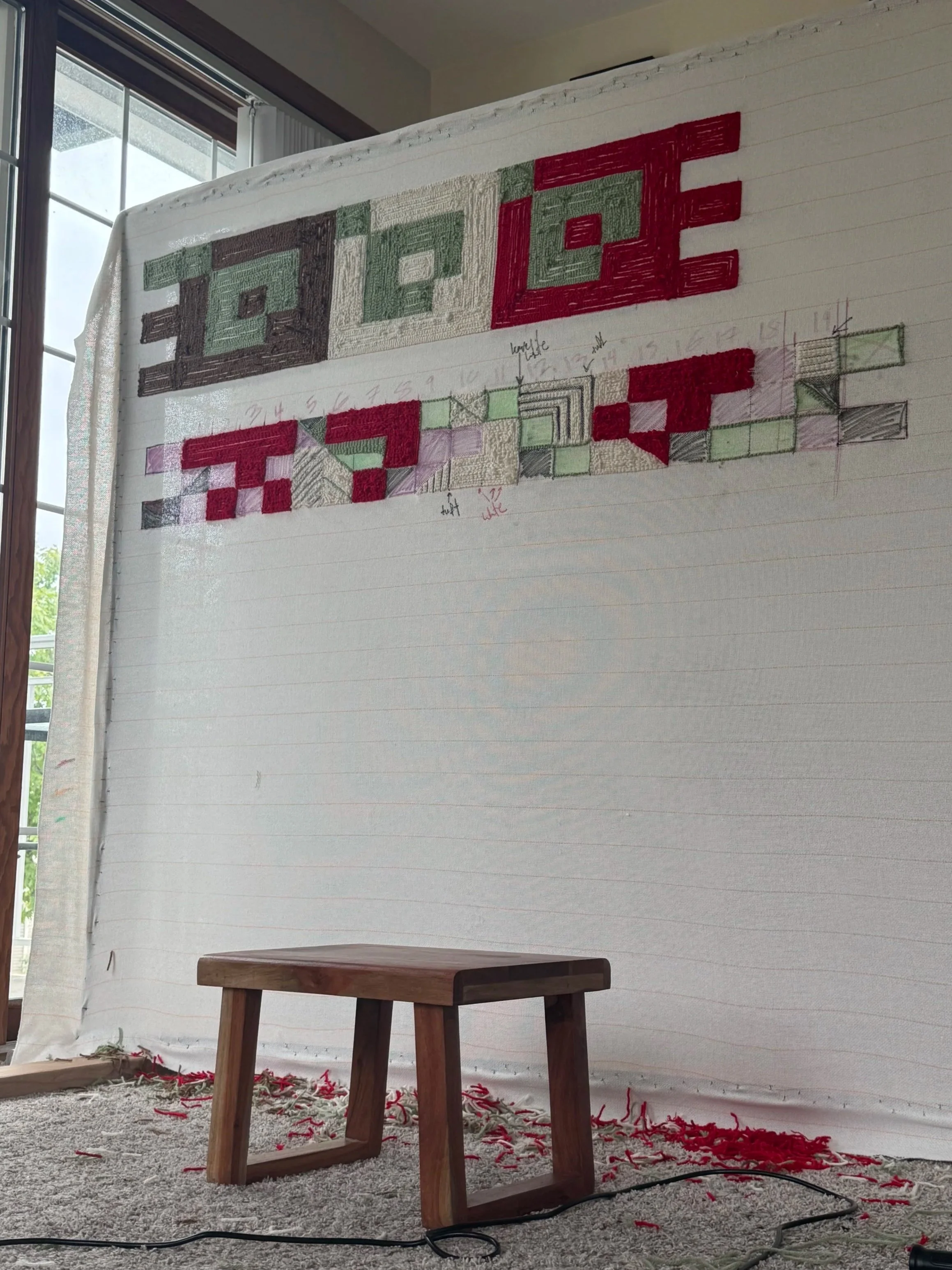
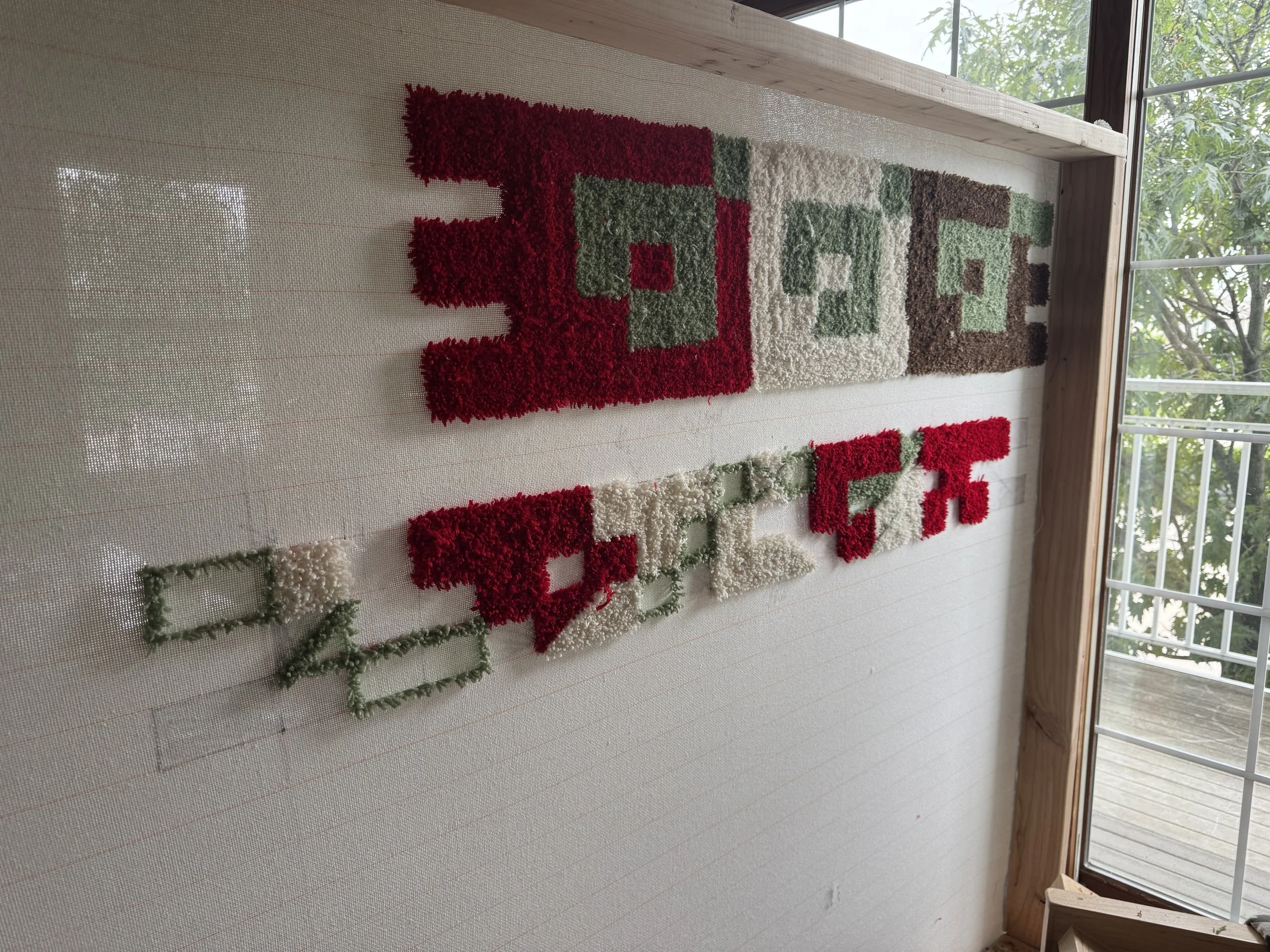
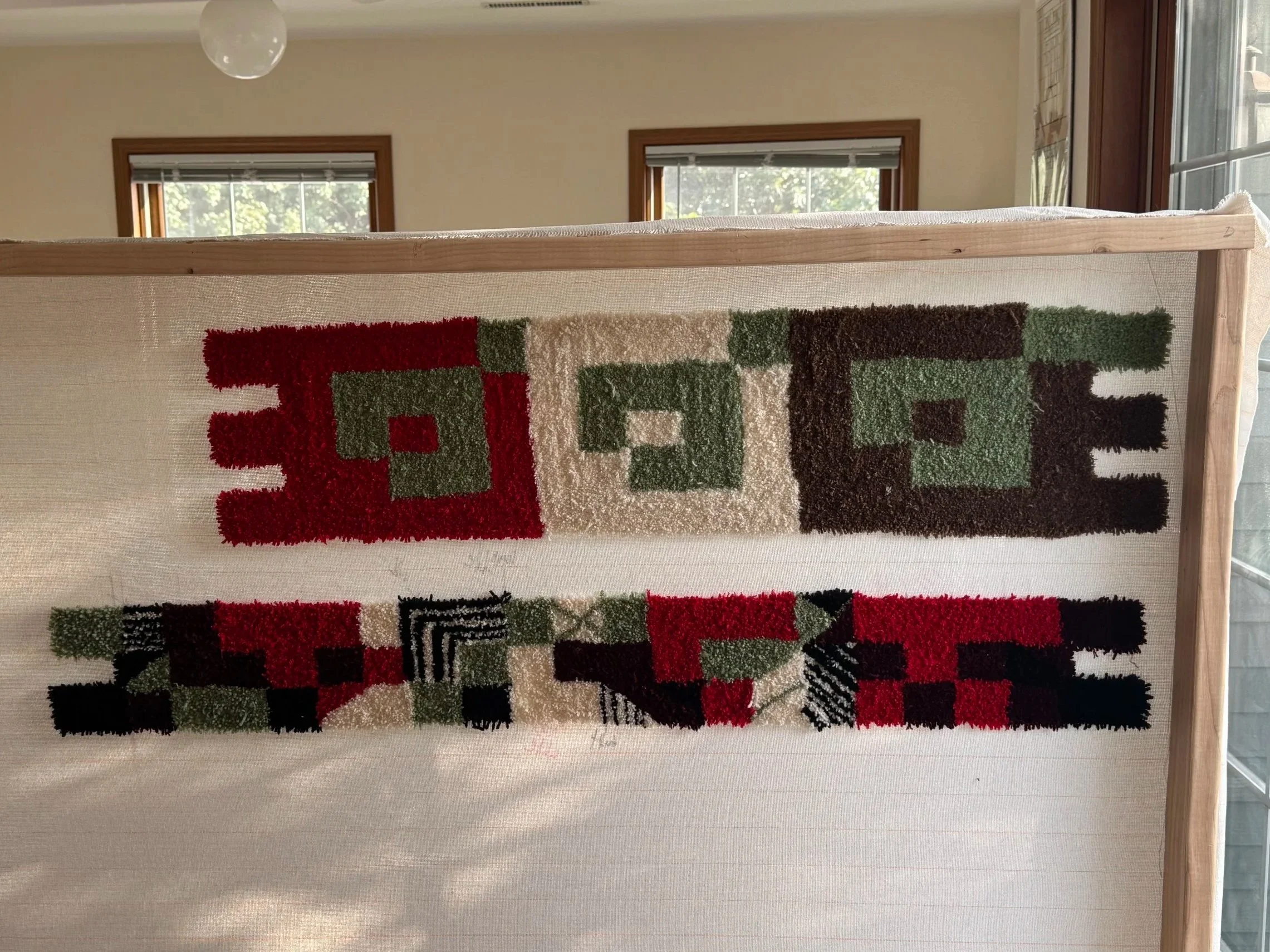
As mentioned above, testing the idea of using small rugs as indicators for interactivity, as well as simply testing out new techniques/designs — following the same grid but breaking the strict set of rules/structure. [I do not like this direction] — but I would like to sit with it for longer and see if I feel any differently later.
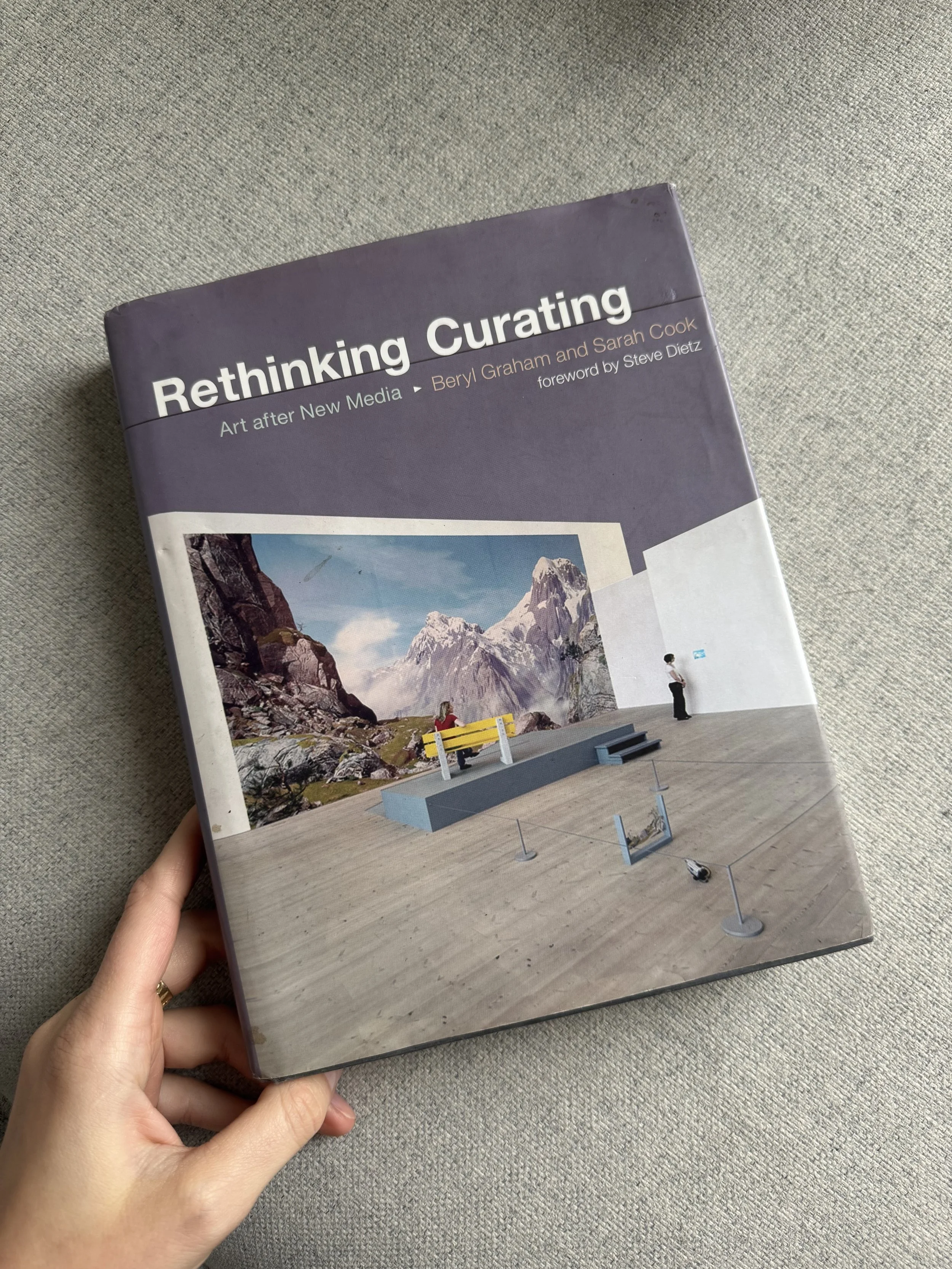
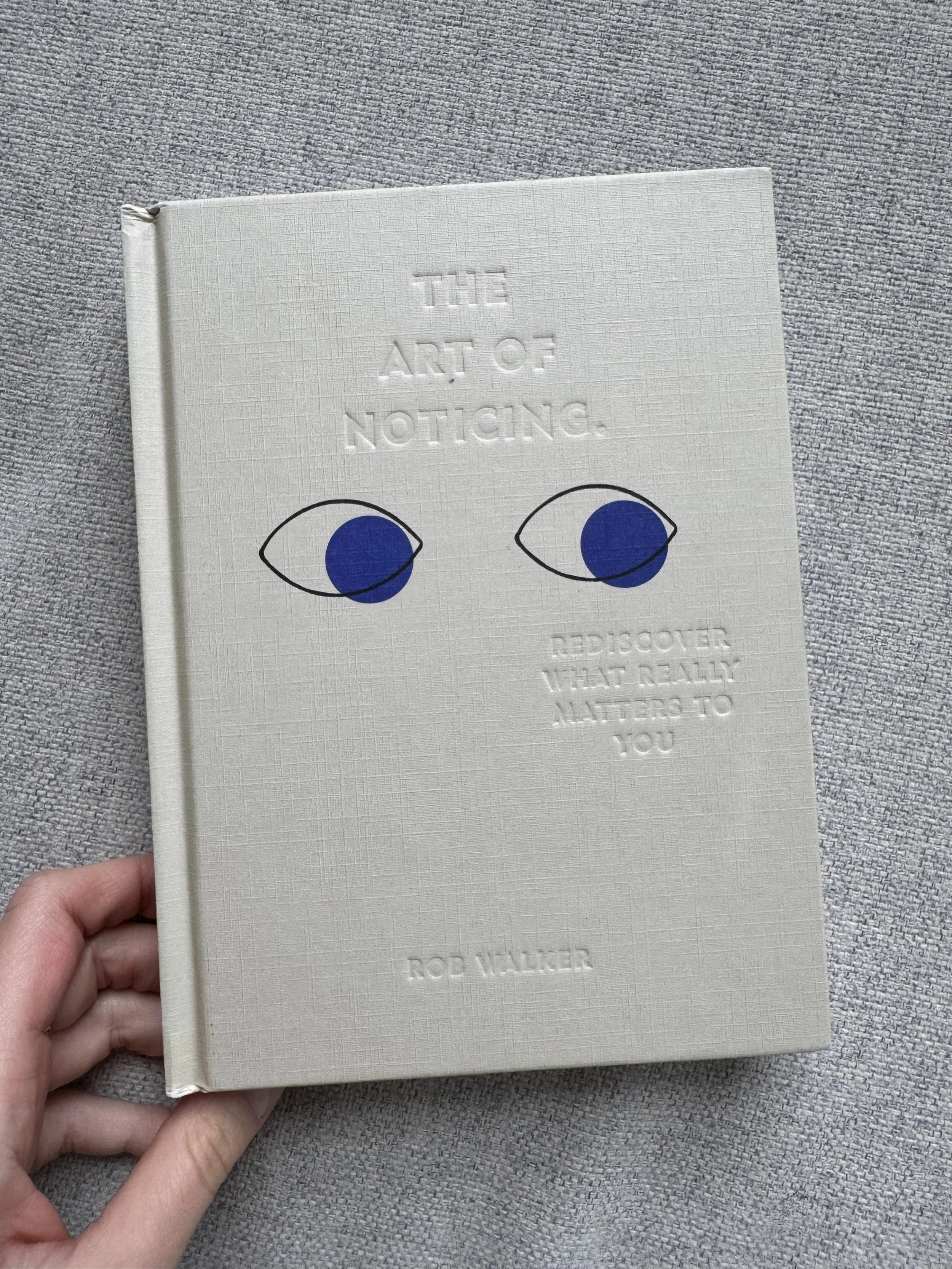
BOOK UPDATES! NEWEST ADDITIONS TO THE LIBRARY!
FULL COMMITTEE MEETING
Friday, September 18 -
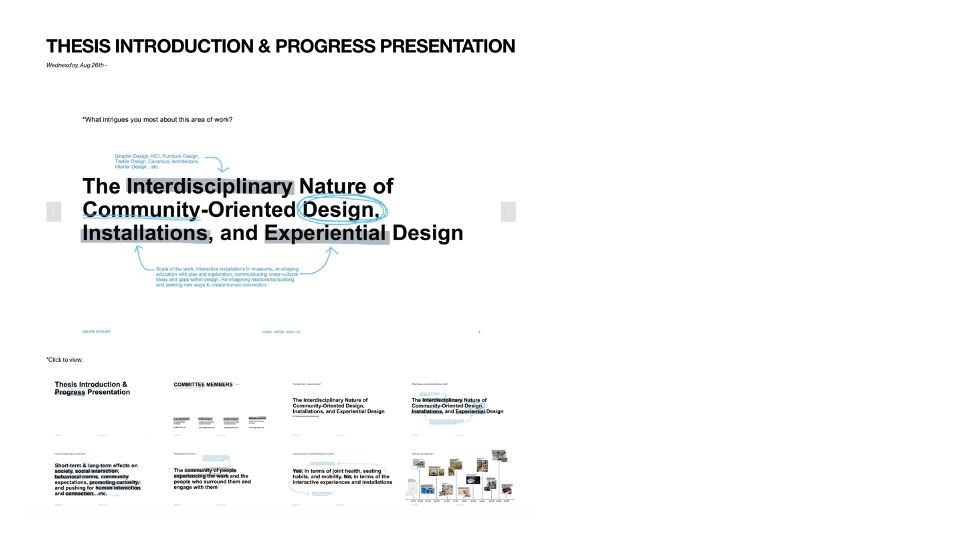
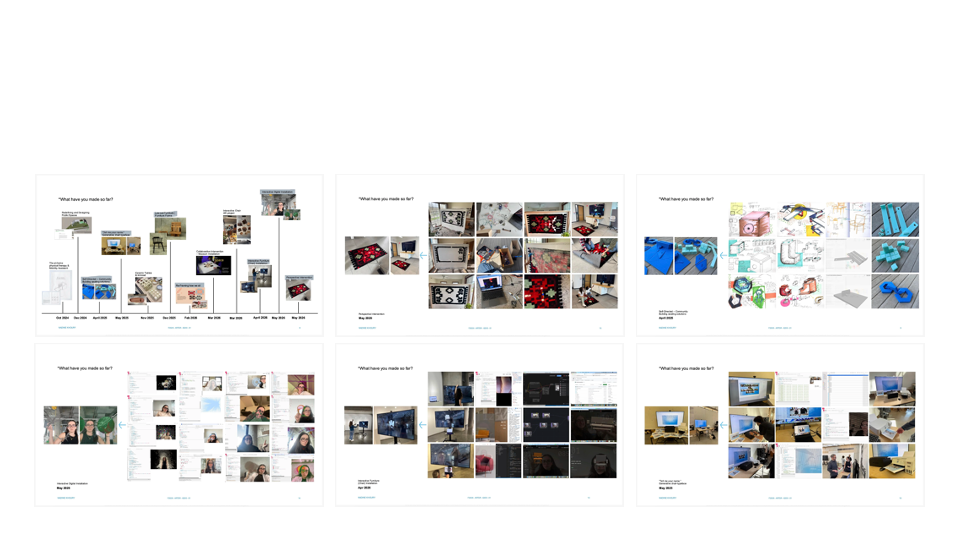
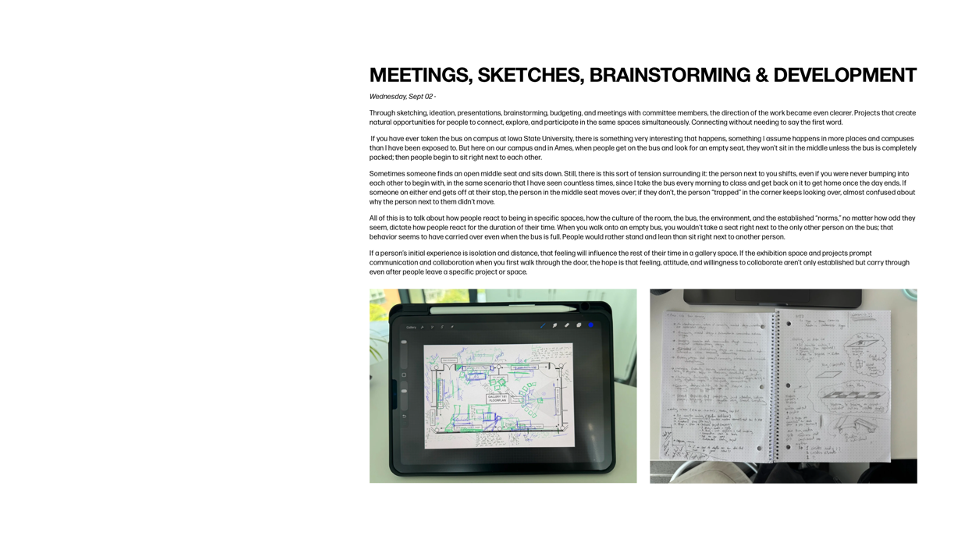
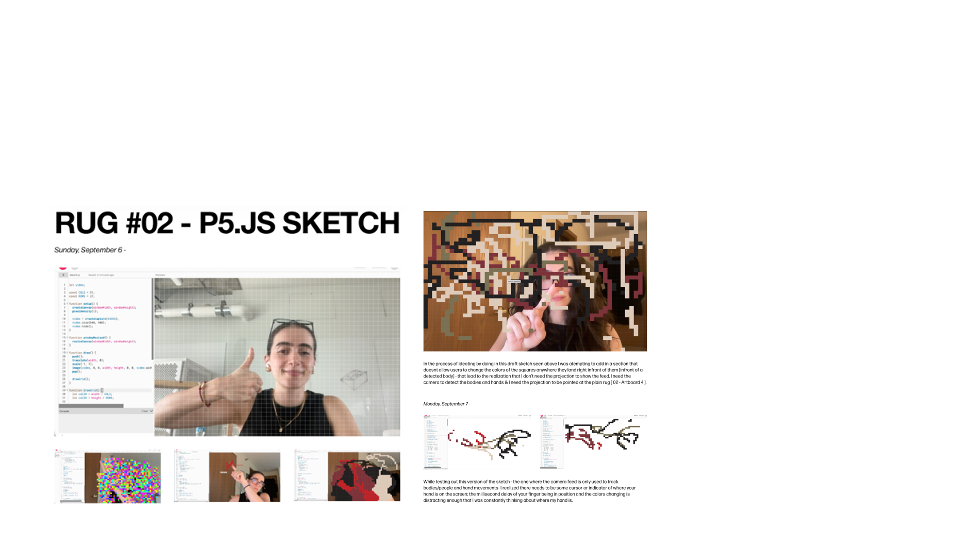
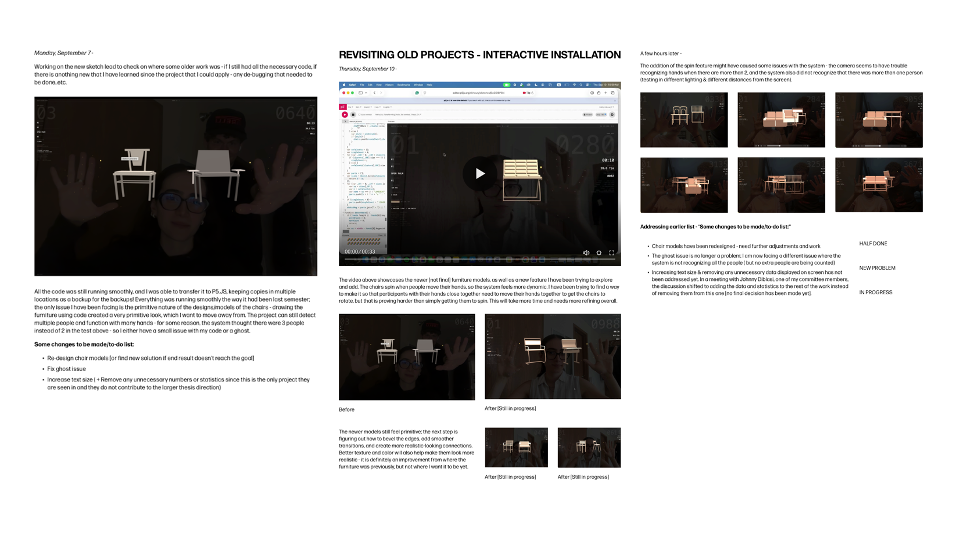
I started the meeting with a recap about the work: where I was, what decisions I have made, what made me decide to change the direction, etc. From there, I discussed each current project — where I am at, the idea, the process, and some future plans. All of that, in a lot more detail of course, was presented against the first placeholder title, the one that I had already known was a super large topic — "The Interdisciplinary Nature of Community-Oriented Design, Installations, and Experiential Design."
The main takeaway from the meeting is that now it's time to pause on production and begin thinking more in depth about the why. What do I want this thesis to truly be about? Being able to produce and compare the work against a set framework, creating more of a guideline for myself, a frame of reference.
The current projects can all come together, but why should they? Or should they at all? I don't want to send the wrong message, but I won't know what that message is until I have a more solid understanding and clearer vision for the work.
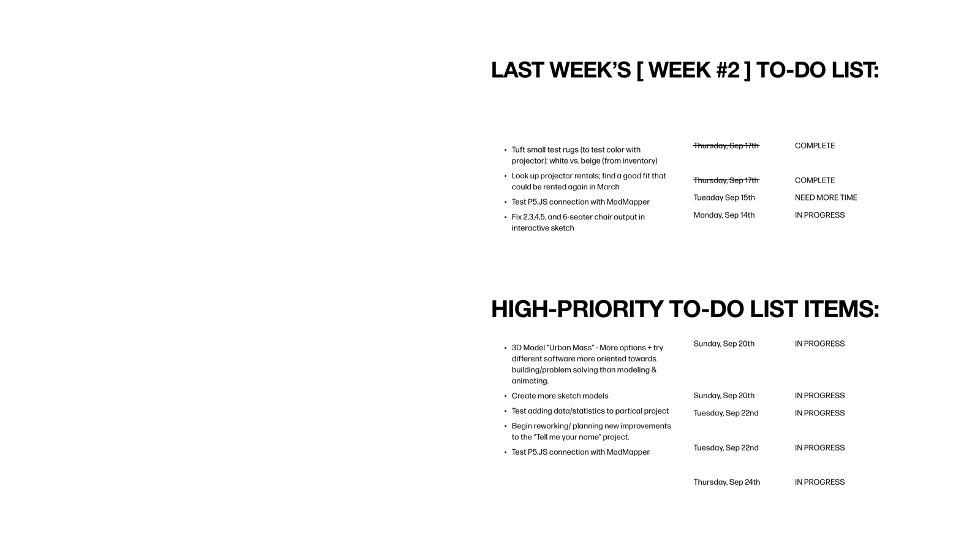
LAST WEEK’S [ WEEK #2 ] TO-DO LIST:
Tuft small test rugs (to test color with projector): white vs. beige (from inventory)
Look up projector rentals; find a good fit that could be rented again in March
Test P5.JS connection with MadMapper
Fix 2,3,4,5, and 6-seater chair output in interactive sketch
Thursday, Sep 17th
Thursday, Sep 17th
Tueaday Sep 15th
Monday, Sep 14th
COMPLETE
COMPLETE
NEED MORE TIME
COMPLETE
HIGH-PRIORITY TO-DO LIST ITEMS:
3D Model “Urban Mass” - More options + try different software more oriented towards building/problem solving than modeling & animating.
Create more sketch models
Test adding data/statistics to partical project
Begin reworking/ planning new improvements to the “Tell me your name” project.
Test P5.JS connection with MadMapper
Sunday, Sep 20th
Sunday, Sep 20th
Tuesday, Sep 22nd
Tuesday, Sep 22nd
Thursday, Sep 24th
IN PROGRESS
IN PROGRESS
IN PROGRESS
IN PROGRESS
IN PROGRESS
Note: As stated in the introduction, these will be paused for the time being — I will be moving on to the writing portion: ideation, discovery, and brainstorming. No longer trying to fit what I have into a thesis, but rather finding the end goal, the why and the what, then building on that and moving forward from there. I am leaving this to-do list here as a reference and as a jumping-off point.
With that said, my current and main HIGH-PRIORITY TO-DO LIST consists of writing, writing, reading, and more writing!
+MORE ON EVERYTHING NEXT WEEK!
Thank you :)