#05 Refining & Rethinking the WHY, A pause production
Saturday, September 19 - Friday, September 25 -
The main goal for this week is to write! As the title suggests, pause on the production and begin to refine and rethink the why- reorganize my thoughts and narrow down the concepts at hand. The current trajectory of the work, projects, and testing has been heading in a wide direction - finalizing the concepts will allow me to compare my work and process against guidelines and concepts.
This week will also include process work on a video project for ARTGR 6200 - Graduate Thesis Studio 01. Disclaimer: This website format limits the number of video minutes that can be attached, so the process will be photo- and text-heavy to attach the final video project here.
The premise of the video is to create something related to our thesis but explore a different avenue, allowing us to ideate in a more dynamic and fluid way. The video needs to be a stand-alone piece, and as our professor described in class, this project is a “side quest,” which I think sums it up perfectly!
This couldn’t have come at a better time: writing and ideating about the thesis and pausing production. Also, creating a video project that explores new avenues is a great combination for this week!
*Photo of the weekInspiration column
Painted Metal Bench
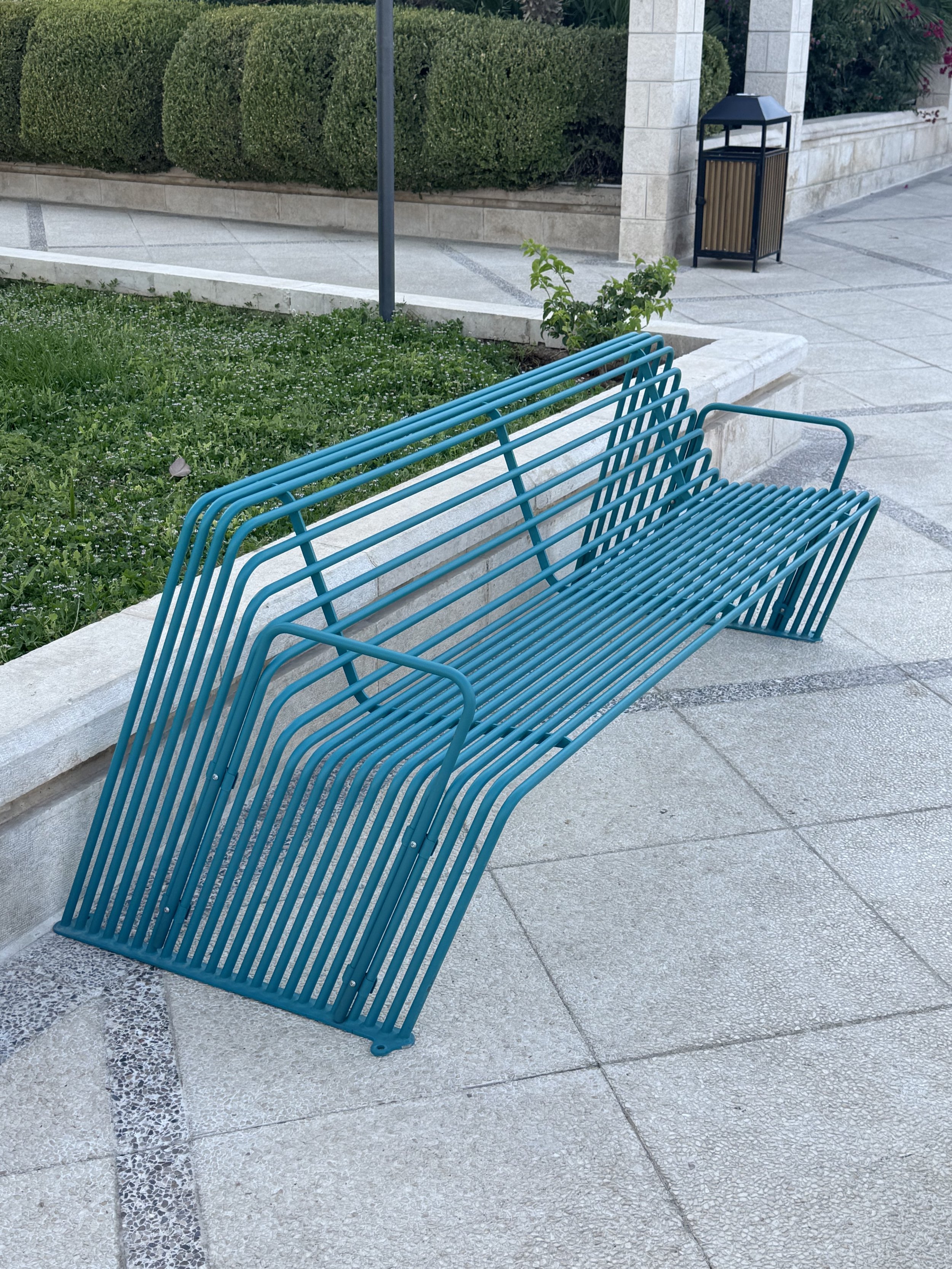
Amman, Jordan
A recap of some notes and main ideas from last week’s meeting
Monday, September 21 -
My first full committee meeting is what prompted this change in direction and pause in the production - During the meeting the consensus was that I needed to begin to narrow down, to boil the ideas down and be able to say in a few words what the work is, what it means, why I am doing it - funneling it down enough that one or two words could be used to describe the entire thesis [this is very flat and does take away from the work but it helps showcase the point, there needs to at this point in the semester be a clearer more consise idea, there needs to be a clearer answer to - why?
Writing, research, and discovery also mean reading, looking, absorbing, noticing, and documenting; here are some photographs of images, ideas, detections, and objects that sparked some thought - I will be including images of this nature throughout this week’s post. The first collection is from Main Street, a very different direction from what I have been looking at recently, but still community-oriented in a way. Made to promote Downtown Ames! A wonderful area with great local businesses, stores, coffee shops, restaurants, and boutiques! I wish more people would spend more time there, but I have heard many people say it needs more residents to truly become a downtown!
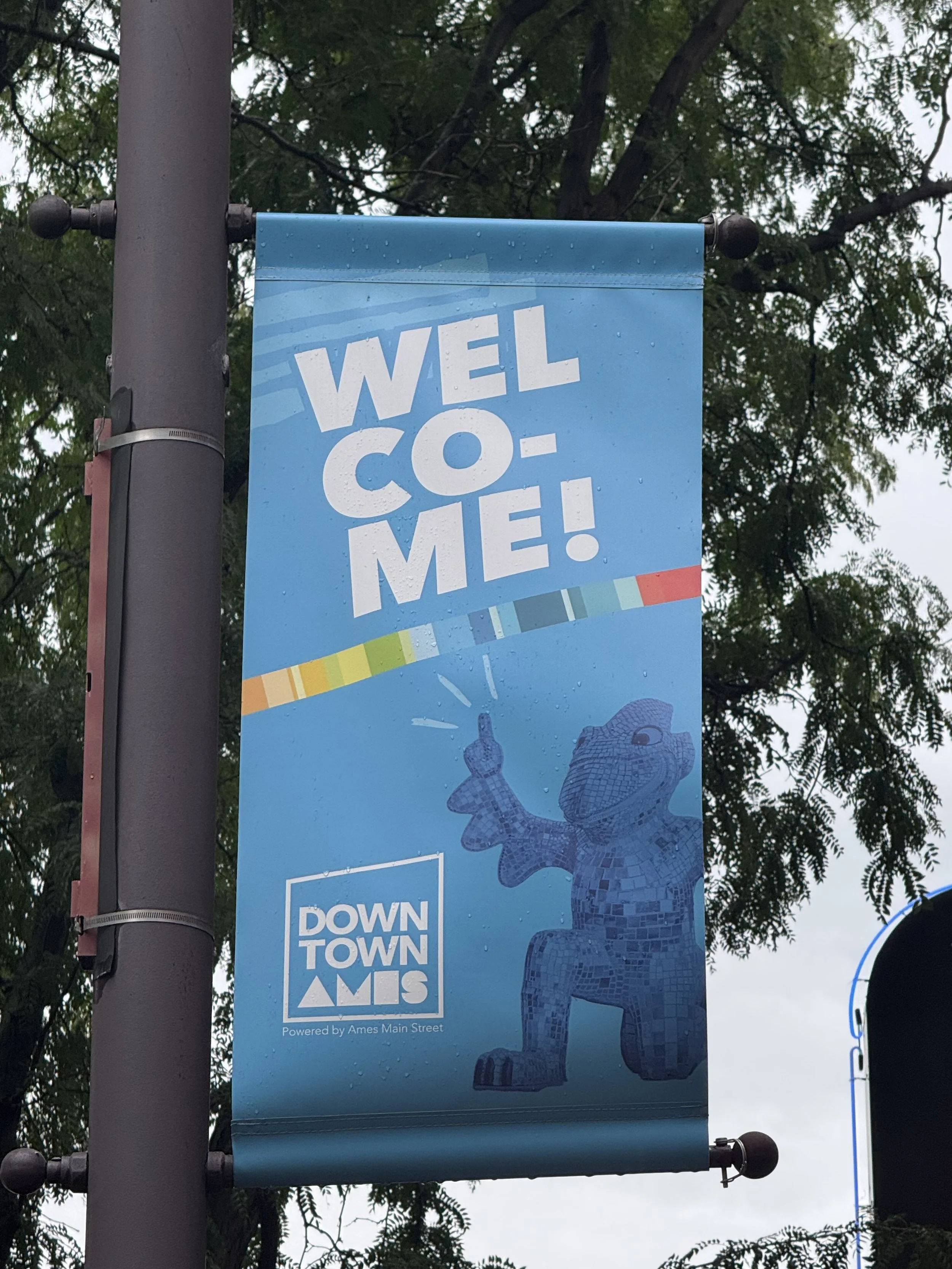
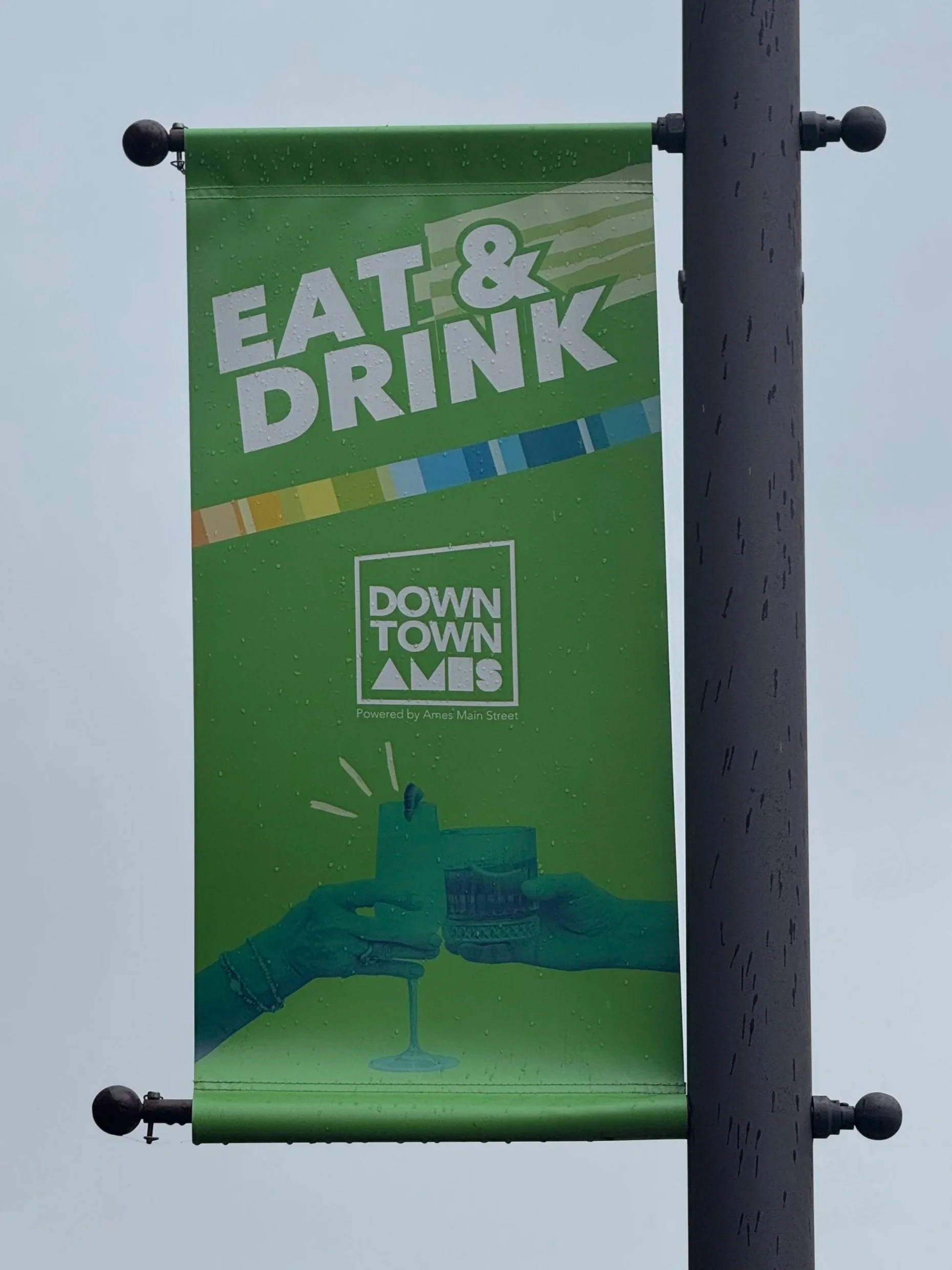
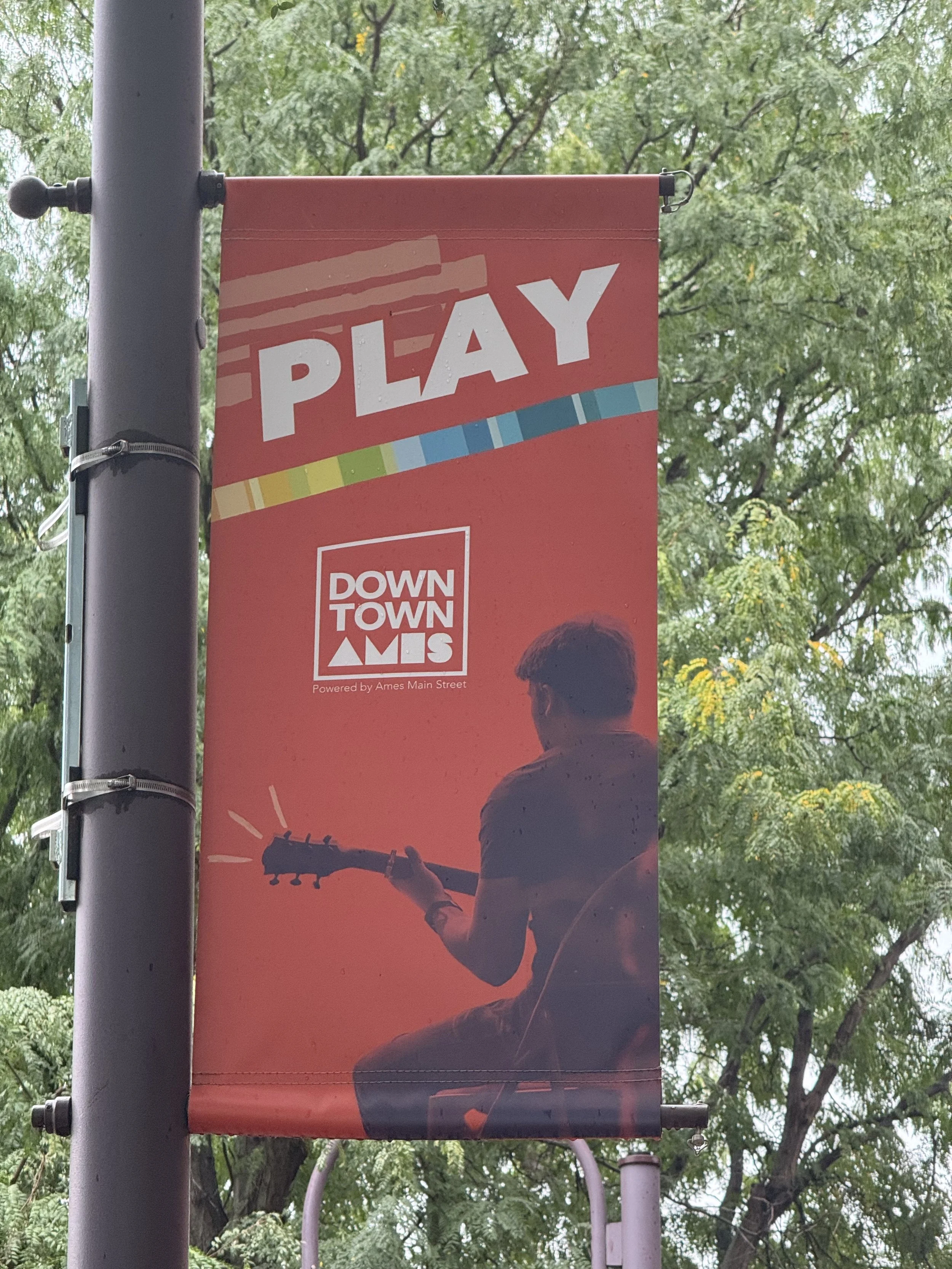
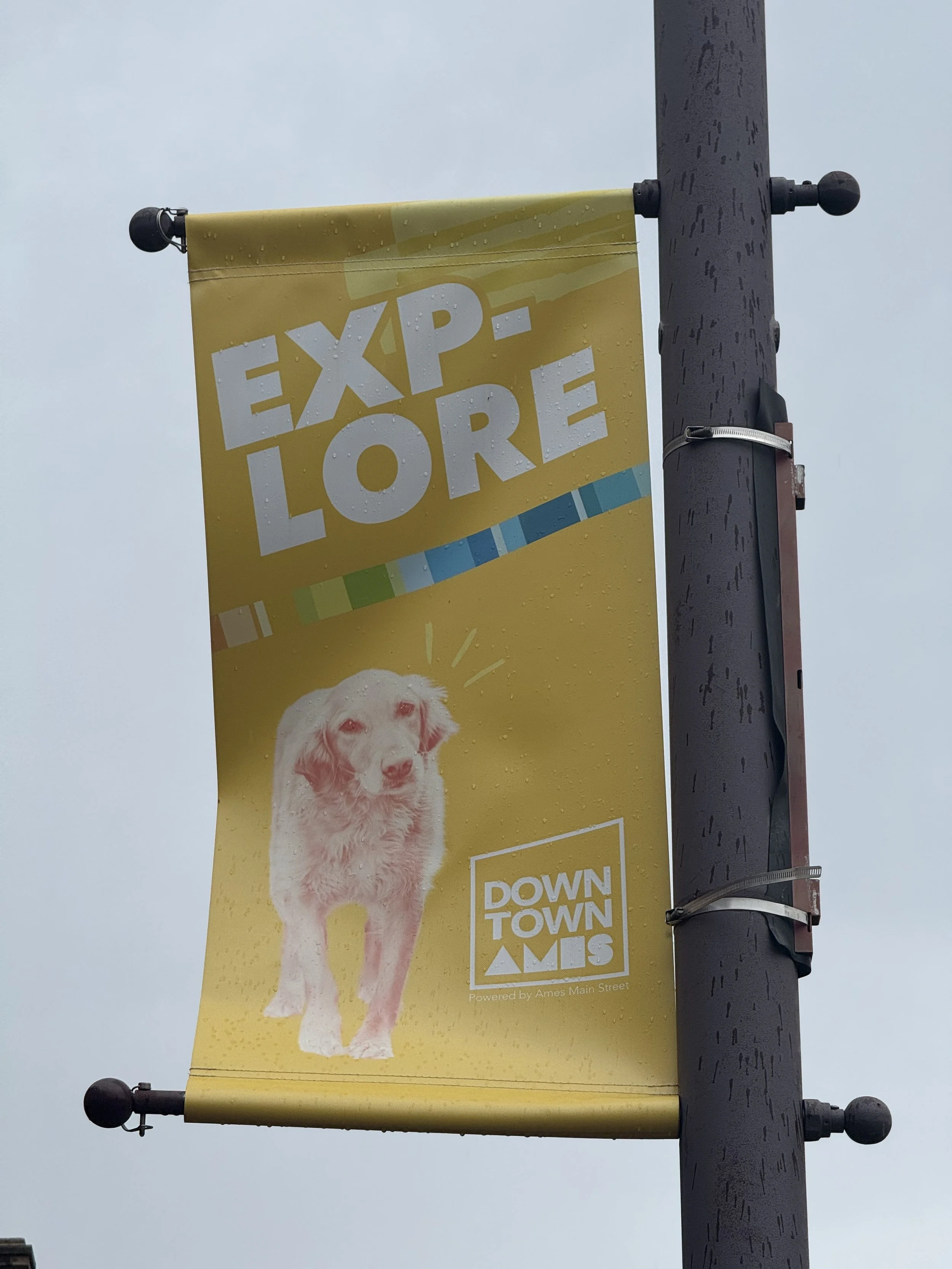
Downtown Ames, signs on Main Street
Ames, Iowa
WRITING PROMPTS & VIDEO PROJECT IDEAS
Monday, September 21 -
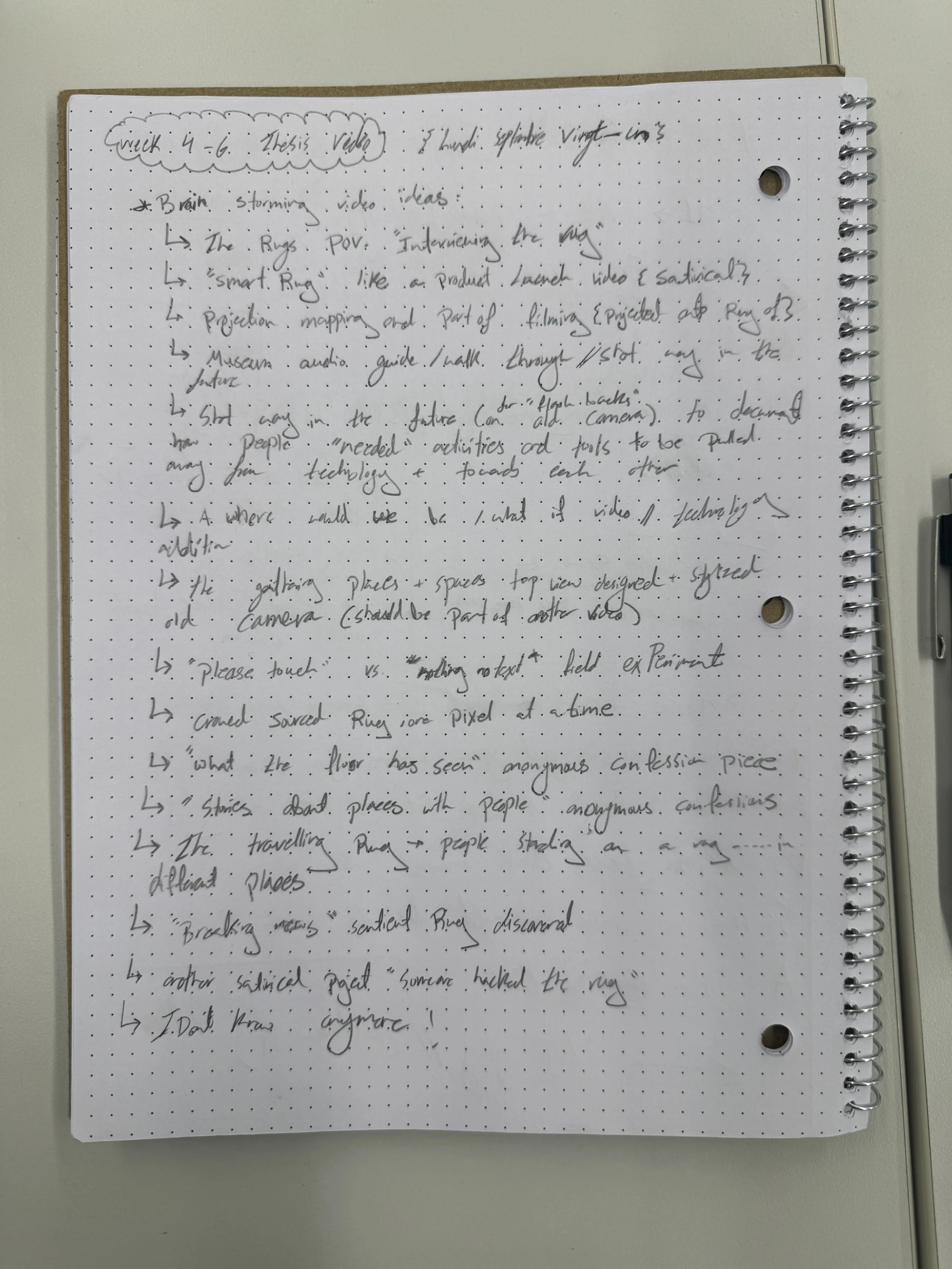
Since my handwriting is incoherent, here is a recap of what I wrote, also as a way to ideate further by re-explaining my thoughts and organizing the concepts:
[Not in any particular order]The Rug’s point of view/Interviewing the rug
“Smart Rug”: a satirical product launch video
Projection Mapping to create the video - projecting onto rug 01 [Would allow me to test projection mapping further]
A museum audio guide/ walk through
A futuristic video describing how people in the past [now] (this part would be filmed on a vintage camera) needed devices such as interactive rugs to bring them together and pull them away from technology
The gathering places and spaces: top-view video clips of people around coffee tables, desks, and dining room tables - Could be part of the previous idea [documentary-like]
A “Where would we be” video without technology, without individualistic tendencies and cultures
“Please touch” vs. no sign field experiment
Crowdsourced Rug, one square at a time
“What the floor has seen” anonymous confessions from people - read by one or two people [filming only legs down]
Stories about places, with people - anonymous confessions again, feel-good stories
The traveling Rug - people standing on a rug in different places [could pair well with either one of the anonymous confession videos] [I could use one of the new mini rugs/test rugs]
“Breaking news” sentient Rug discovered.
Another satirical project, maybe “Breaking news” again: “Someone hacked the rug”
And the last thing I wrote in my notes is “I don’t know anymore!” Yes, with the exclamation mark, I write the same way I type, apparently!
I don't want to focus only on the output when thinking about ideas; I want to create a video that also generates ideas and helps refine the thesis work/project.
I think these ideas on the left here all stem from similar concepts but draw on different ideas; my top favorites are the ideas that question and highlight the human component: why do people do what they do, how do people connect, how do people use the grounds, floors, and rugs of their surroundings, how and why do people?
Some ideas stray further away but still question an aspect of the thesis I have been wanting to explore: how do people react to signage in an environment? What would the end product of a community created/crownsourced rug look like? Is the rug/table/chair/food what brings people together? What will we look like when we are studied in the future? What does needing spaces to prompt connection say about us as a society? How do other societies do this better than others?
Why do people even need to be pushed to communicate and interact? What holds people back? What is the biggest reason we don’t pick up a phone and talk to each other anymore?
Where would we be without the technology we have today? What would we have innovated and discovered? What other direction would we have gone?
Current Chosen Idea/Plan [from list]
Wednesday, September 23 -
A documentary-style video, narrated around 2060, documenting, commenting on, surveying, and looking back at the 2020s, and explaining how humans interacted with one another during that time. It explains how we sat at full tables without speaking, showed up at gatherings and didn’t know how to communicate with people, and how connection became something people quietly unlearned.
“Archival Footage” - The short video will include “Archival Footage” videos of people on their devices, people watching big screens, people at desks, coffee tables, and dining tables not having any form of conversation [ this portion of the archival footage will be recorded on old cameras to exaggerate the time difference and emphasize how much better video quality had gotten in the future.
“Anonymous confessions” - The second part will include “Anonymous confessions” text posted online or “on the line,” as they say in 2060. Confessions and texts from the 2020s read by someone in the future [which, in the video universe, is actually the present] - this will be recorded using a higher-quality camera. These will be small testimonials - examples: someone has been trying for ages to say hello to their neighbor in the elevator but never mustered up the courage to.
Before the rugs - The main narrator will then talk about how people held devices that connected them to the world. Still, somehow they resorted to & needed to use primitive technologies like reactive rugs to initiate conversation and connection.
There needs to be a balance between satire and seriousness — enough to get the point across properly while still making something entertaining to watch. As for how this stand-alone project relates to the thesis: I'm currently figuring out the why. I know the project is community-oriented, and I know I want to create a space that brings people together. This video will include research and stories from real individuals [rewritten for true anonymity and to fit the script] — stories that will help me better understand people's minds, fears, and needs in a way no other kind of research can.
DRAFTS -
The elevator: "There's a girl on my floor. We take the same elevator most mornings; we must have the same schedule or start work at the same time. I've been meaning to say hi for- I’m not sure; I think it's been a month now? I've even rehearsed it; it's embarrassing how many times. It's one word. I just... every time the doors open, I sort of panic and freeze up. I know her coffee order from the cup. I don't know her name; I’m not like stalking her or anything weird. I guess the last time I tried to say anything, I froze up and did one of those half-awkward, not really a smile smiles…”
The party: “I went to a thing on Saturday. Twelve people, one flat, which took a lot for me to even, you know, go. I felt rather guilty I had previously canceled on her - um, the host, I mean- two other times. At some point during the gathering, I looked up, and everyone was on their phones, including me. I can’t say much; I mean, I looked up from my phone to see everyone on their phones. And I remember thinking, we're all here. We did the hard part, or what I think is the hard part. We showed up. Then it began to feel as though no one knew what to do next.”
The unlearning: “I used to be good at this. Talking to people, I mean. I don't know when it stopped; there wasn't a moment. It's like a language I stopped practicing; I just started choosing the comfortable route, the quiet one. At some point, I realized I keep waiting for someone to go first. I think everyone's waiting for someone to go first.”
Anonnymous story submisison created to gather stories and testilonions with a few questions to help explain the types of stories needed for the testimonials.
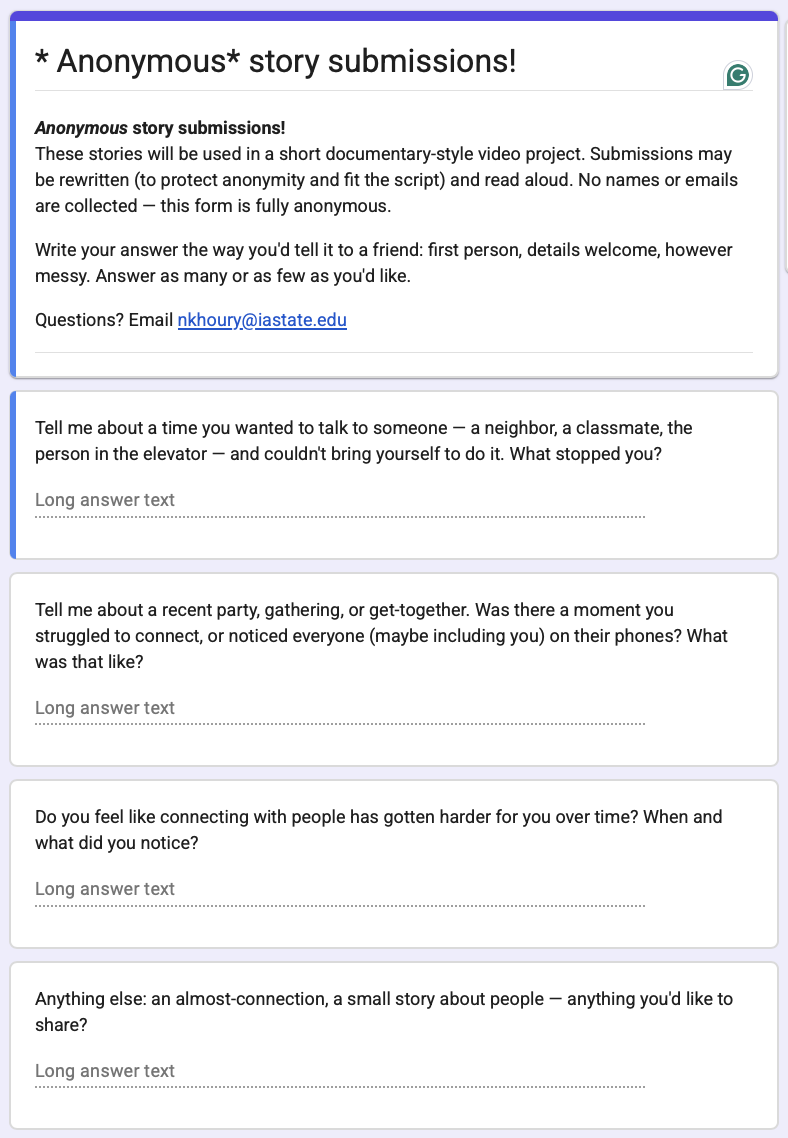
Here are some examples of texts based on the survey responses -
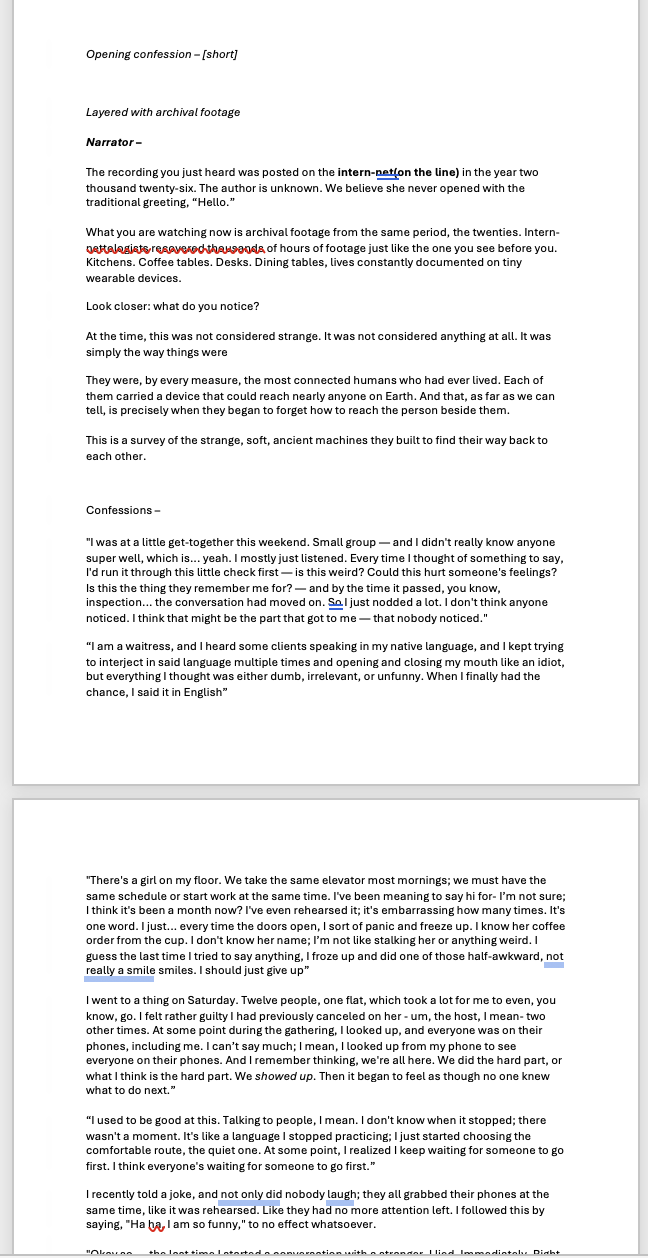
Sometimes modified to fit the video's vision and add more drama, these story submissions are now based on true stories. Here are a few:
"I was at a little get-together this weekend. Small group — and I didn't really know anyone super well, which is... yeah. I mostly just listened. Every time I thought of something to say, I'd run it through this little check first — is this weird? Could this hurt someone's feelings? Is this the thing they remember me for? — and by the time it passed, you know, inspection... the conversation had moved on. So I just nodded a lot. I don't think anyone noticed. I think that might be the part that got to me — that nobody noticed."
“I am a waitress, and I heard some clients speaking in my native language, and I kept trying to interject in said language multiple times and opening and closing my mouth like an idiot, but everything I thought was either dumb, irrelevant, or unfunny. When I finally had the chance, I said it in English”
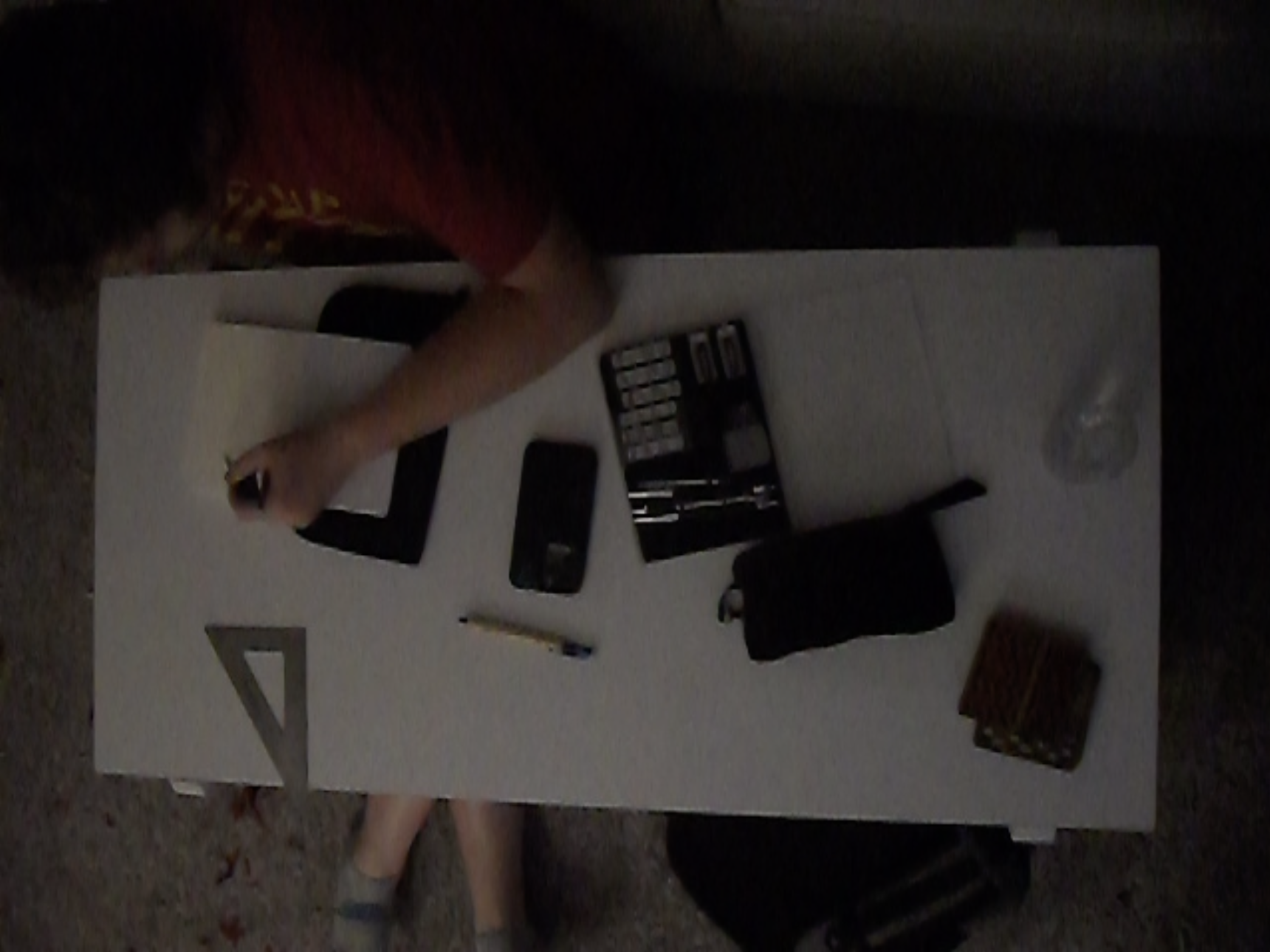
Testing Camera, video, and audio quality
Tuesday, September 22 -
Old Camera -
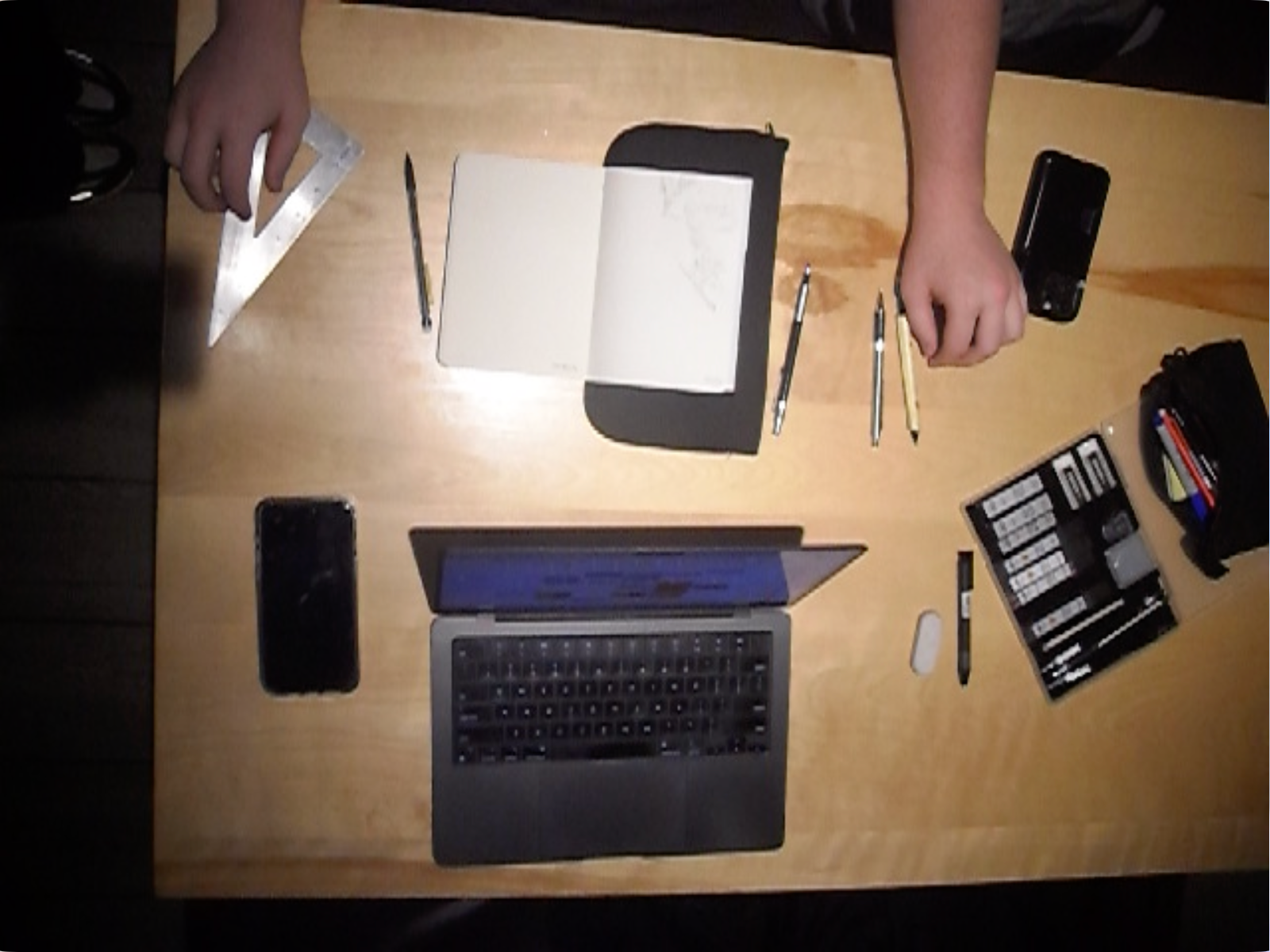
Older Camera -
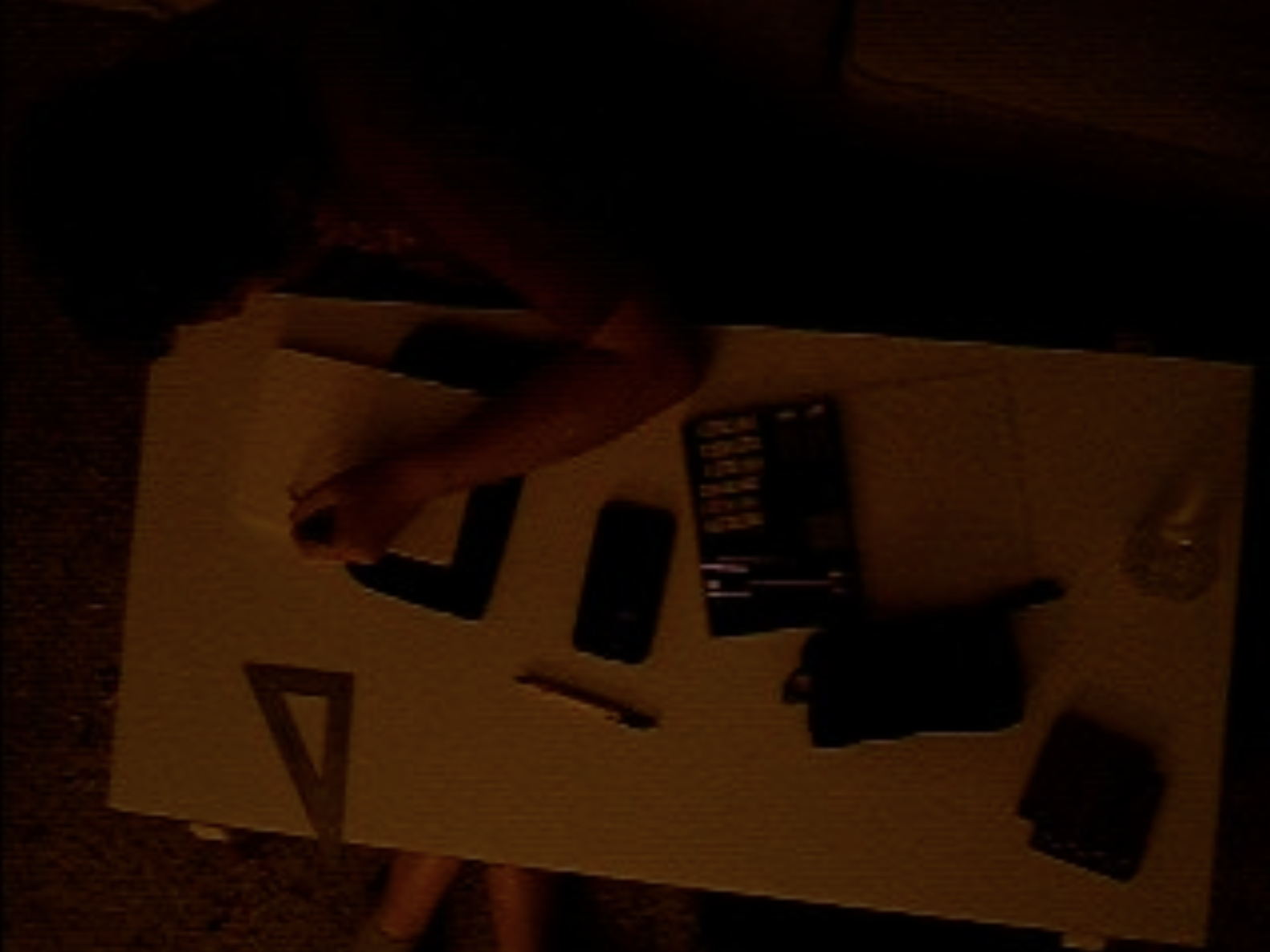
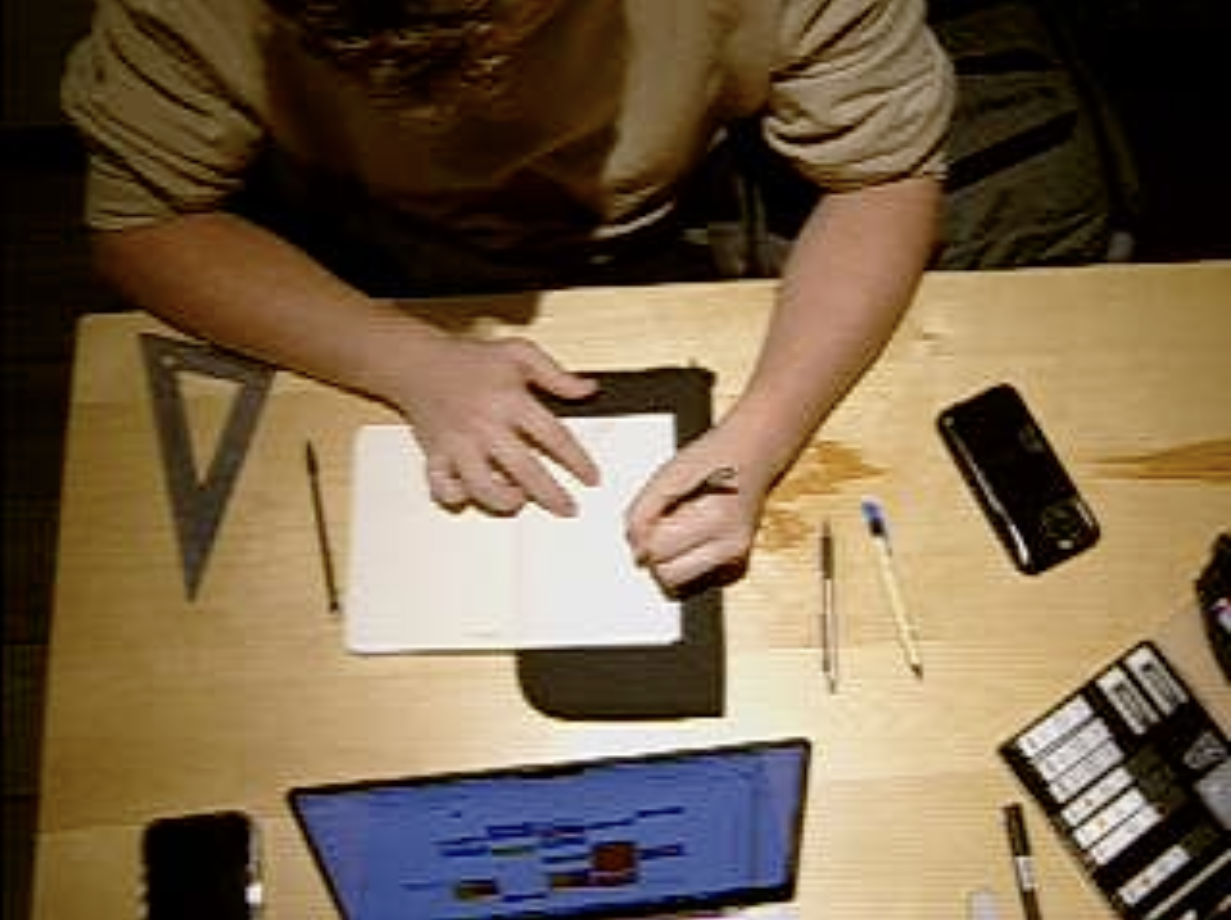
Testing the same setup with different cameras, these images are all screenshots from short video clips with music playing in the background and people talking.
Thursday, September 24 -
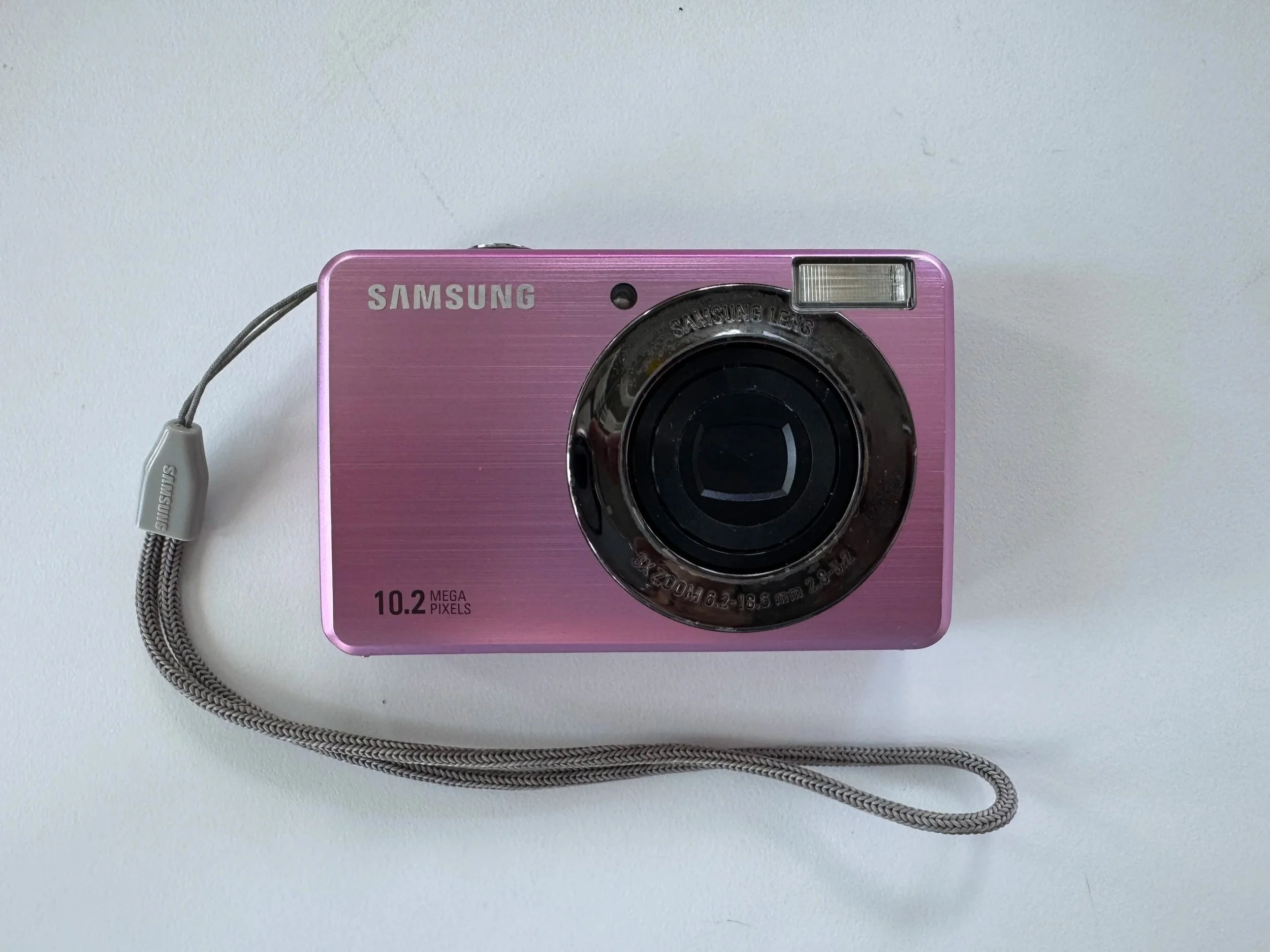
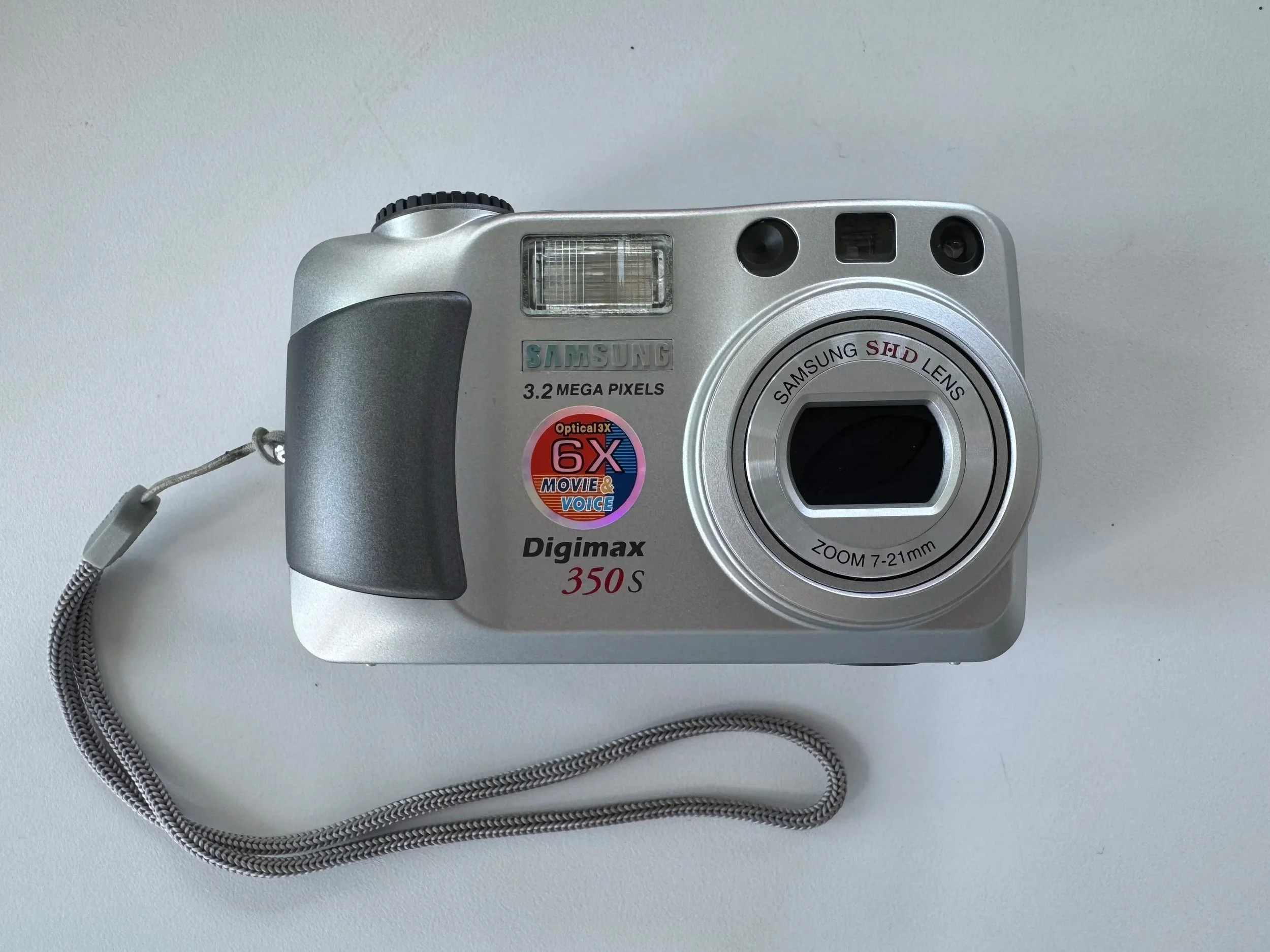
I thought I had finally decided to stick to one camera to create a more dramatic effect and drive home the point that the difference in time and technological advancements from 2026 to 2060 will be evident in the older camera. But remain consistent.
Then, last night [Wednesday, September 23], I attended the first “Afterimage” movie viewing and discussion at the College of Design. The movie was “Run Lola Run,” and the mix of camera types and filming techniques was mesmerizing! So I decided I would use both cameras, the old one and the newer one, for the “archives section.” This variation adds another layer and creates a more dynamic viewing experience; it also means I wouldn't have to re-film clips I only have on one camera.
Using multiple cameras also pushes the idea of this being “found footage” archives from the internet or “relics” off of people’s phones. Videos people take of movies in the theater and clips from CCTV, etc.
The cameras in question -
PAST WORK AND FUTURE INSPIRATION!
Monday, September 21 -
December 2024ARTGR 5120 - Audience and Perception
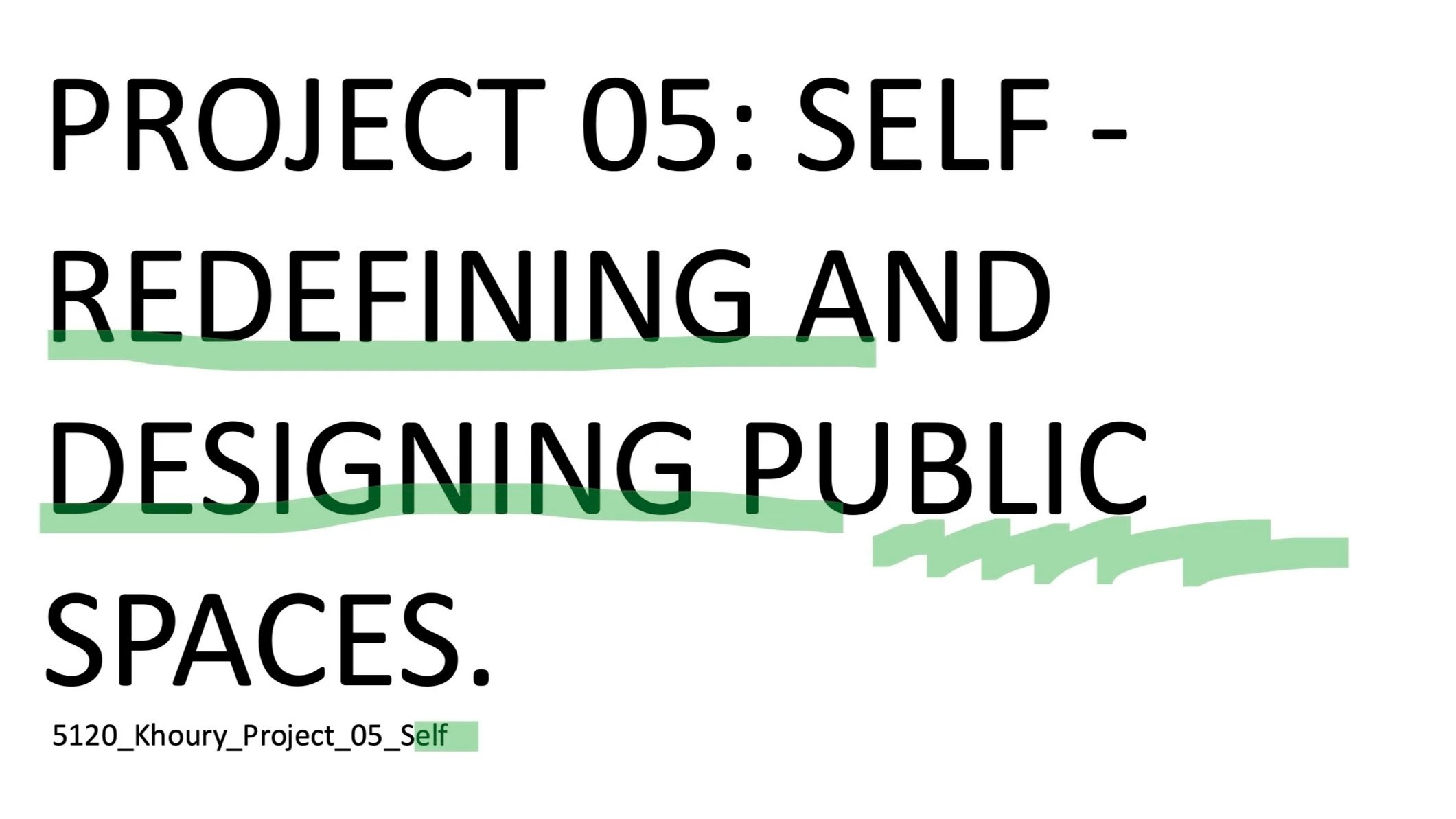
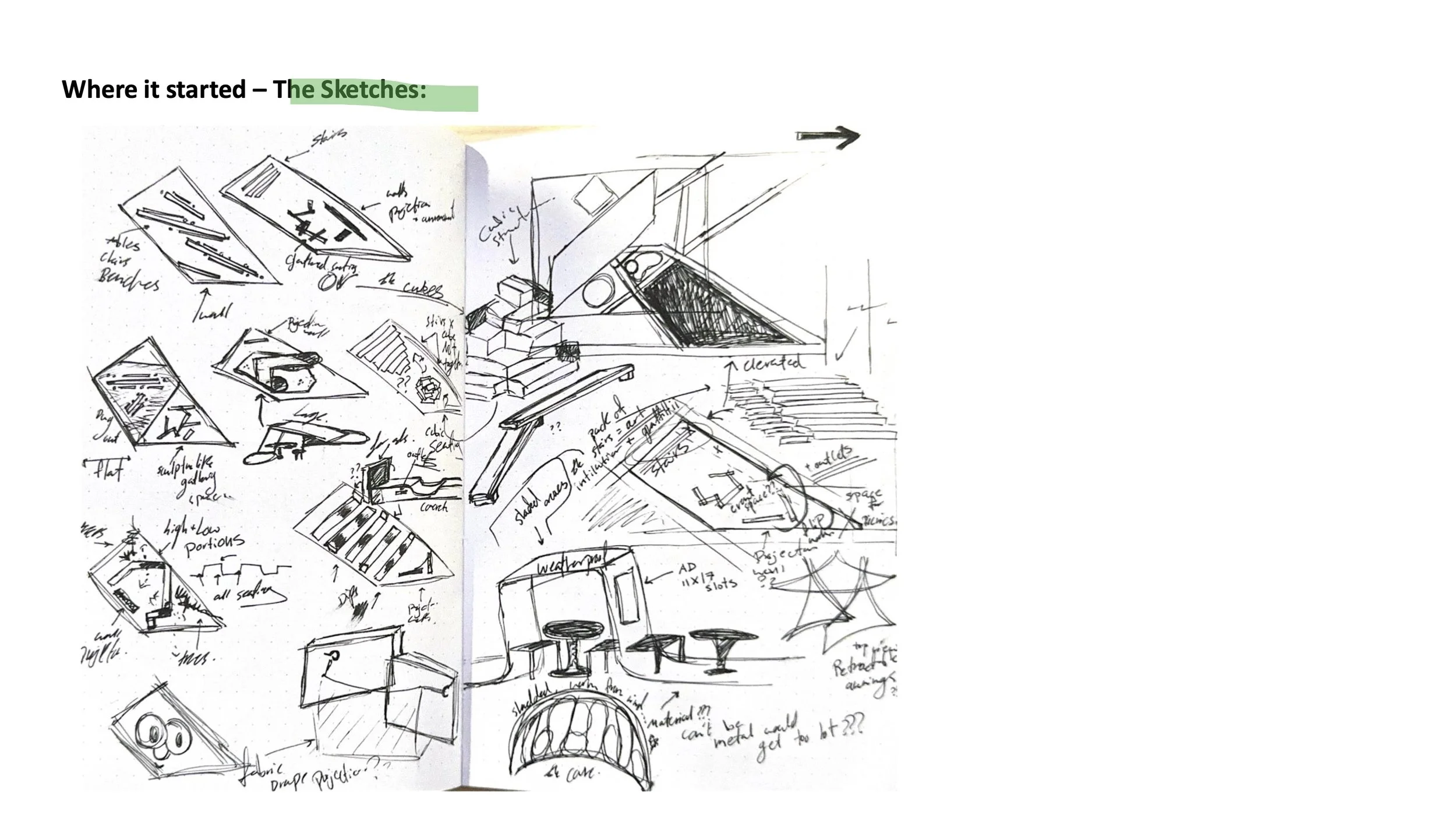
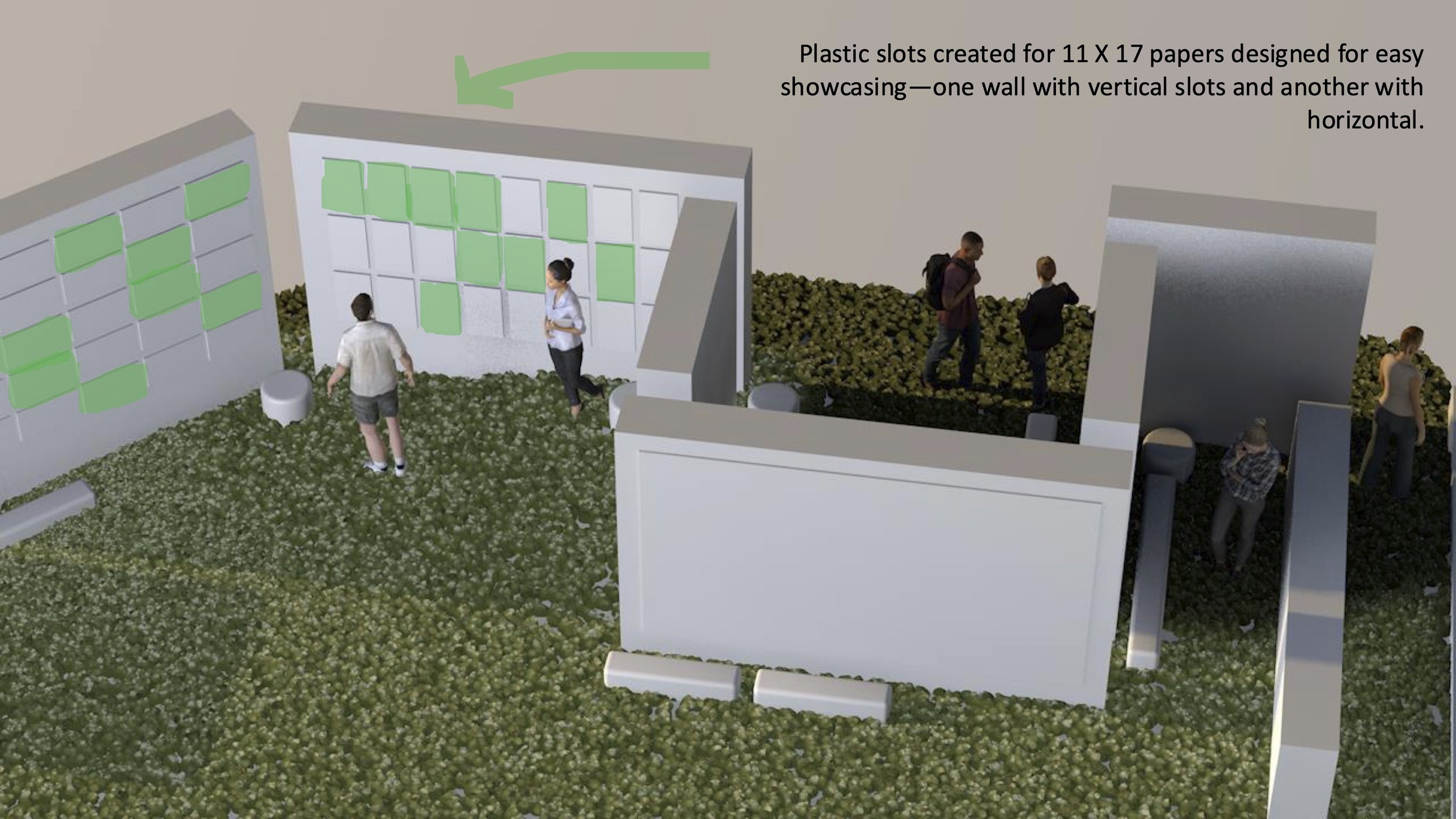
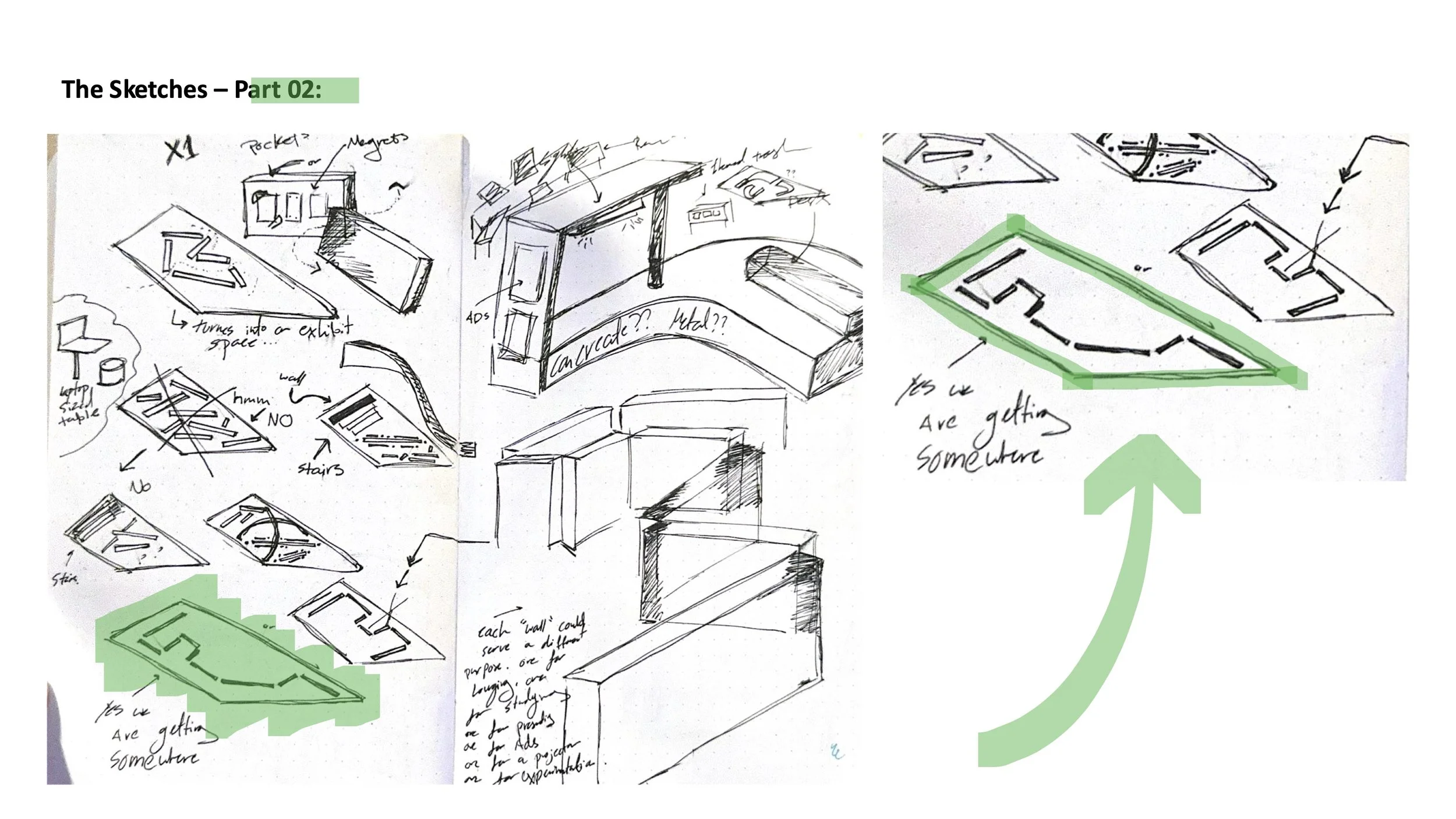
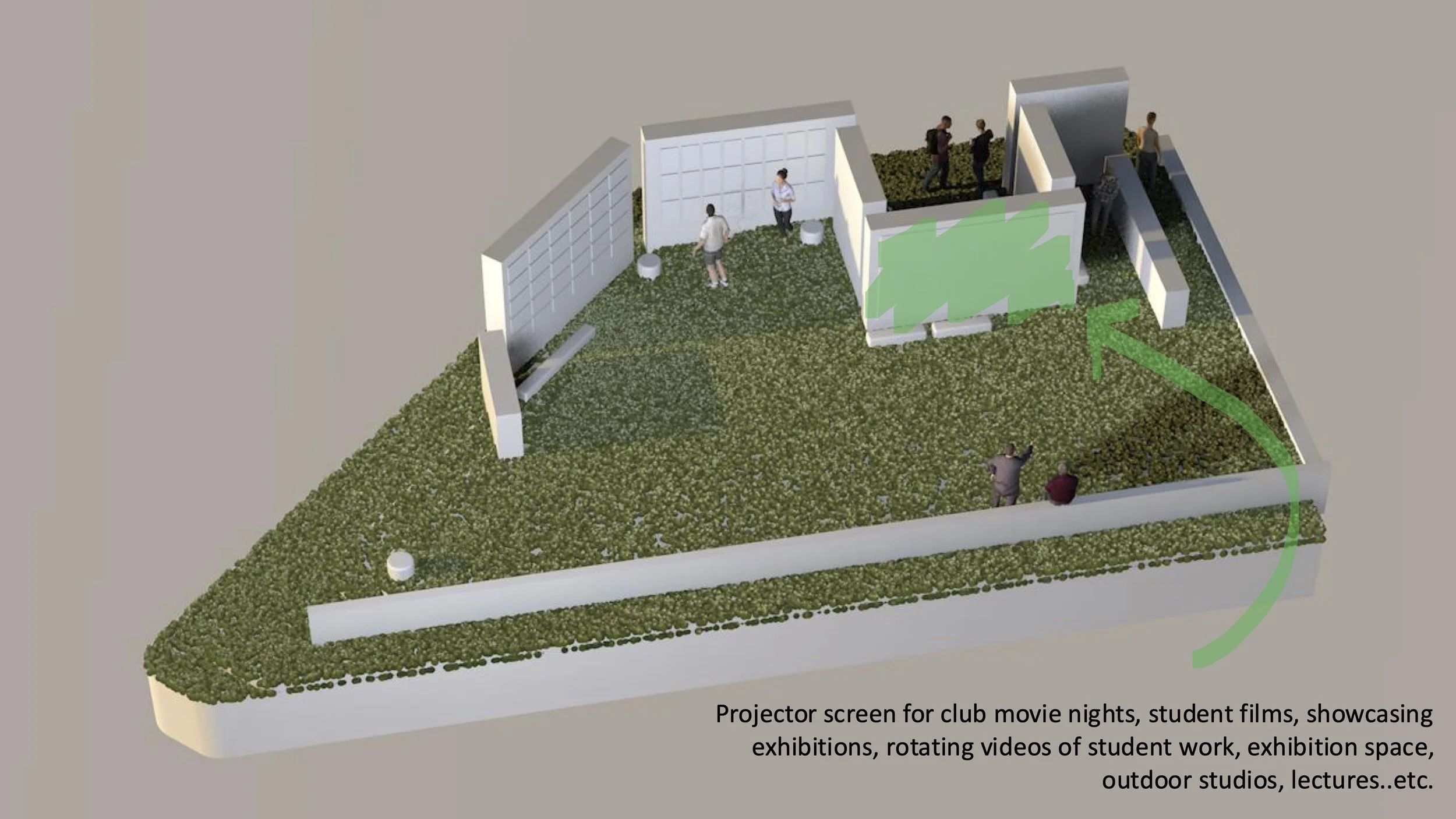
The Wordless Survey -
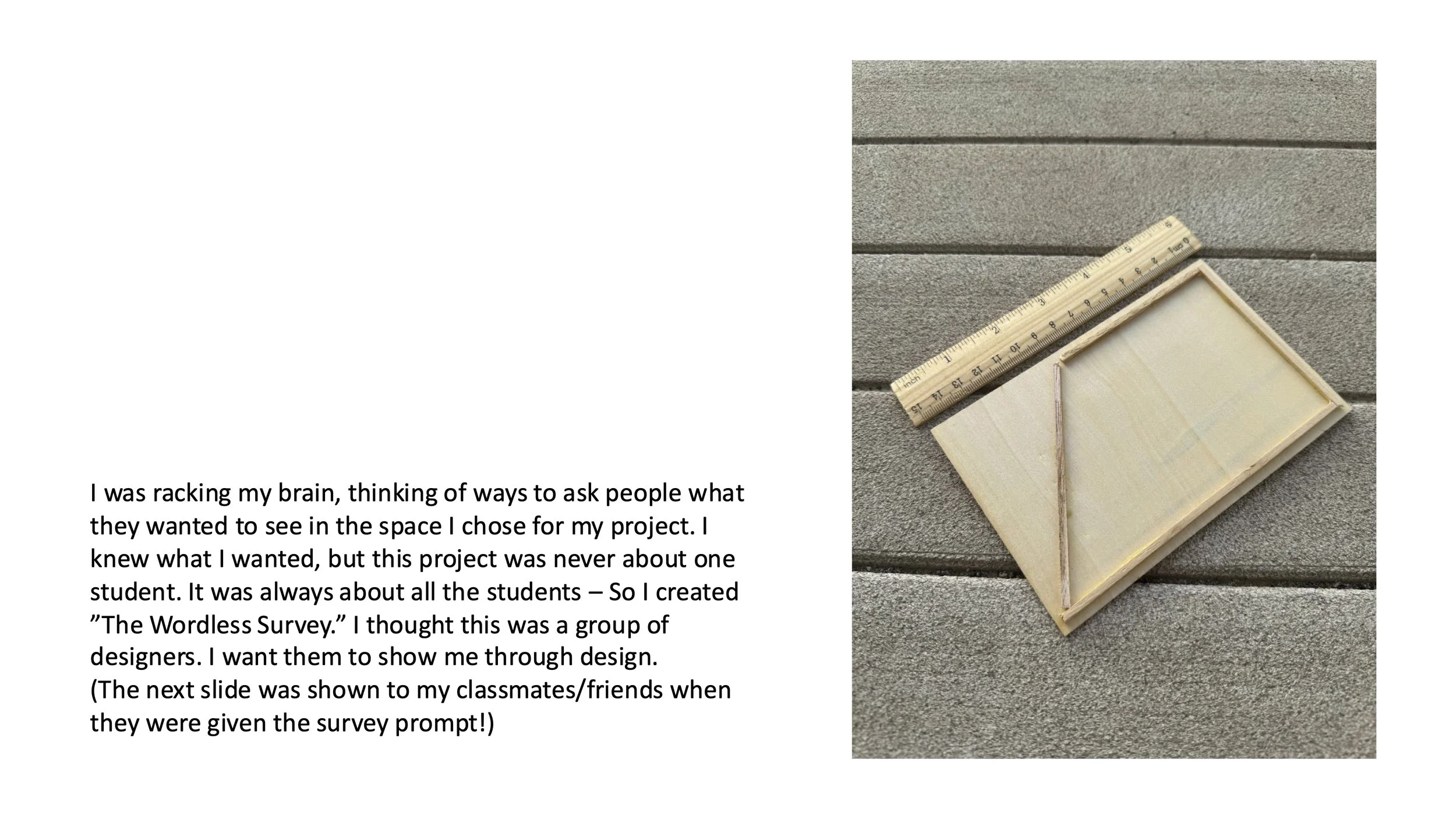
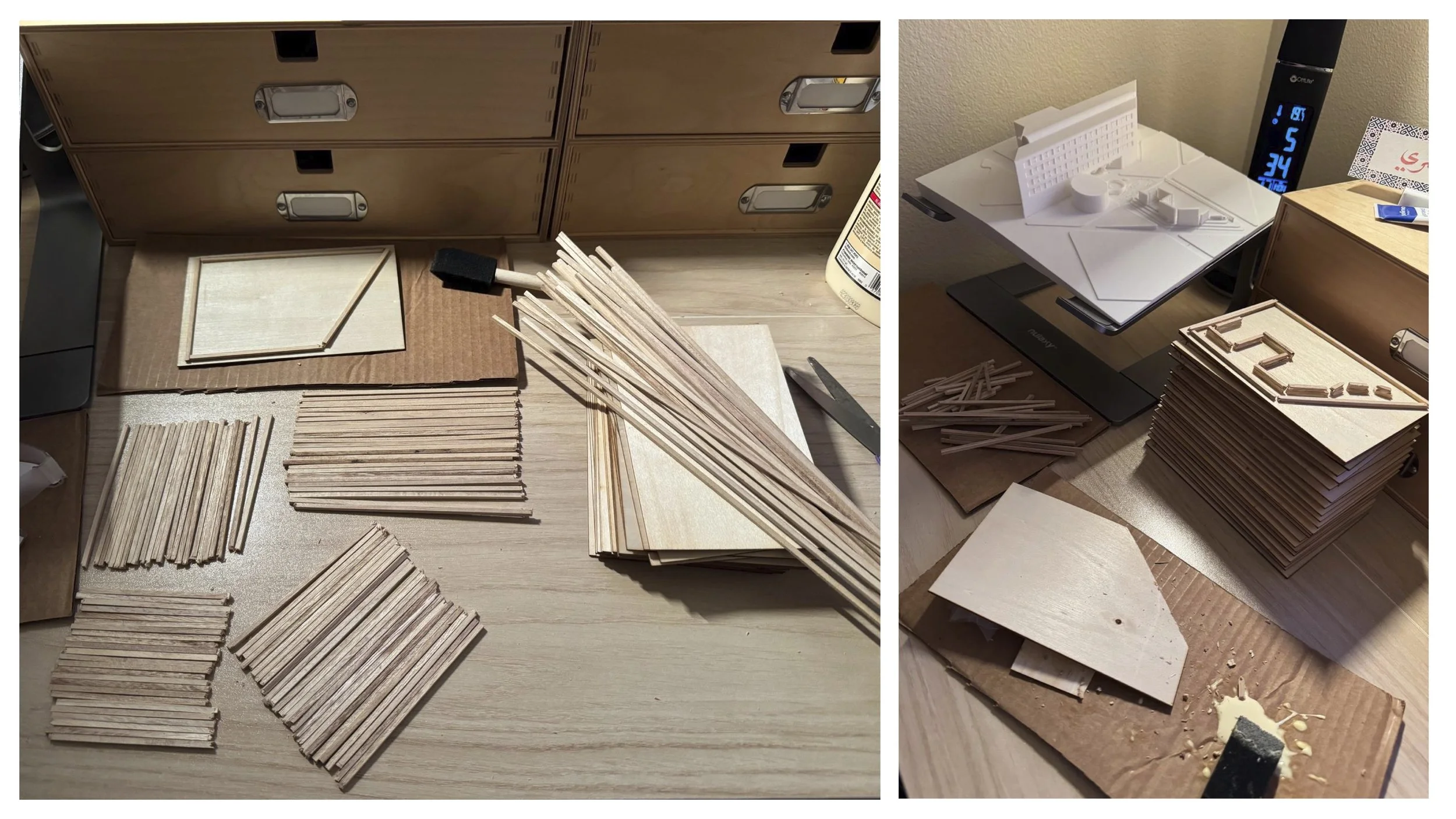
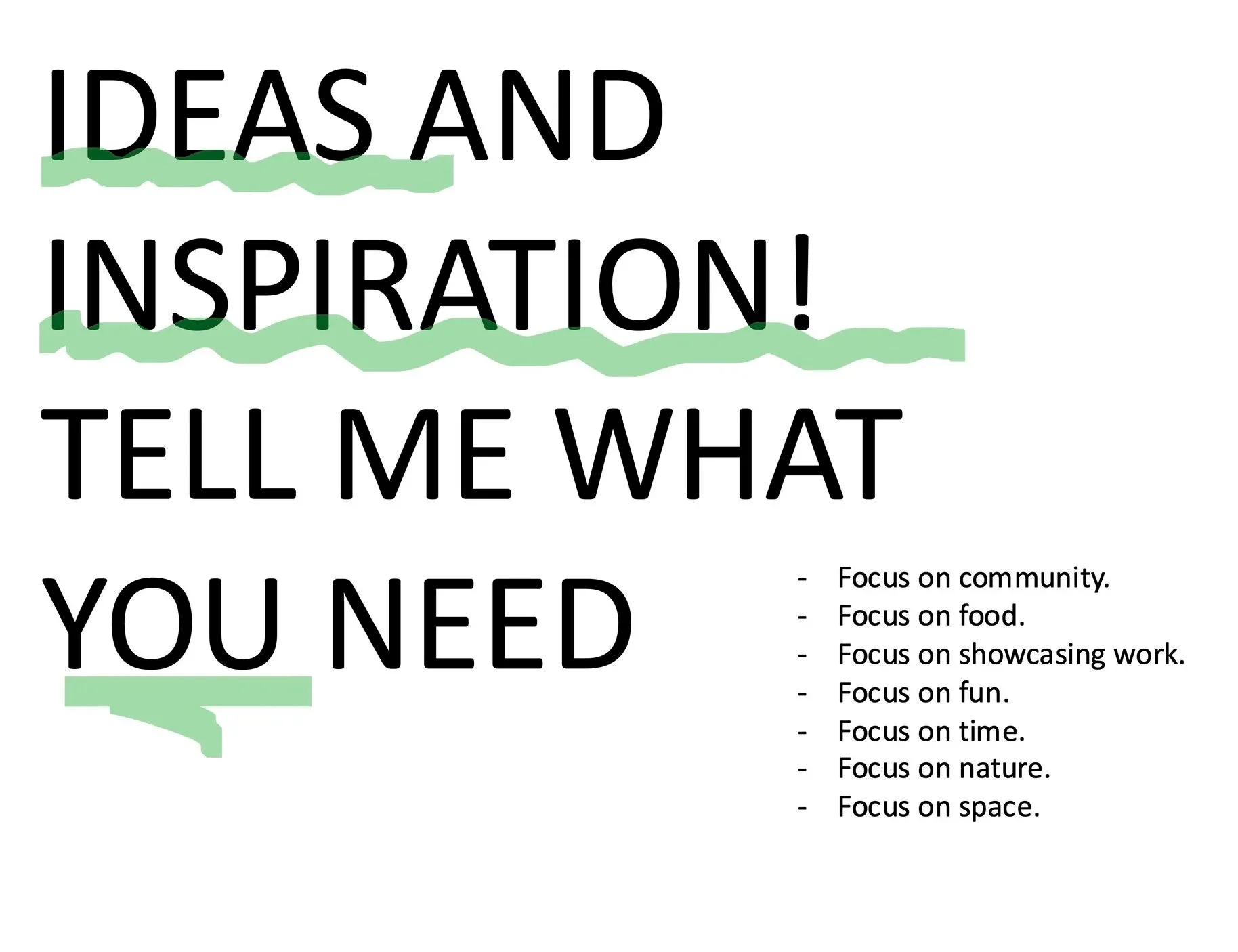
Participants were informed of the location [In front of the College of Design at Iowa State University] and then told to:
Focus on community.
Focus on food.
Focus on showcasing work.
Focus on fun.
Focus on time.
Focus on nature.
Focus on space
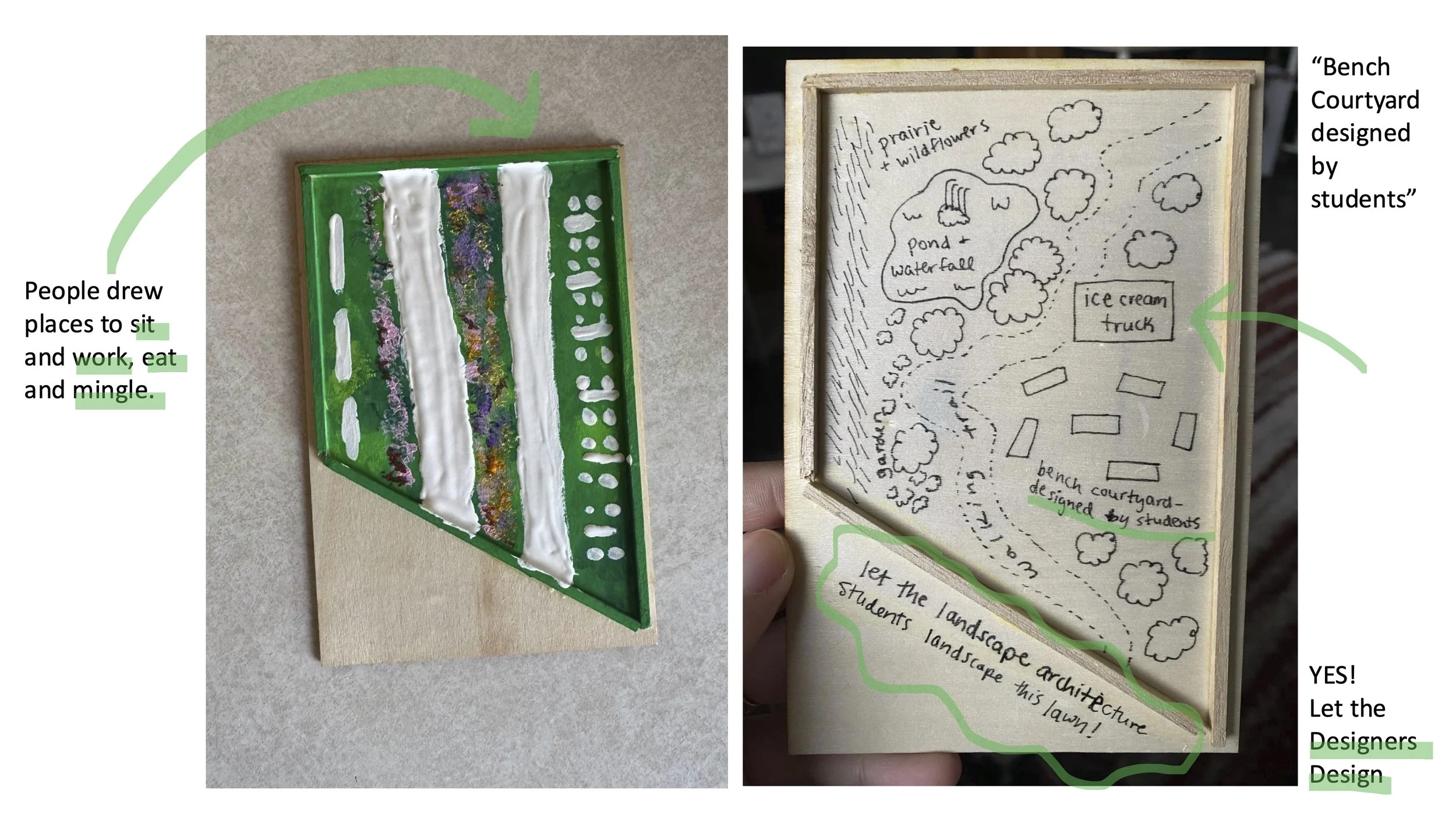
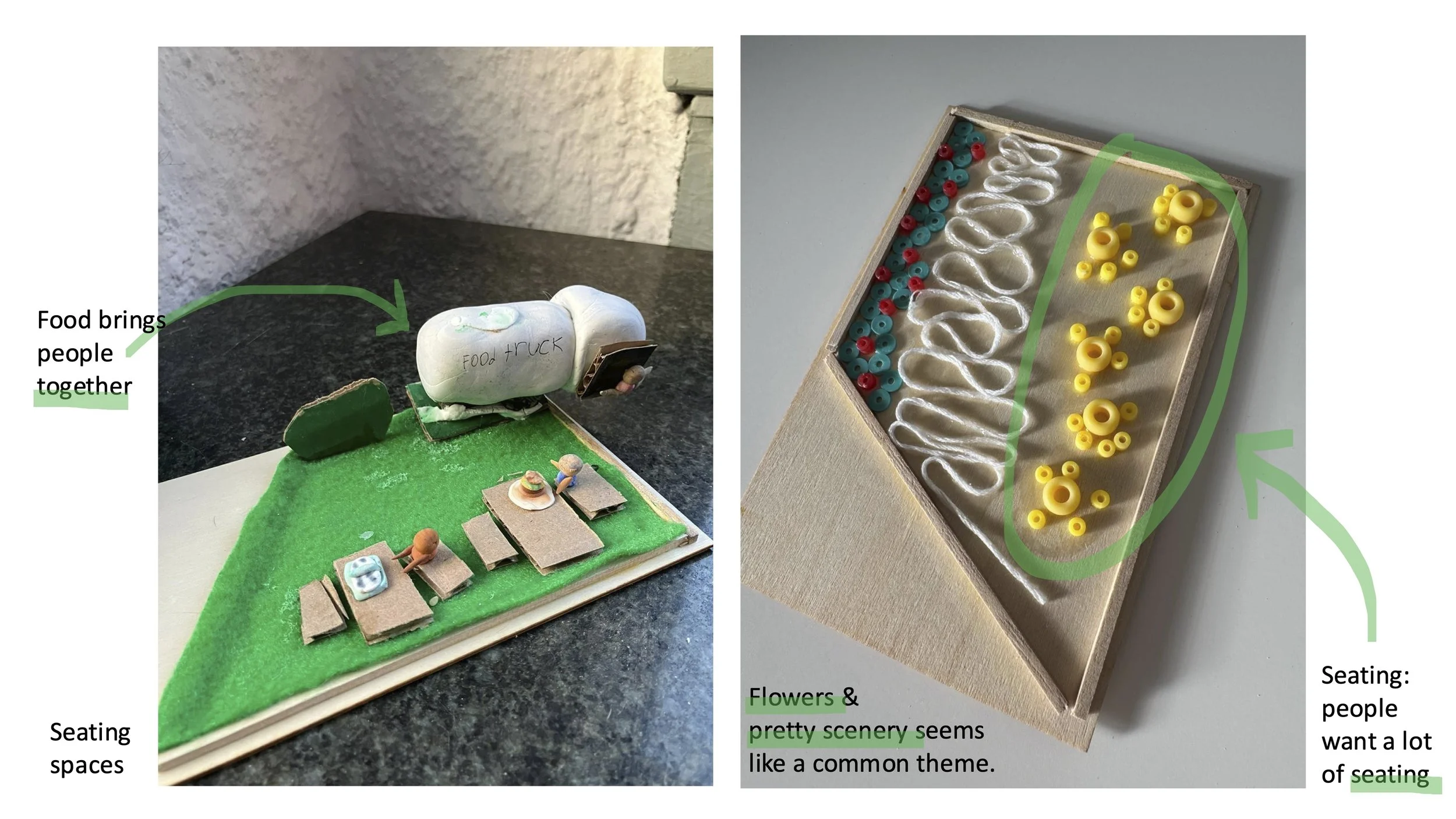
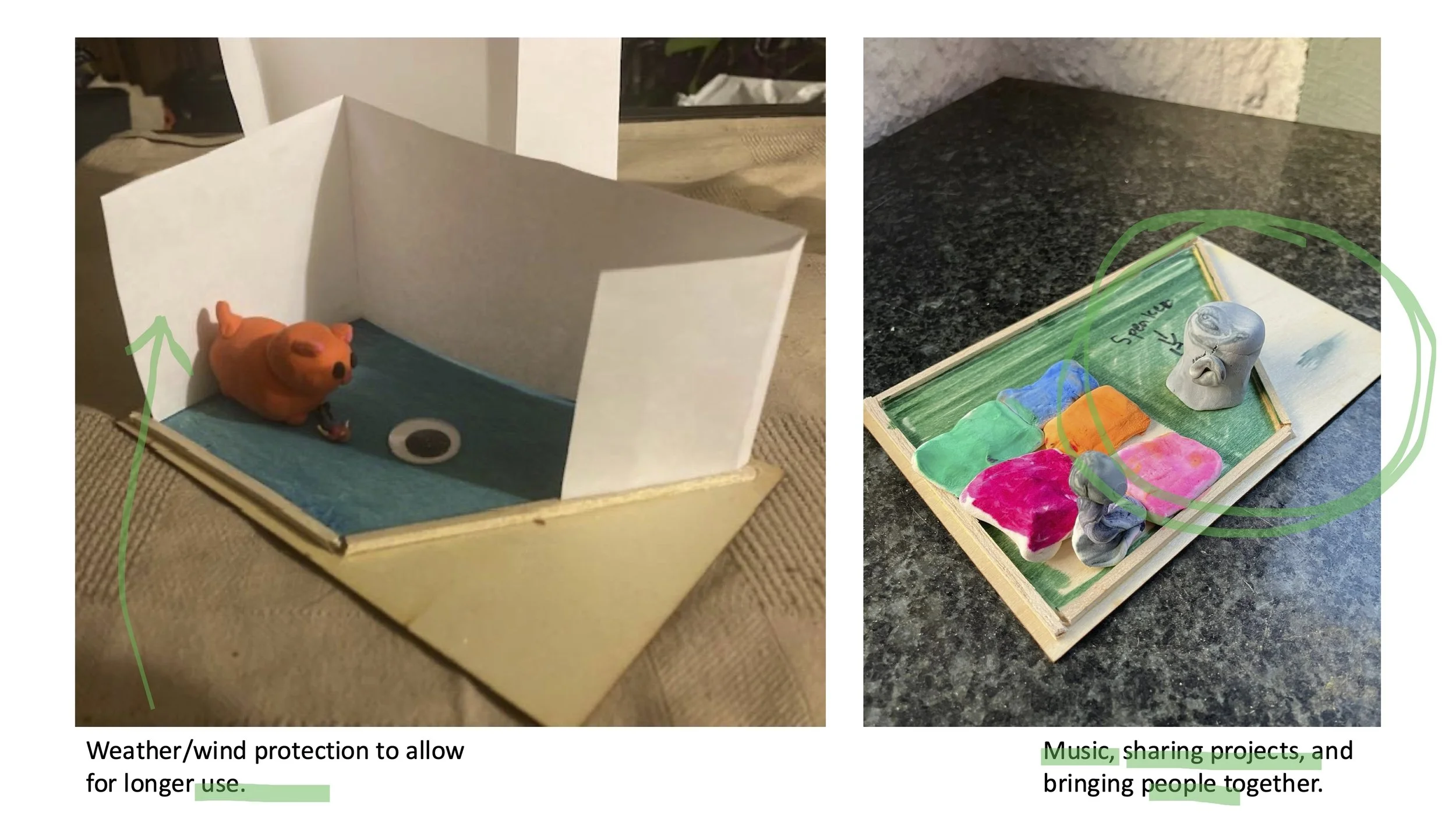
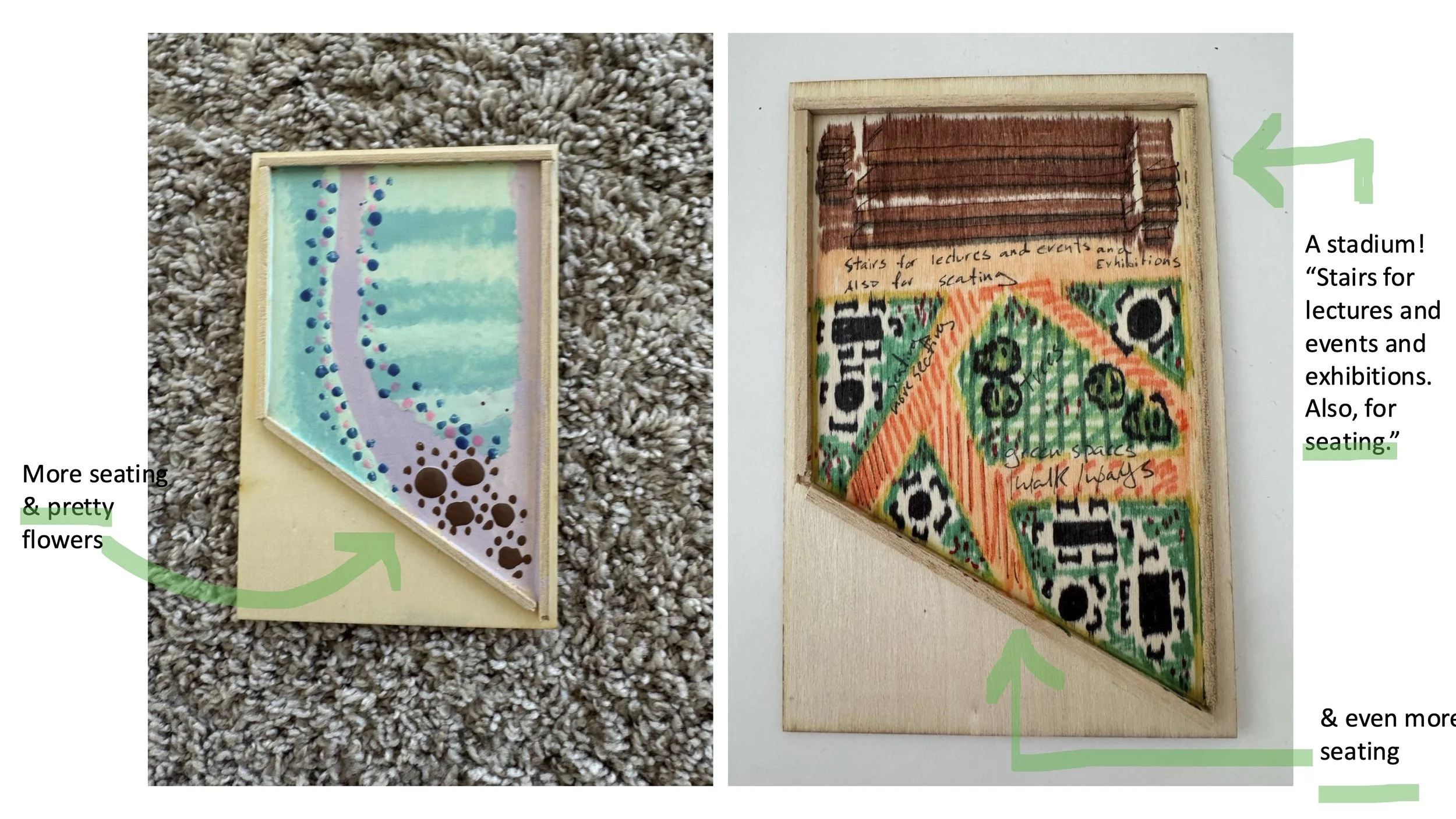
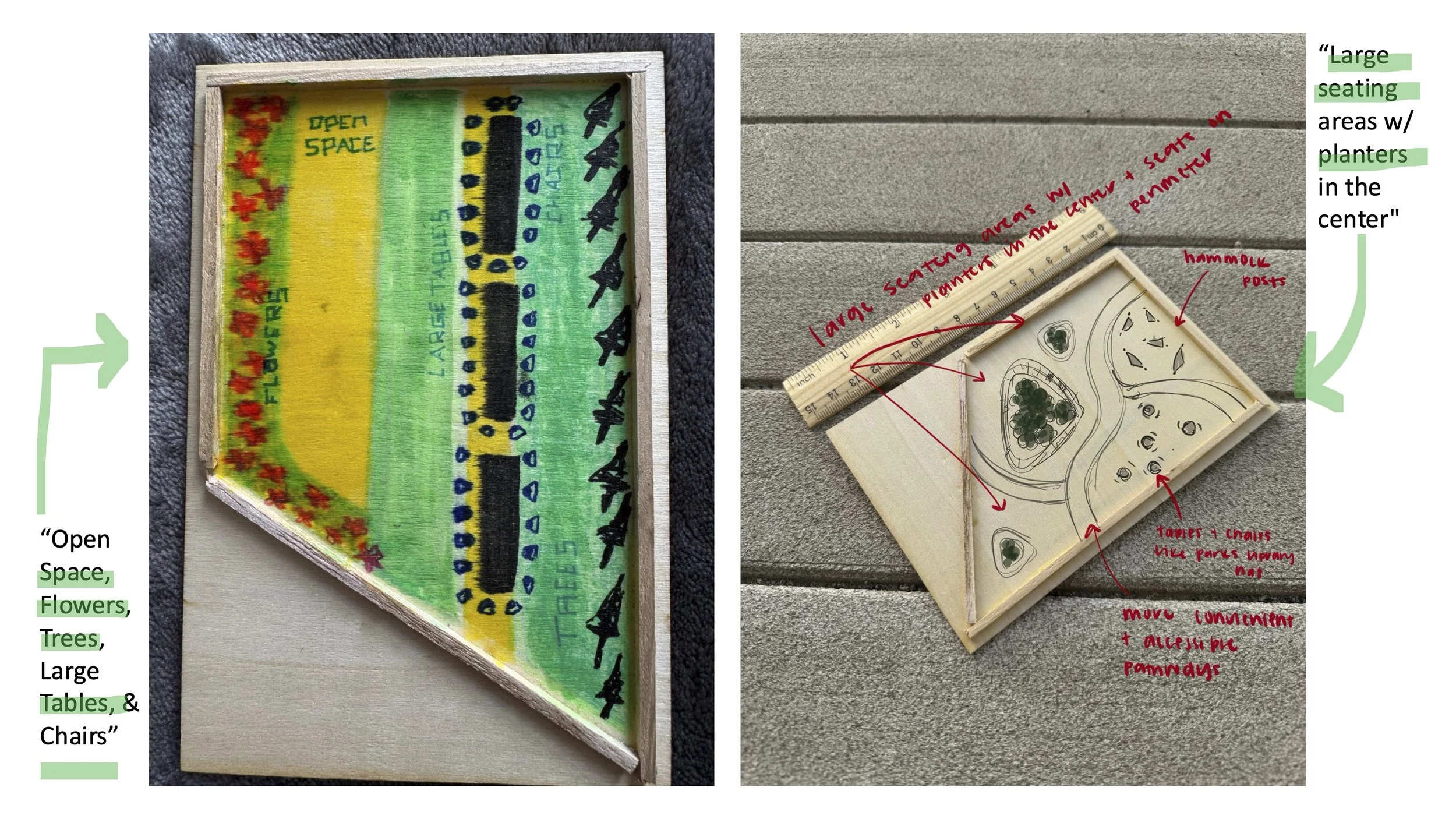
All of this context to get to the most important part - or rather, the most relevant portion of this project at this time - Deliverable 05!
The Proposal - used as writing practice for a future thesis [this was back in 2024] & the pitch to encourage and drive change within the community and explore community-oriented seating solutions, urban spaces, and areas made to accommodate student needs.
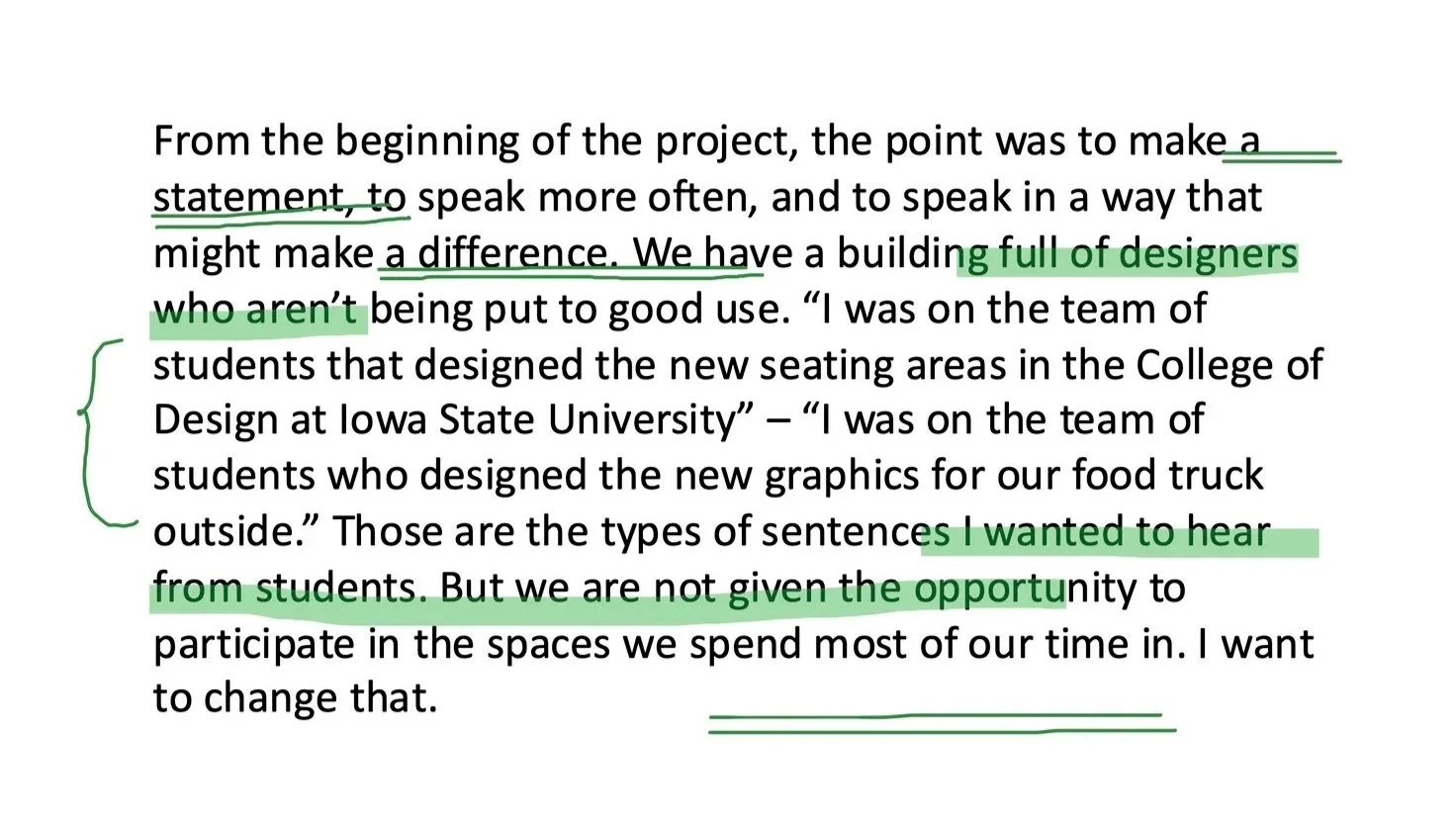
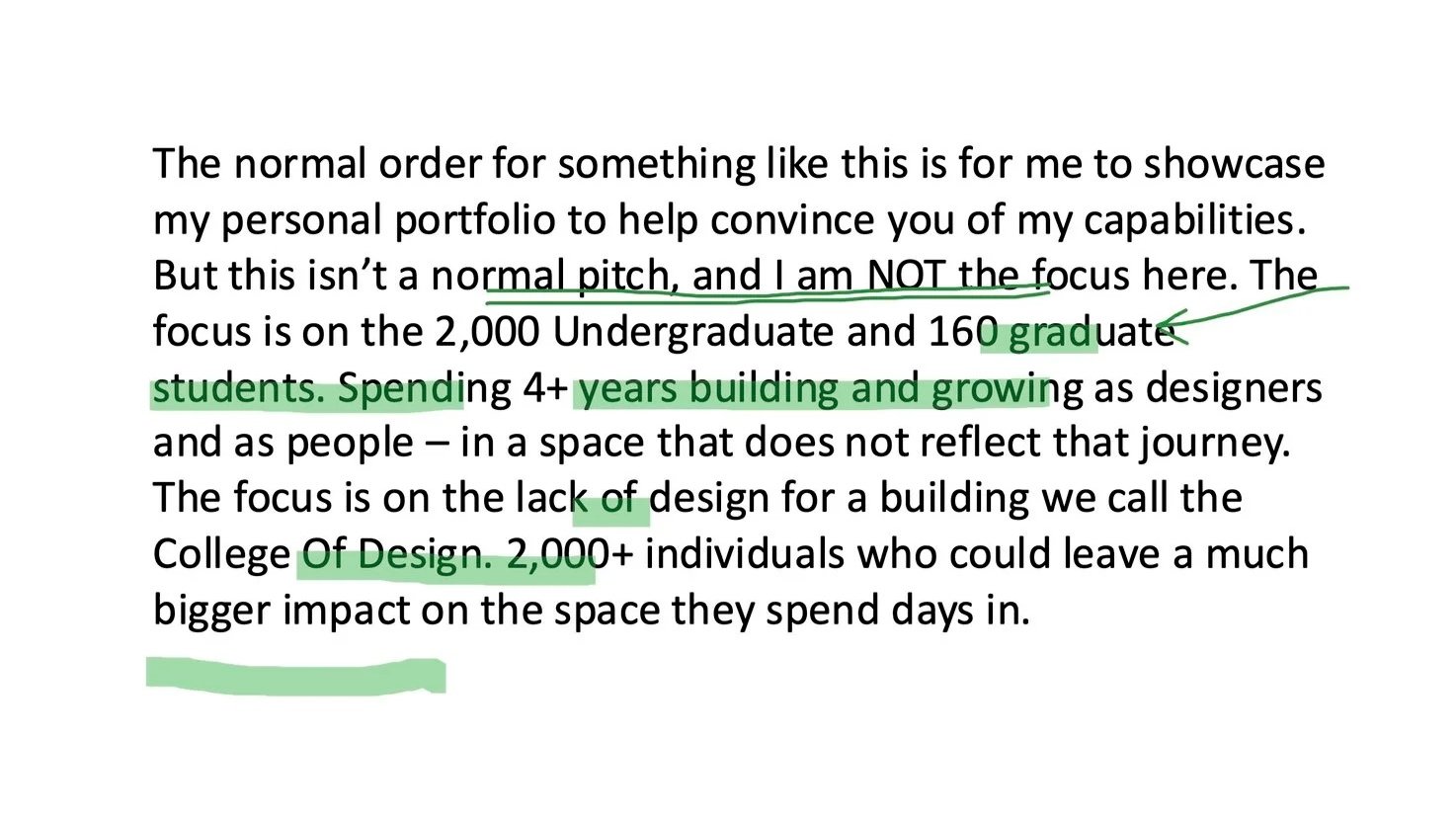
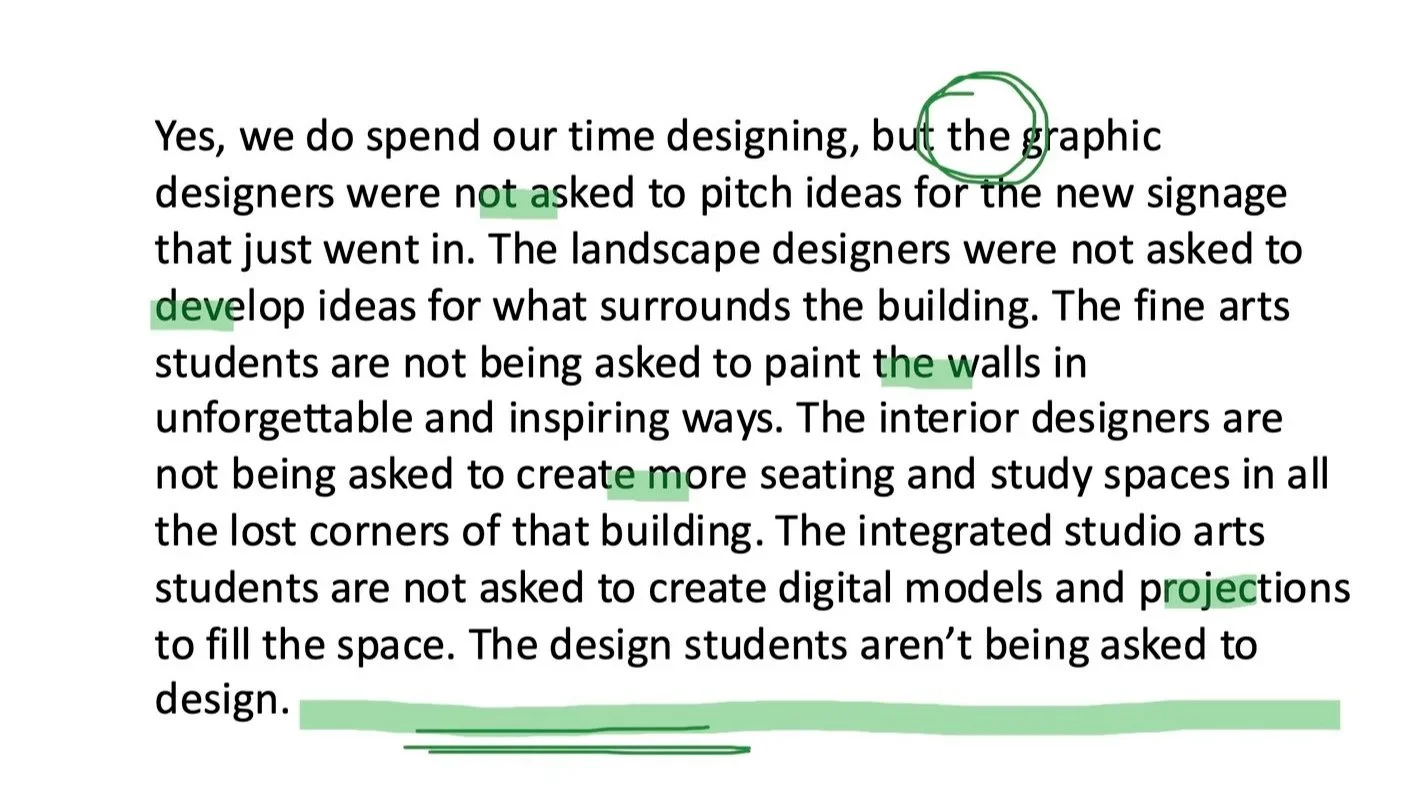
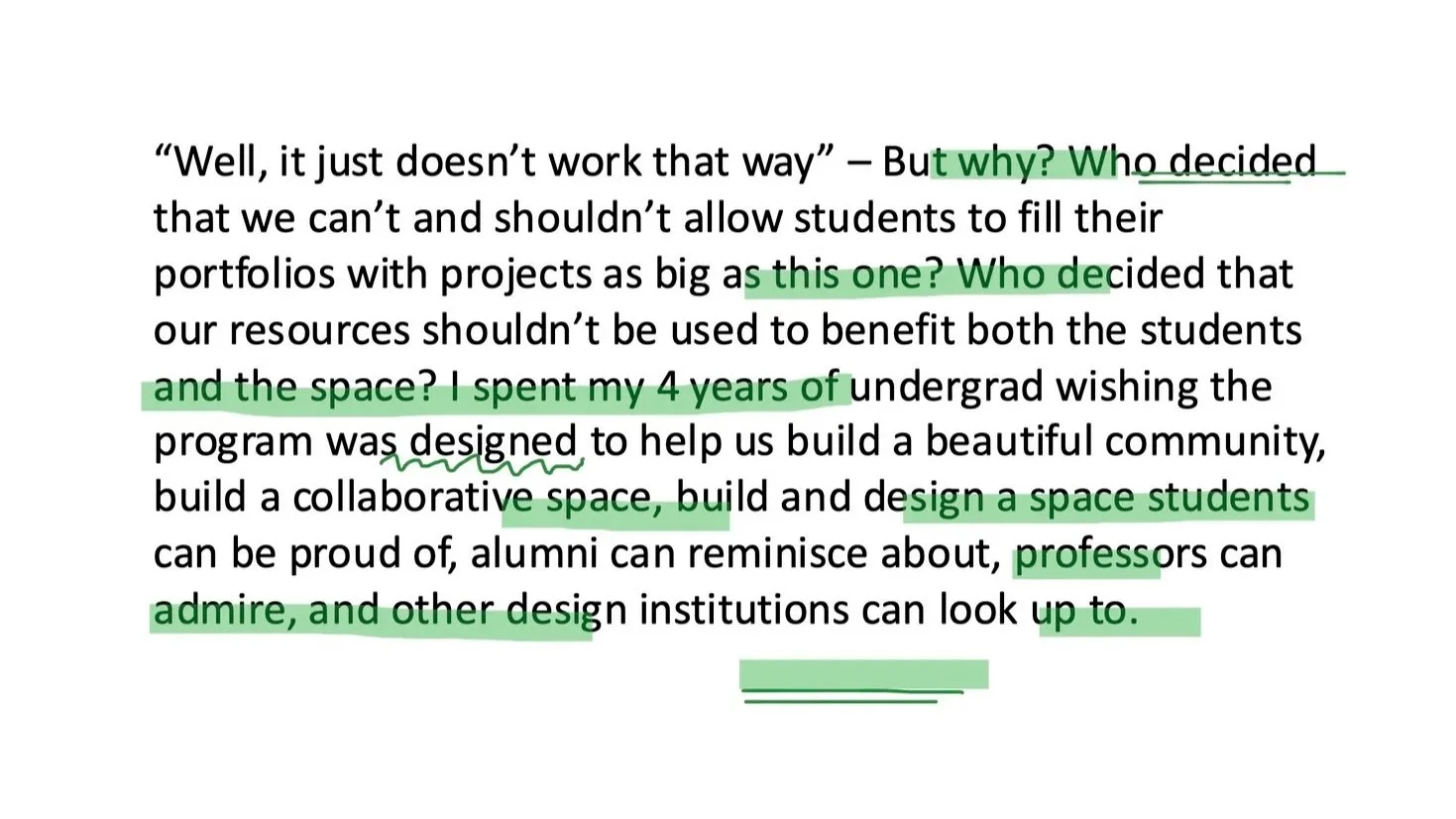
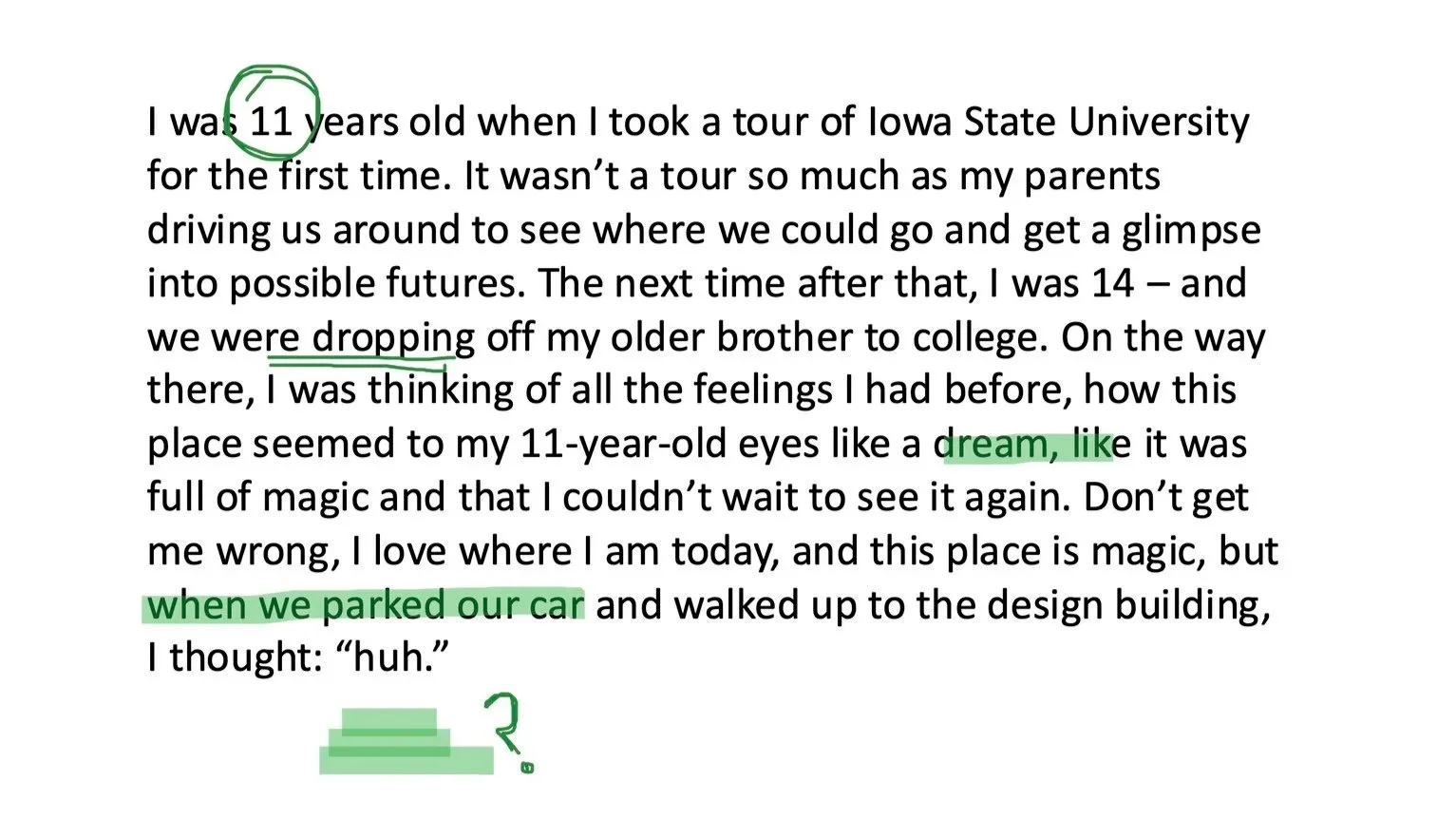
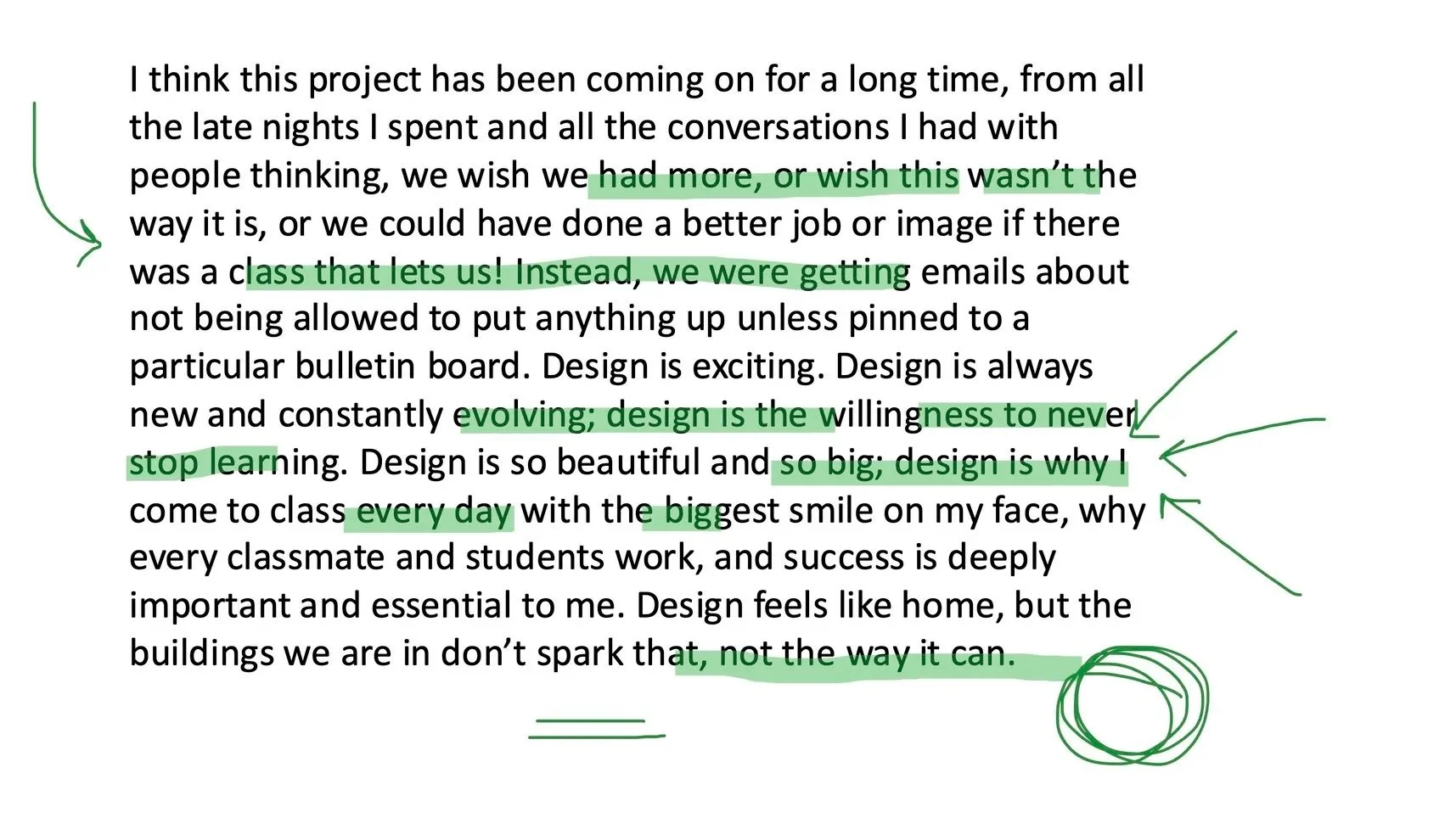
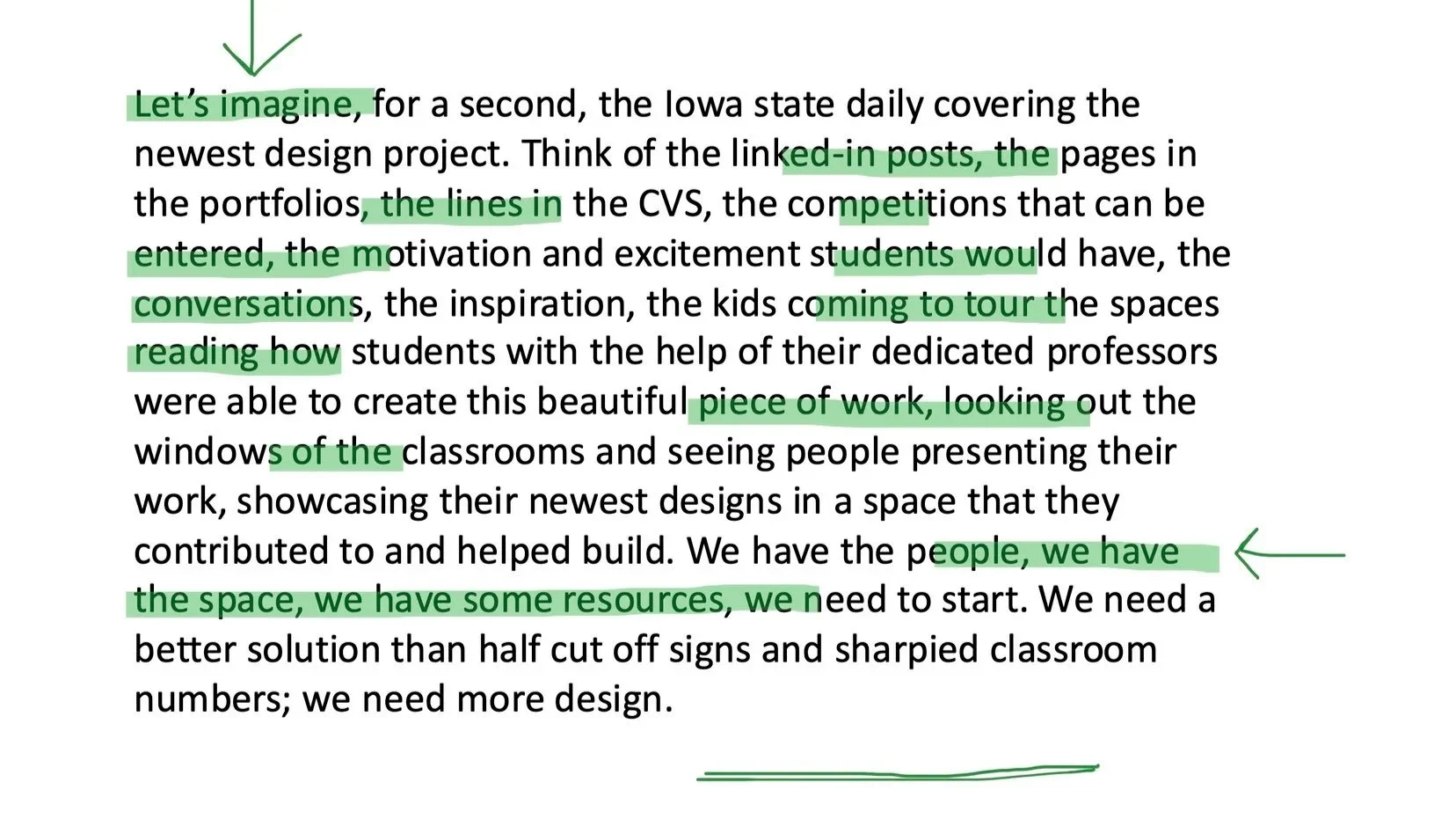
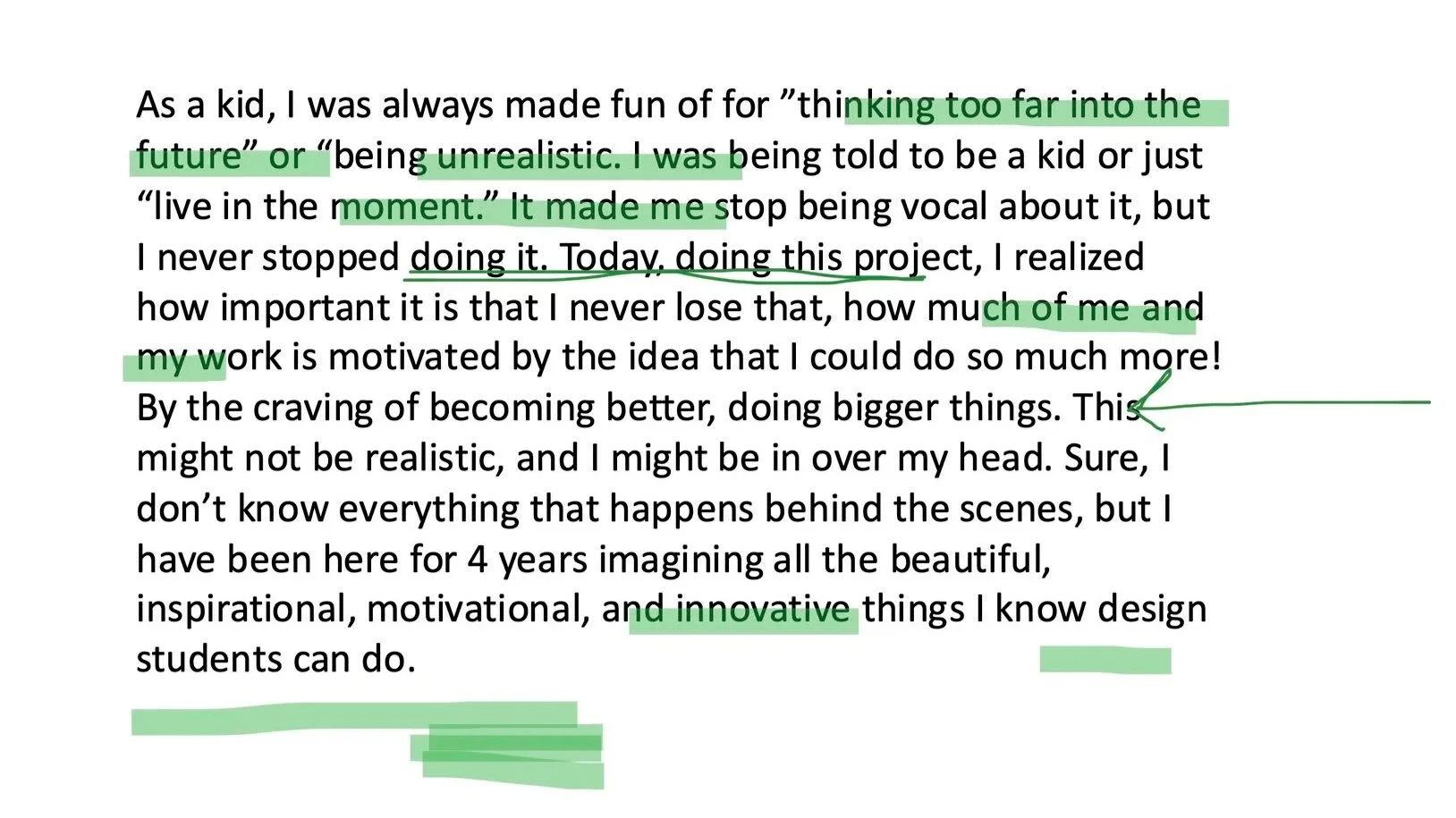
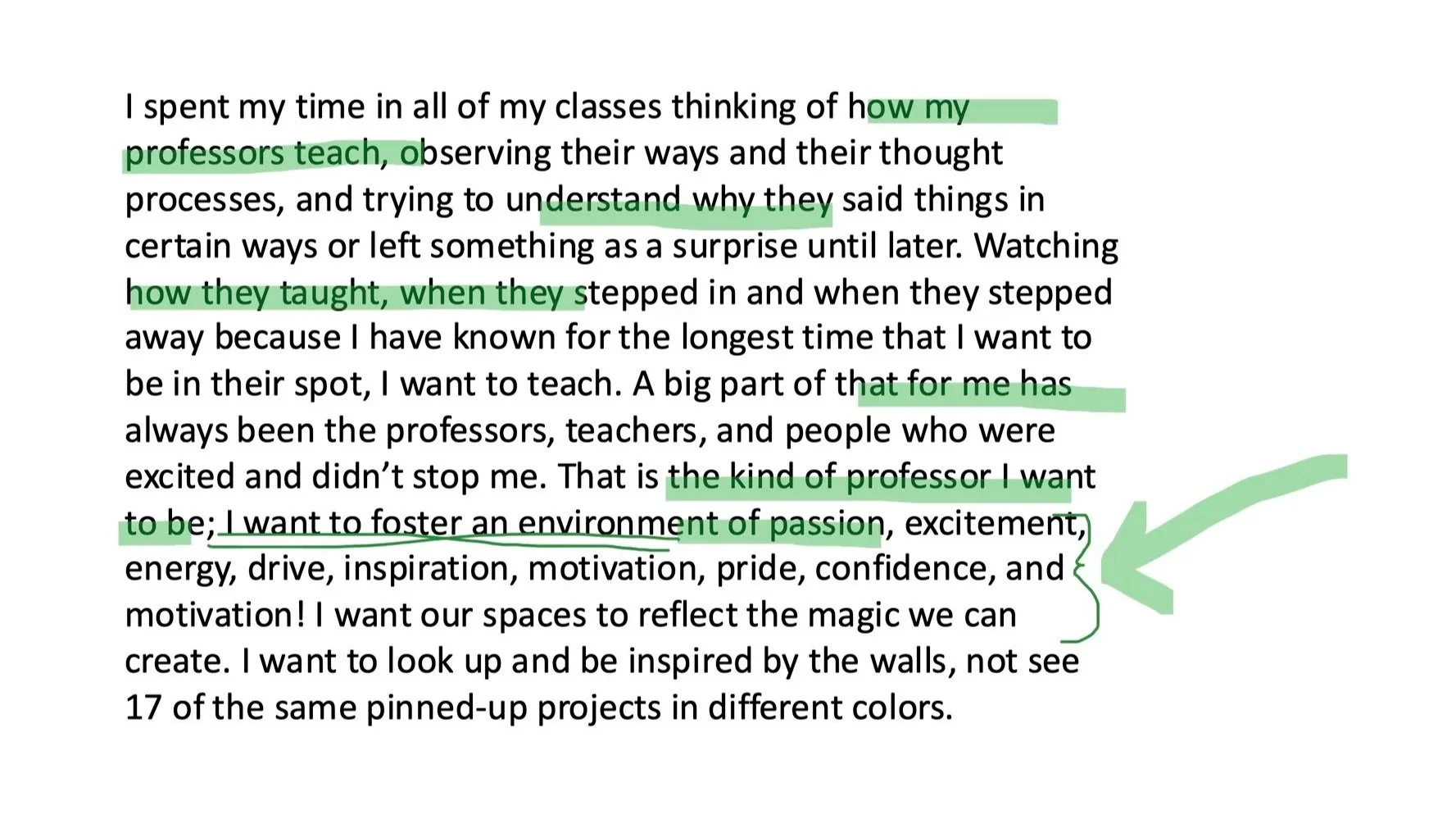
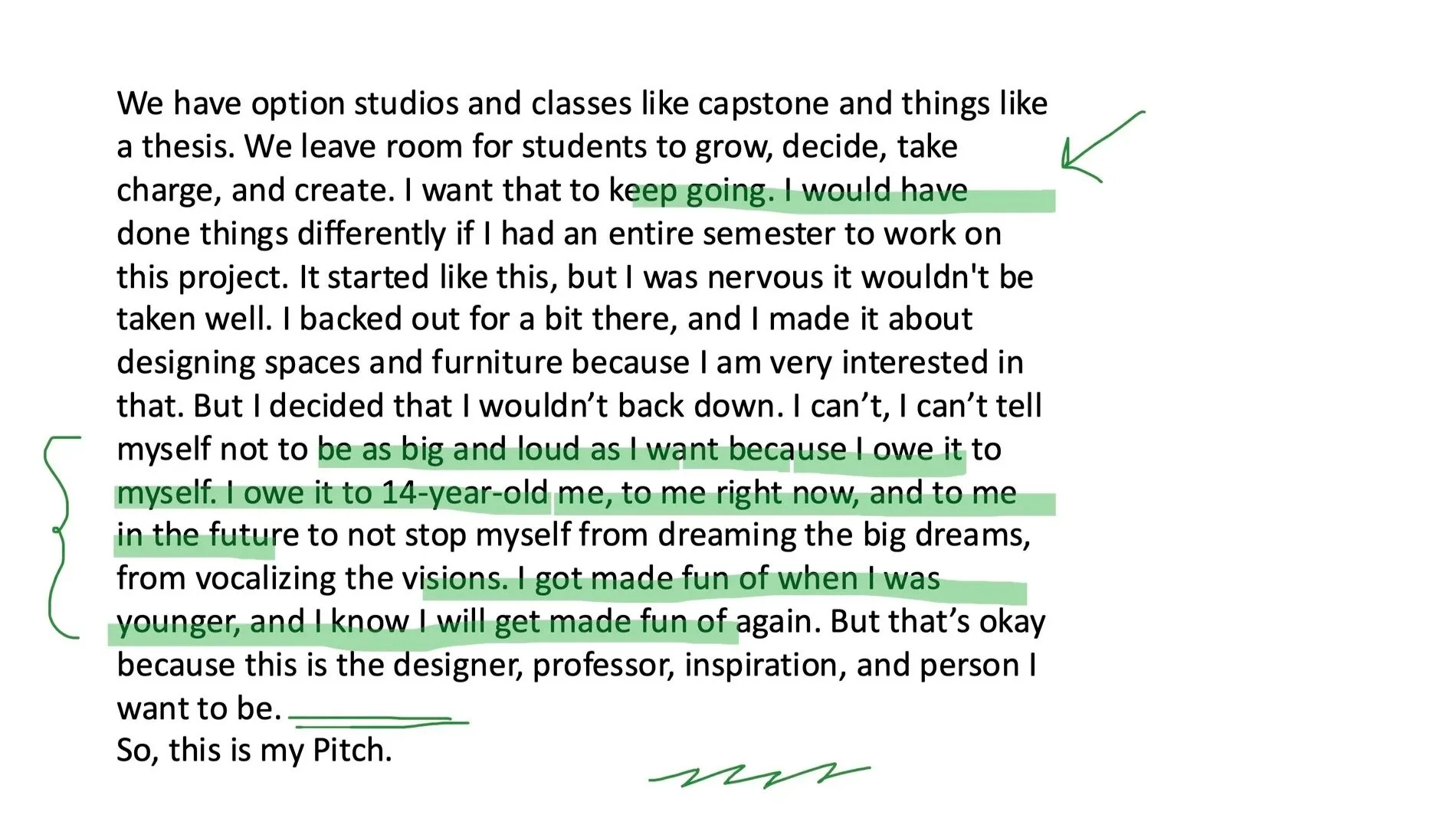
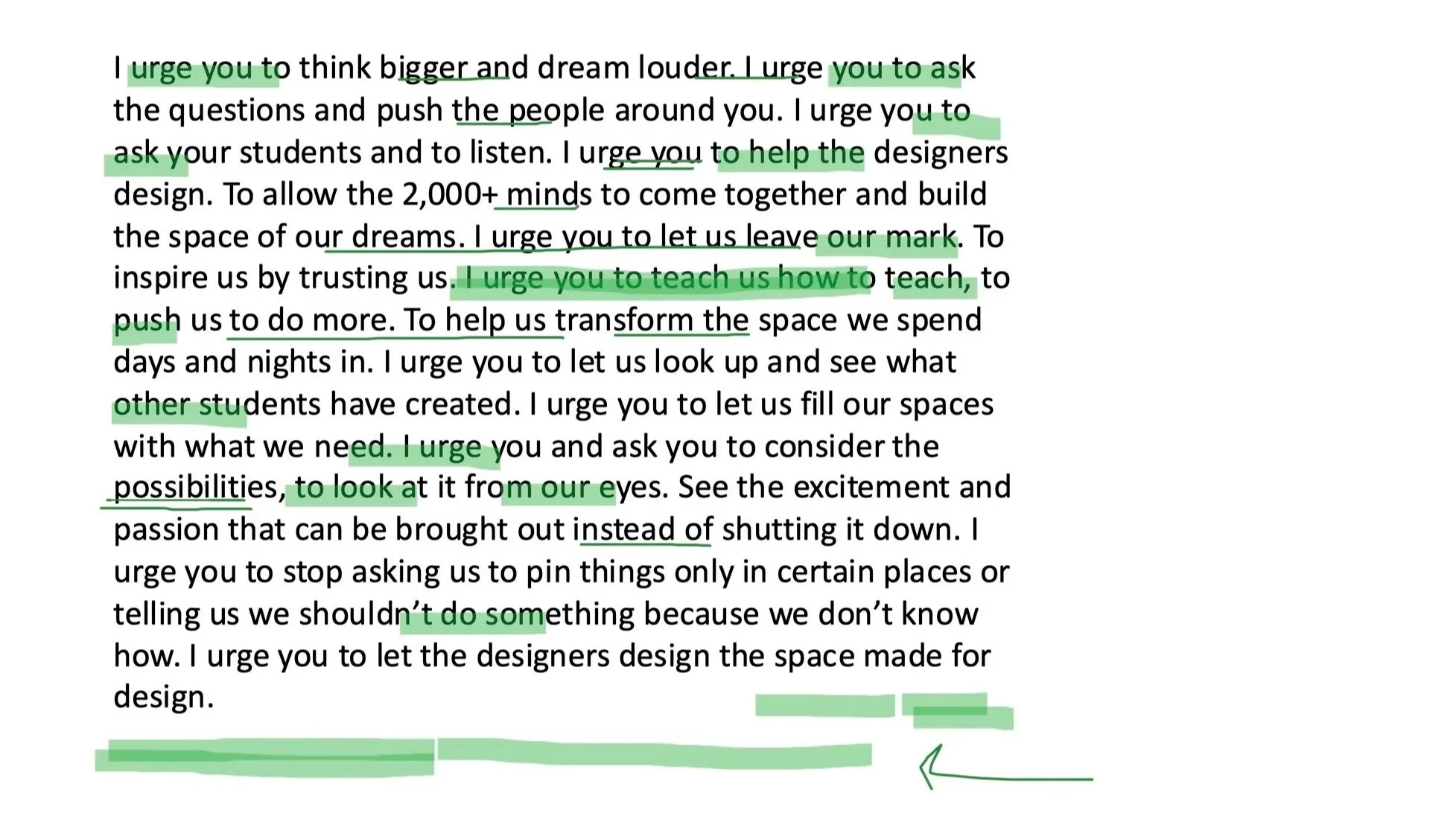
“Redefining and designing public spaces - can chairs bring us together? How much power does a chair hold? What parts of our community could benefit from fun, functional, interactive, and thought-provoking furniture? Who needs chairs the most? Why is this so important? What brings people together? How can a bench, a seat? A chair to a cot? A new environment and installation? An interactive piece brings people together. Ames Public Library? Places around campus? Parking lots? Bus stops? In front of classrooms? By Windows?” - NK 2024
Reading these and more archives made me realize that I have been asking very similar questions since the start; this was the best example. There are different angles and ideas, but the consensus is that I need to start from scratch, even if it’s only for this week.
REASEARCH & INSPIRATION
Sunday, September 20 -
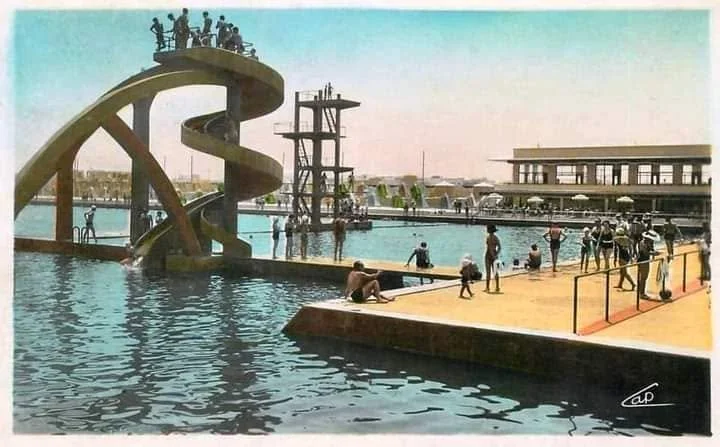
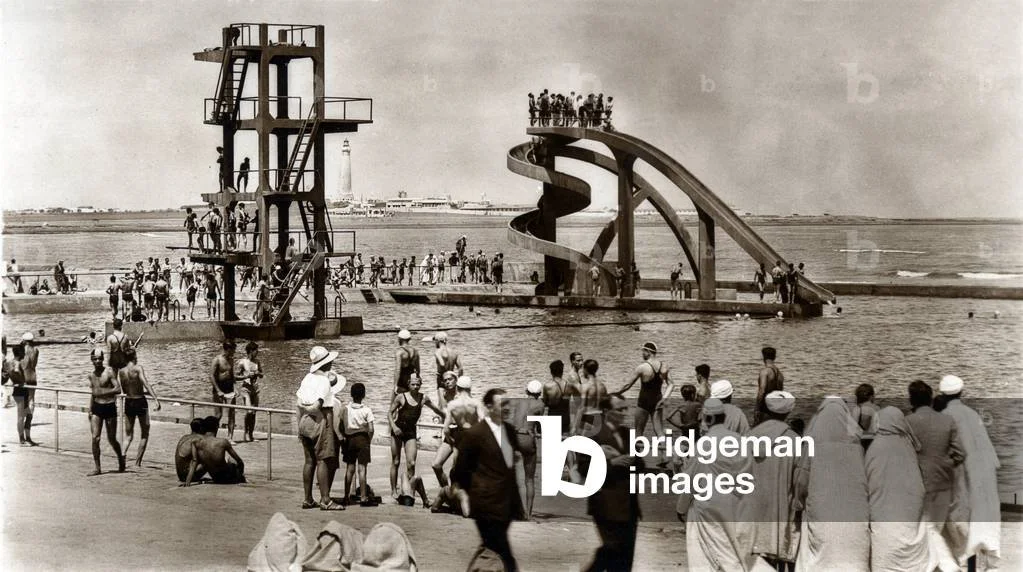
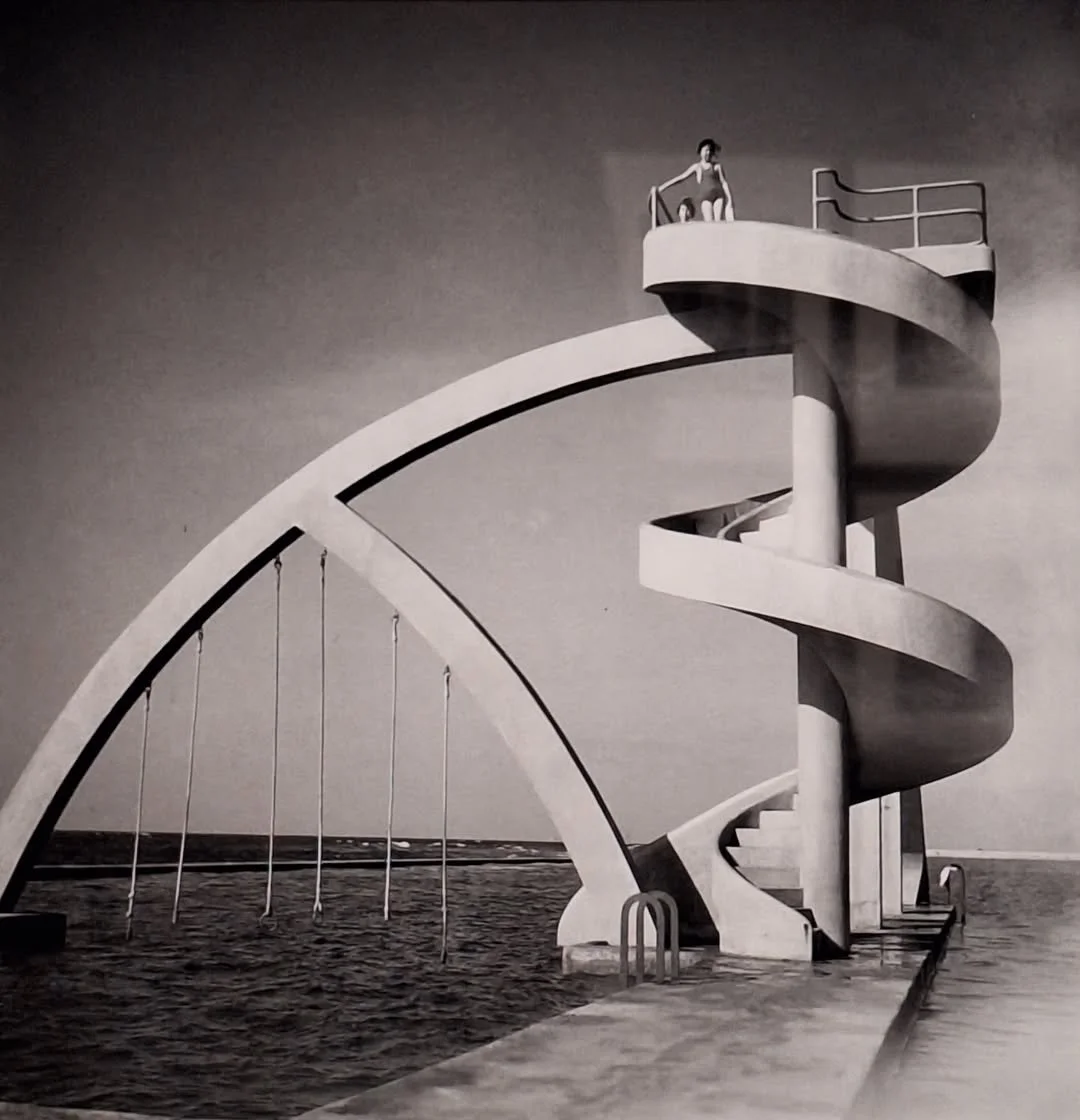
Centre Balnéaire Georges Orthlieb or the Casablanca municipal swimming pool - 1934
https://ar.yabiladi.com/articles/details/171770/عندما-كانت-الدار-البيضاء-تحتضن.html
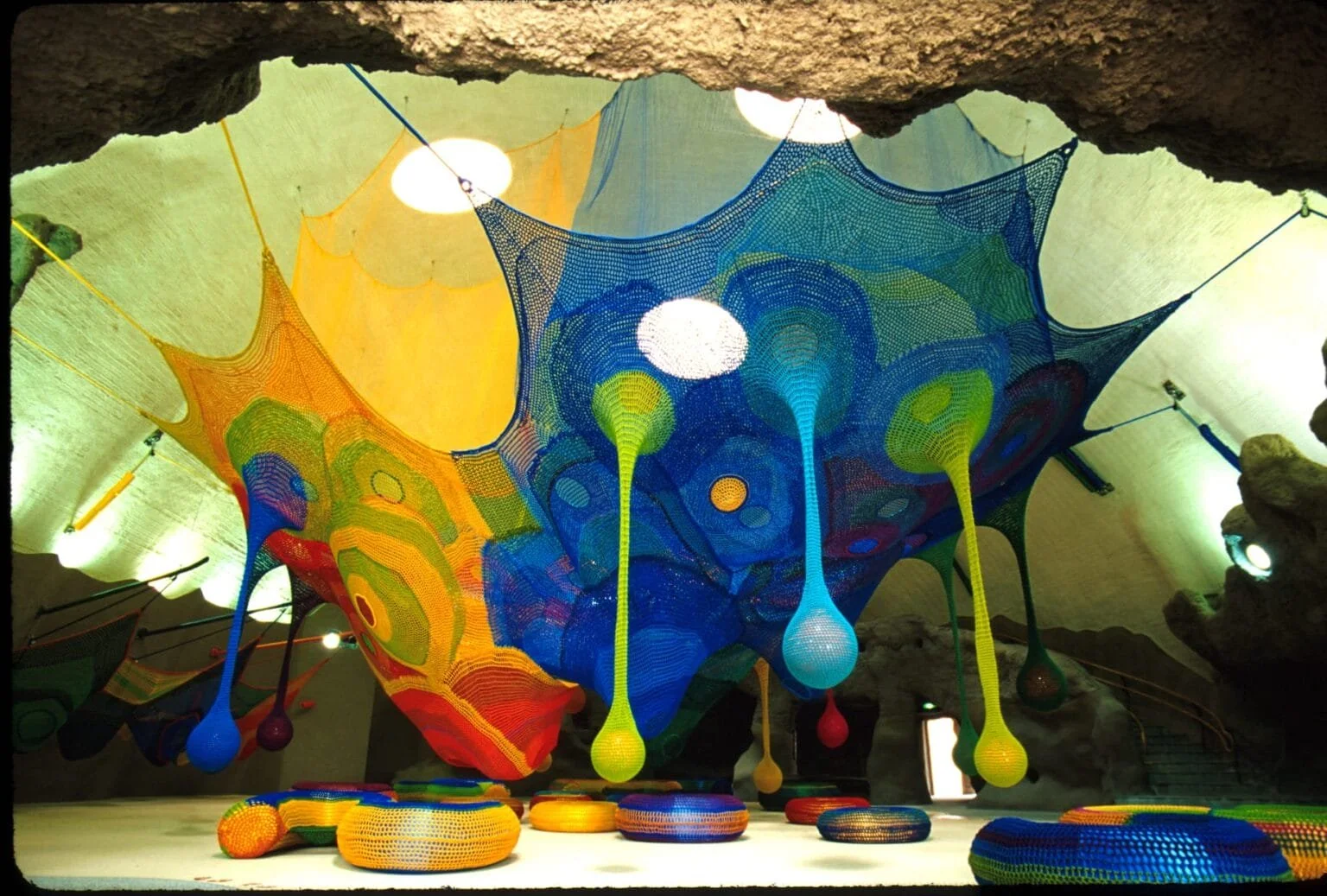
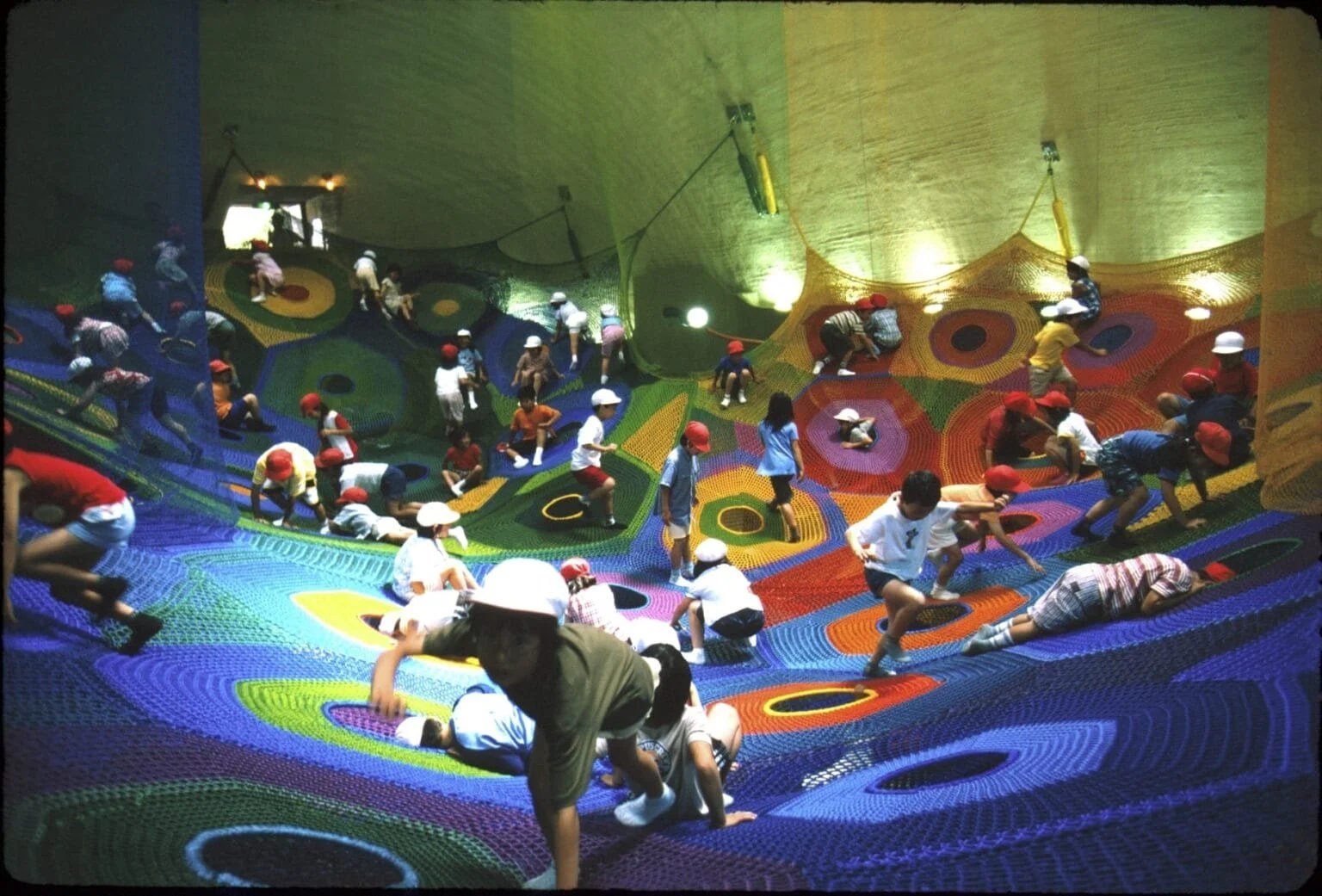
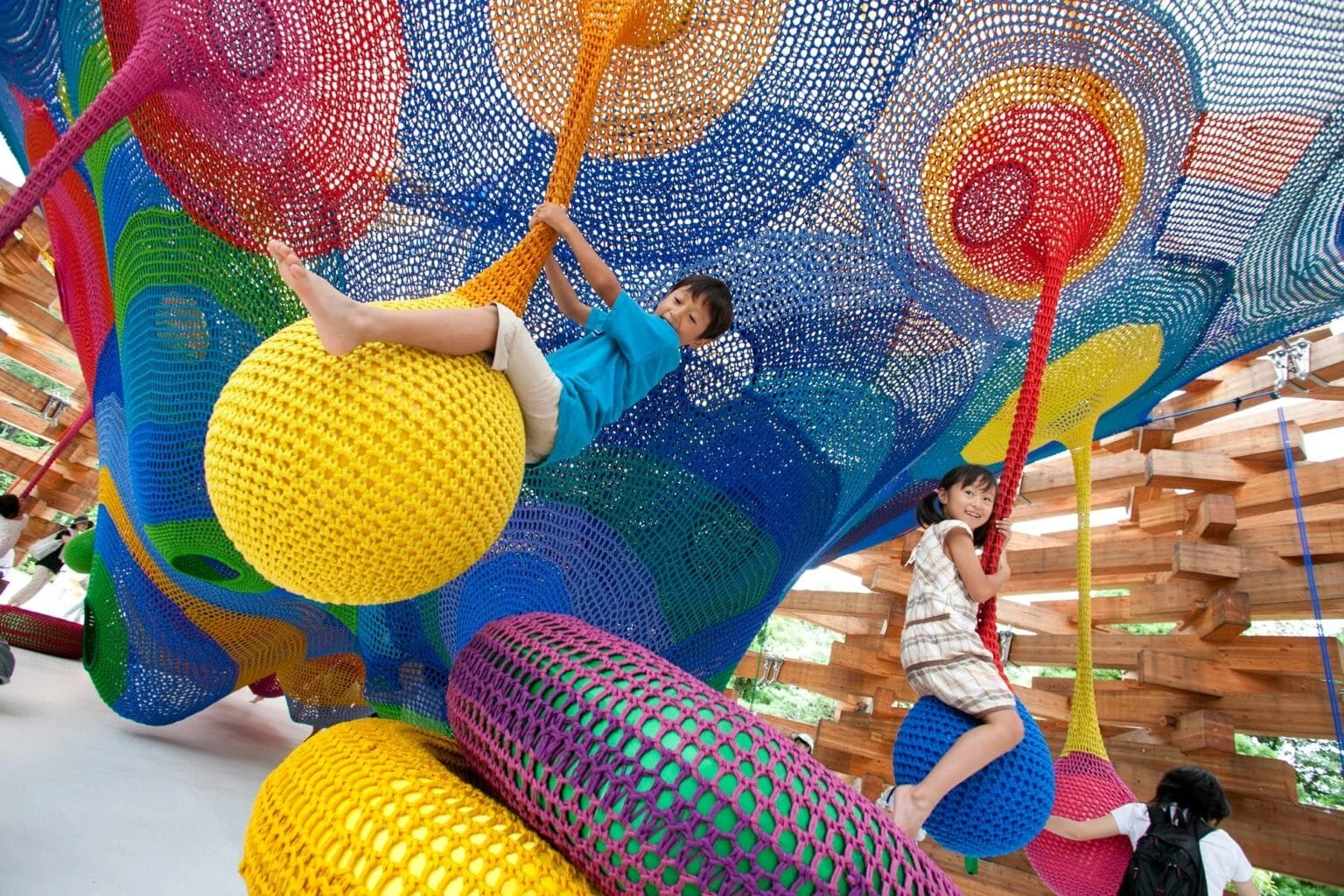
Crochet Playgrounds by Toshiko Horiuchi MacAdam - 1990
https://www.thisiscolossal.com/2012/07/crochet-playgrounds-by-toshiko-horiuchi-macadam/
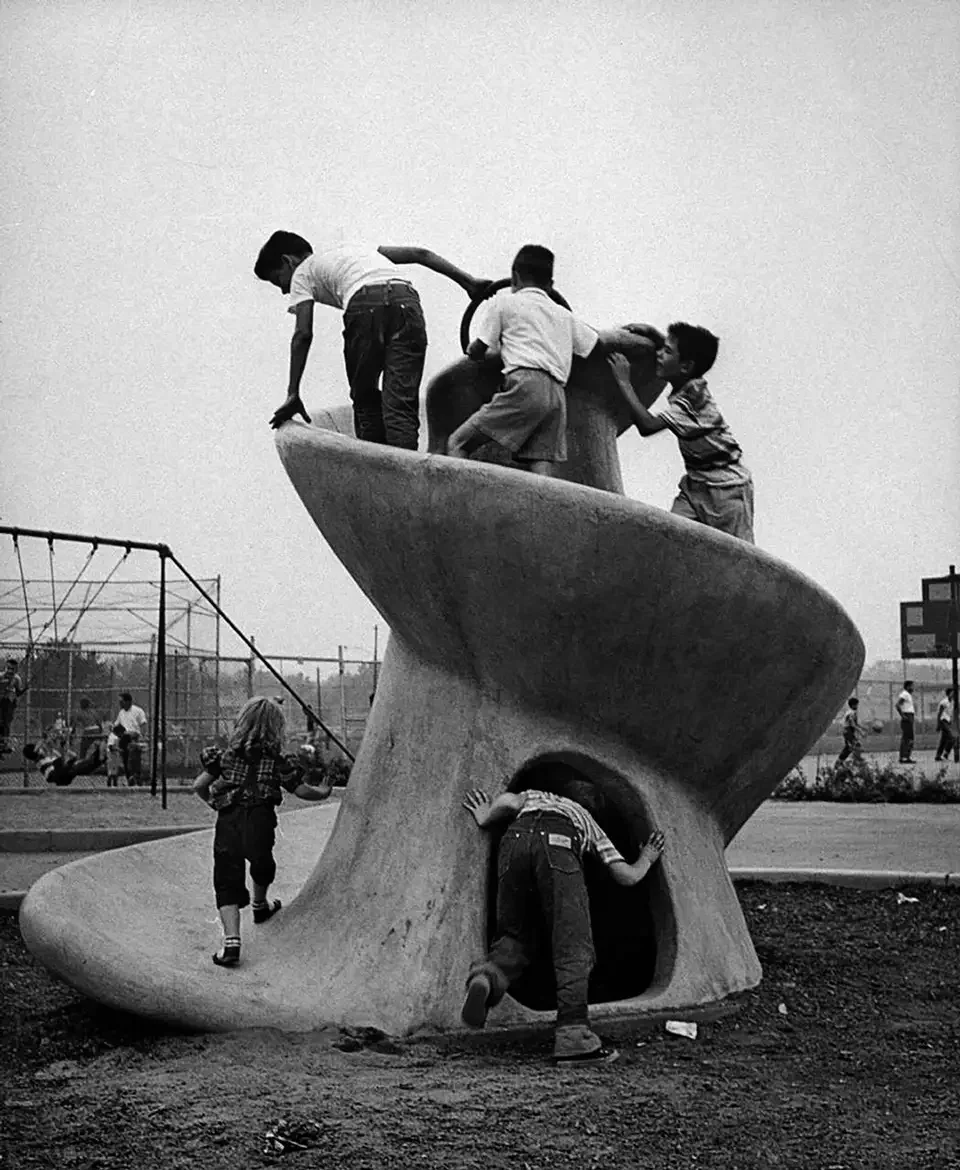
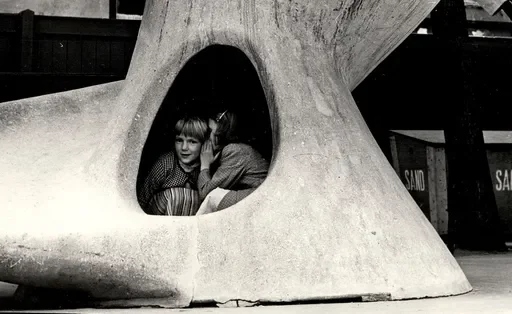
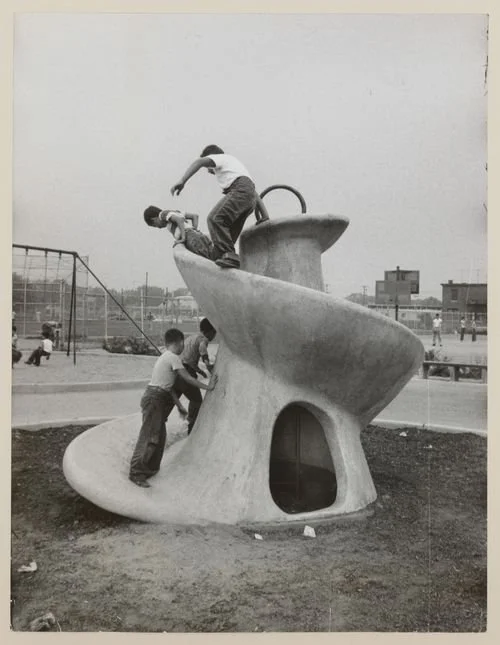
Concrete Spiral Slide, designed by Swedish sculptor Egon Møller-Nielsen, 1956
https://www.tate.org.uk/tate-etc/issue-31-summer-2014/when-play-got-serious
Writing, thinking aloud, and throwing words on the page!
Tuesday, September 22 -
Simplest way to explain: boiling down the ideas in list form:
Community
Sparking conversation
Togetherness
Tools for communication
Removing barriers
Inclusion
Shared experiences
Collaborative output
Nonverbal communication
Interdisciplinary solutions
Connection
Puzzle
Closeness
Interactive
Shared space
Play
Curiosity
Encouraging connection
Encouraging interaction [between people]
Dynamic
Fluid every changing/fluating
Committee meeting Links I do NOT WANT TO LOSE
Wednesday, September 23 -
Meeting with Johnny:
https://www.lozano-hemmer.com/body_movies.php
https://corescholar.libraries.wright.edu/restein_hoberman/1/
Video Comparison & Writing Progress
Friday, September 24 -
While working on and finalizing the video project, here are some ideas, ways to describe, and concepts that came up naturally -
This is what I think is relevant to the thesisWhile writing the script and finding ways to describe things, I called the rug “an ancient technology, one of the simplest ways of saying ‘gather here’ without any words”
Dramatic, yes; funny? maybe. But the part that stuck out to me the most was “gather here”: the rug, designed and placed in the middle of a room, similar to a low set table and chairs, to a coffee table or a dining table, communicates connection and prompts people to gather around and together without any further instructions.
This got me thinking about my attempts to design a rug that prompted people to walk on it, or how I would get people to use the systems without any prompting. This is not to say I will go backward and try to connect what I have again; it is to say the idea was always there—quiet nonverbal communication designed to create connection.
Bringing people together with both simple and complex systems and designs, giving them an easy way to communicate so no one needs to “wait for someone to go first” - the responses and anonymous confessionals from the survey provided a lot of insight: insight that most people are very similar in their feelings and concerns and that people from all over the world, living all over the world (Germany, UK, Jordan, USA, Turkey, etc.) All experience the same situations and complex feelings. [The information about where the anonymous confessions are from is based on the people it was sent to - who answered is unknown].
“Everyone is waiting for someone to go first” came up multiple times in the video; I used it in the first narration, and after another story was submitted, I added it again for dramatic effect to make the point clearer.
Every story submitted, collected, or written followed the same formula: walking up to someone with full intent to connect and communicate but not being able to do it. People show up to the party, the dinner; people walk over and almost say something; people open and close their mouths; people say what they think is the wrong thing.
The rug in the video is a nonverbal invitation, a solution created in 2026 to help people regain their ability to communicate and recover abilities they have lost. “One of the simplest ways to say gather here” really stuck with me during this video. Gathering, coming together, that has been on my mind since the start.
Whether furniture, rugs, redesigning spaces, or projects that need multiple people, all the projects I have been exploring have involved gathering people. A simple switch: none of the projects function if used by a single person, as far as I can tell.
Shared spaces reliably and constantly bring people near each other, but they rarely help anyone start a conversation. Now, I know the video is dramatized, made to portray the people from 2026 as completely incapable of communicating with each other the way they want to - I do not believe this is the case; I am simply using this dramatized version/reality to help create stronger, more effective solutions.
There are no barriers to connection; desire and access are often clear, but social pressure and the risk of initiating stop people before they even begin. The survey responses, research, and conversations with friends and family all highlight self-monitoring and the fear of being “weird,” making a bad first impression, being remembered wrong, not being good enough, or not speaking a specific language fluently enough. The goal is to design a space that removes even those feelings and brings people together through play, activity, and exploration. Bring people together by saying, “Gather here,” and having them complete a task or explore what's in front of them.
The first thing that comes to mind when I discuss this is puzzles: building a puzzle with another person; the puzzle does the hard part. The conversation stops being about the people; the focus shifts from each other to a shared goal. Now I know people can sit across from each other and finish a puzzle without saying a single word. Still, the goal will be to avoid those scenarios, to create activities and systems that push for conversation, laughter, joy, and connection. Systems that maybe even require conversation.
“Meet a stranger” what if that is the only prompt, right at the begining of the exhibition, at the entrance - The first thing people see?
Here are some more questions that kept coming to mind throughout all the writing, all the video creation, script writing, and brainstorming this week:
What holds people back from initiating? [I should gather more confessions; those were very insightful]
What does connection mean? Does it always mean conversation? People's ideas of connection and intimacy vary widely.
How do objects and signs communicate permission and connection, and how can they prompt low-stakes conversations?
Does a shared activity- stepping, jumping, playing, co-creating, etc.- lead to conversations, or only parallel play and activity? How do I make sure people communicate and connect?
Input vs. output:
Input -
Strangers, acquaintances, even friends [creating deeper connection and not discriminating]
Public and semi-public spaces, museums, downtowns, galleries, libraries, schools, halls, etc.
The initial feeling, attitude, atmosphere, interaction, and culture of a space.
In-person interaction, connection with people, meeting a stranger, finding a friend, exploring together, simultaneous activity, togetherness in play.
Output -
Moving away from technology [currently trending, reaction to feeling watched, moving back to nostalgic tech]
Pushing past barriers of social anxiety and obligated communication; moving away from being scared to go first or waiting for someone else to go first.
Connecting offline
Meeting new people, building deeper connections
Leaving the space with a different mindset, one of connection and play.
This all brings me back to research I started in 2024 - the furniture, the floor sitting, how different cultures spend time together, how people choose to gather, the separation of sitting on a single-seater chair…etc.
More details from the video to the thesis -
The video blames technology, saying we are “by far the most connected humans that have ever lived,” and that this is the moment people began to forget how to connect with the person right next to them. There is tension here because the thesis is that the solutions will include technology. The video suggests that rugs were created to “Solve” the “problem” of connection, not to remove or eliminate technology.
On a different note, the list of words I wrote out on Tuesday- when looking back at the list- I realize how broad it is. Now, after all the work, the brainstorming, and the creation of the video, here is an improved list:
Gathering
Invitation
Initiation
Shared focus
Play
Co-presence
Connection
Some concepts, design principles, theories, etc. -
Nothing works alone - each piece in the thesis exhibition needs more than one person to function
The object goes first - the tool takes the blame; the rug, the seating solution, makes the invitation.
The attention shifts - from each other to the shared goal, the object of the system; lower self-monitoring.
Low stakes, easy exit - people join without any commitment; they can leave. They can join, but never by themselves.
Designed for exchange - not designed for parallel play. Built-in reasons to talk; designed prompts to create some form of connection.
Going back to a question I posed earlier: “Does connection always mean conversation?”
I think I can decide what connection means in this space and for the thesis. think connection means:
Co-presence within a shared space and experience.
Acknowledgment, a smile, a laugh, eye contact
Coordination, moving, and acting simultaneously
Conversation and the exchange of words
Continuation, conversing beyond the activity
This allows for different methods, the creation of works, and people with different comfort levels to participate as much as they want.
More writing, thoughts, drafts -
I went back to the mock thesis paper written for Introduction to Research Design:
The title: Challenging Functionality: Exploring Furniture’s Ability to Bring Communities Together Through Design using a narrative mixed-methods approach
The 2025 paper - What do students need from furniture in this specific space? A needs-based study - there was no building or testing of furniture [per the parameters and constraints of the semester and how the class is designed]
The new thesis direction - Can a designed object bring people together, create connection, and take the risk of going first?
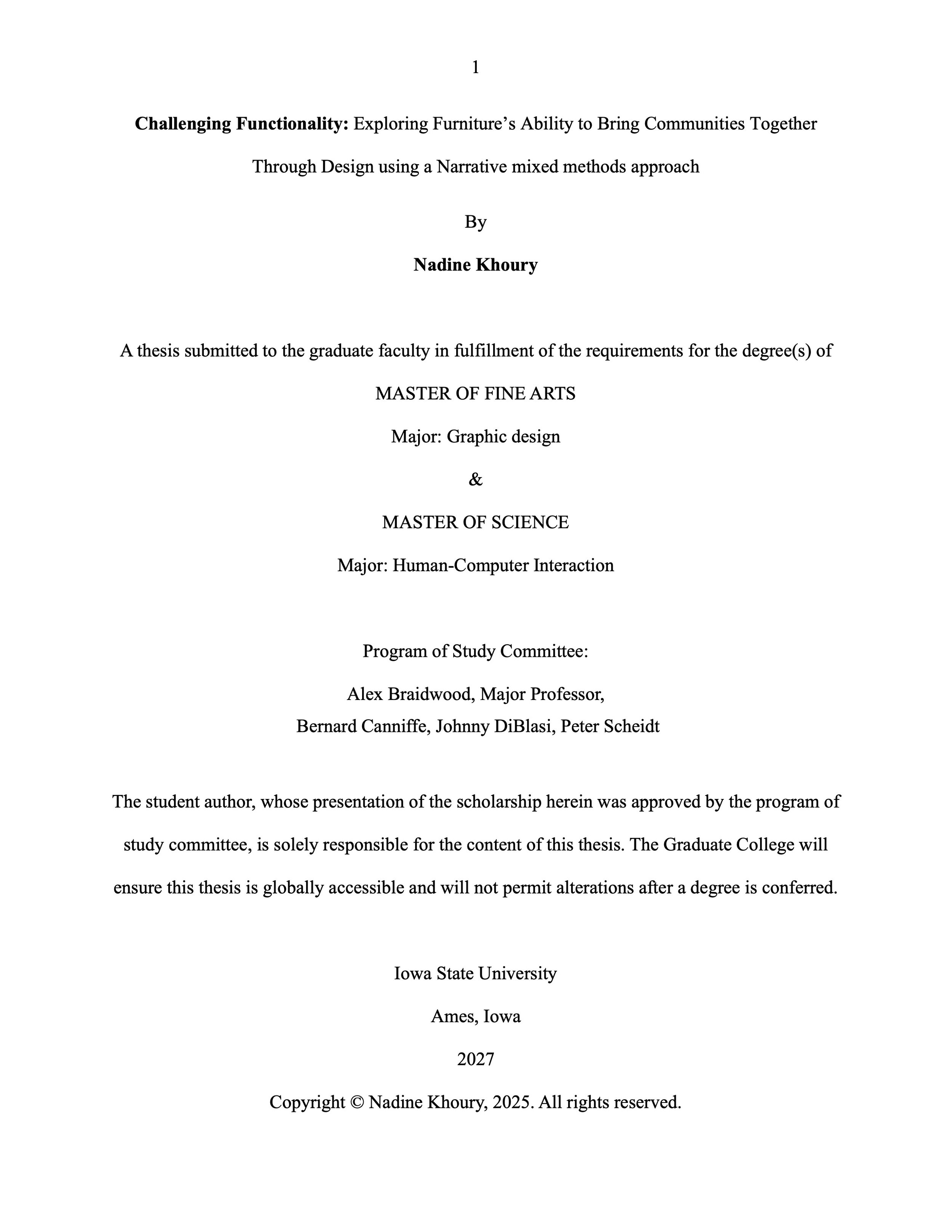
December 2025
Key observations from the 2025 paper: people place totes, bags, posters, and other items on the chair beside them. All items subtly prevent other students from joining the table. The nonverbal “Don’t sit here,” or rather, “you can’t sit here”
The rugs, the current thesis direction: the design goal is to create the opposite signal - a nonverbal “gather here.”
This ties back to a concept I brought up earlier in the weeklies: how people interact and react on the ISU bus system.
Another observation from the 2025 paper: the in-between spaces, not already established public spaces, but spaces like the triangle space in the College of Design - a semi-public space. A location where people are used to one thing - and the designs, thesis, and work come as a shock, completely different interactions - A gallery where you are meant to touch everything, talk loudly, discuss with everyone!
And finally, the title - “Challenging Functionality.” It fits even now, maybe even better now. The rug only works with multiple people using it; the system only functions with more than 2 people, etc.
Brainstorming section by section - [DRAFTS]
Title - [incomplete titles, brainstorming]
Systems designed for connection in shared spaces
Gather Here
Play, participation, and connection in shared space
Shared activities
Challenging functionality to design for connection
Interactive systems for connection in shared spaces
Problem Statement -
Shared spaces put people side by side, but nothing in them asks people to engage with one another. The objects that fill these spaces are all designed for individual use, and they quietly reinforce separation in their own way. This thesis asks what happens when those objects are redesigned to do the opposite.
Semi-public spaces are designed for functionality: to sit, work, pass through, wait. But play, the shared spontaneous connection created through activity that draws people together, is not commonly considered part of the design. Even though it is one of the most natural ways people connect, through shared activity and play. As a result, people share rooms, areas, and spaces without sharing experiences or exchanging any words. This thesis treats play and interaction as essential functions, functions that are more important than the space itself.
Shared spaces bring people near each other, but rarely bring them together. These are in-between spaces, like galleries, waiting rooms, museums, etc. Their object communicate quietly, and what they communicate is separation: the ability to spend time together separately. This thesis explores solutions for spaces shaped by cultures of seclusion and separation.
Purpose Statement -
This study investigates whether interactive, multi-person systems and objects can invite and initiate interaction among strangers and acquaintances, creating deeper connections among friends and initiating connection.
Research Questions -
How can interactive, multi-person systems invite people to gather and engage with one another in shared spaces?
How far into the connection spectrum do participants move when interacting with these systems, from co-presence to acknowledgment, coordination, conversation, then continuation? [From my definition of connection]
Which design qualities- shared goals, play, required cooperation, and movement- are the most encouraging to people? What makes people engage with one another the most, rather than simply engaging with the objects before them?
How does introducing these systems change how an in-between space, such as the gallery, is used and experienced?
Titles are really important, and I'm struggling to create something that feels as though it properly encapsulates everything, so here’s another-
Title - [incomplete titles, brainstorming]
Gather here: Designing social affordances through playful multi-personal systems.
Gather here: Cooperative connection, play and interaction as spatial design.
Gather here: Playful interactive systems as spatial interventions for connection.
Multi-person interactive systems and connection in shared spaces using shared experiences.
Challenging functionality: Interactive systems that invite connection within shared spaces
Challenging functionality: Designing objects ts that only function when operated together
Challenging the functionality of shared spaces through play and interaction
Designing interactive systems that invite connection
An invitation to gather: Multi-person systems for play and connection in shared environments
Play as a function within shared semi-public spaces
Interactive, connected systems for play and togetherness
Designing shared experiences and play to transform how people engage in public spaces
Gather here: Designing playful social affordances in shared space
Designing Multi-person systems that turn shared space into shared experience
From side by side to together: Designing playful systems for connection in shared space
Side by side, together: Social affordances, play, and connection in shared space
Research -
Social Affordances - https://www.sciencedirect.com/science/article/pii/S0360131505000904
Triangulation - https://en.wikipedia.org/wiki/The_Social_Life_of_Small_Urban_Spaces & https://courses.planetizen.com/course/social-life-urban-spaces & https://braverosie.wordpress.com/2012/02/12/the-social-life-of-small-urban-space-william-h-whyte/
Civil inattention - https://books.google.com/books/about/Behavior_in_Public_Places.html?id=CV9CaEvdpisC & https://www.frontiersin.org/journals/sociology/articles/10.3389/fsoc.2023.1212090/full
Precedents - https://dl.acm.org/doi/10.1145/3544548.3581325 & https://ajis.aaisnet.org/index.php/ajis/article/view/126 & https://www.lozano-hemmer.com/body_movies.php
Committee Member meeting notes
Meeting with Peter -
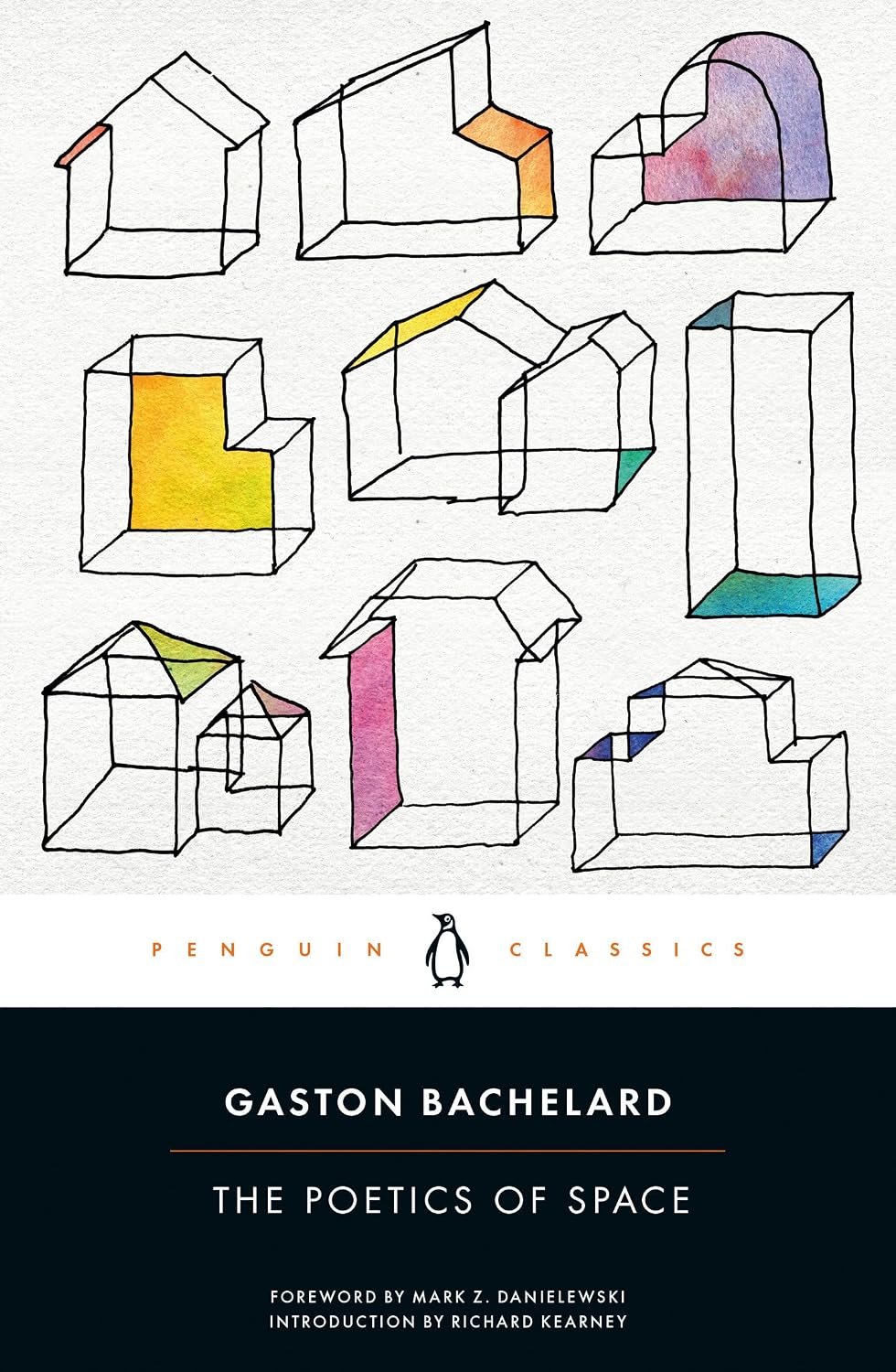
Assigned Reading: “The Poetics of Space.” After presenting my work, where I am currently at, and how the video helped me reach the ideas and concepts I am at now.
Assigned Homework: Visiting the Science Center of Iowa | Des Moines - https://www.sciowa.org
HIGH-PRIORITY TO-DO LIST ITEMS
Send written ideas, summaries, new titles, and concepts to committee members.
Finalize title and problem statement
Send/present summart to committee members
Start IRB process and CITI training based on current direction
Return to production
Friday, Sep, 25th
Next week
Next week
Next week
Next week
IN PROGRESS
IN PROGRESS
IN PROGRESS
IN PROGRESS
IN PROGRESS
+MORE ON EVERYTHING NEXT WEEK!
Thank you :)